

Articulating spinal implant
a spinal implant and articulating technology, applied in the field of spinal implants, can solve the problems of one or more intervertebral disc shrinkage, collapse, deterioration or displacement, herniation or other damage, chronic and often disabling pain, and irreversible paralysis of the upper and/or lower limbs
- Summary
- Abstract
- Description
- Claims
- Application Information
AI Technical Summary
Problems solved by technology
Method used
Image

Examples
Embodiment Construction
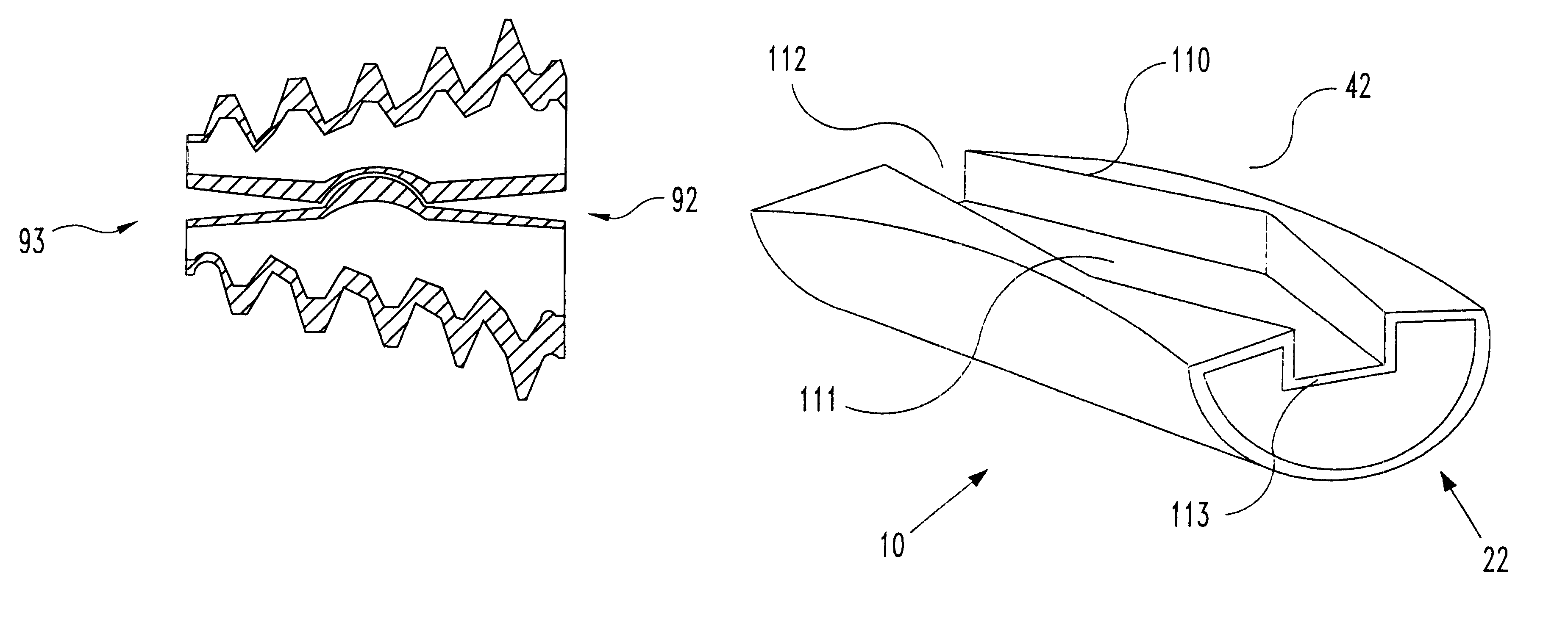
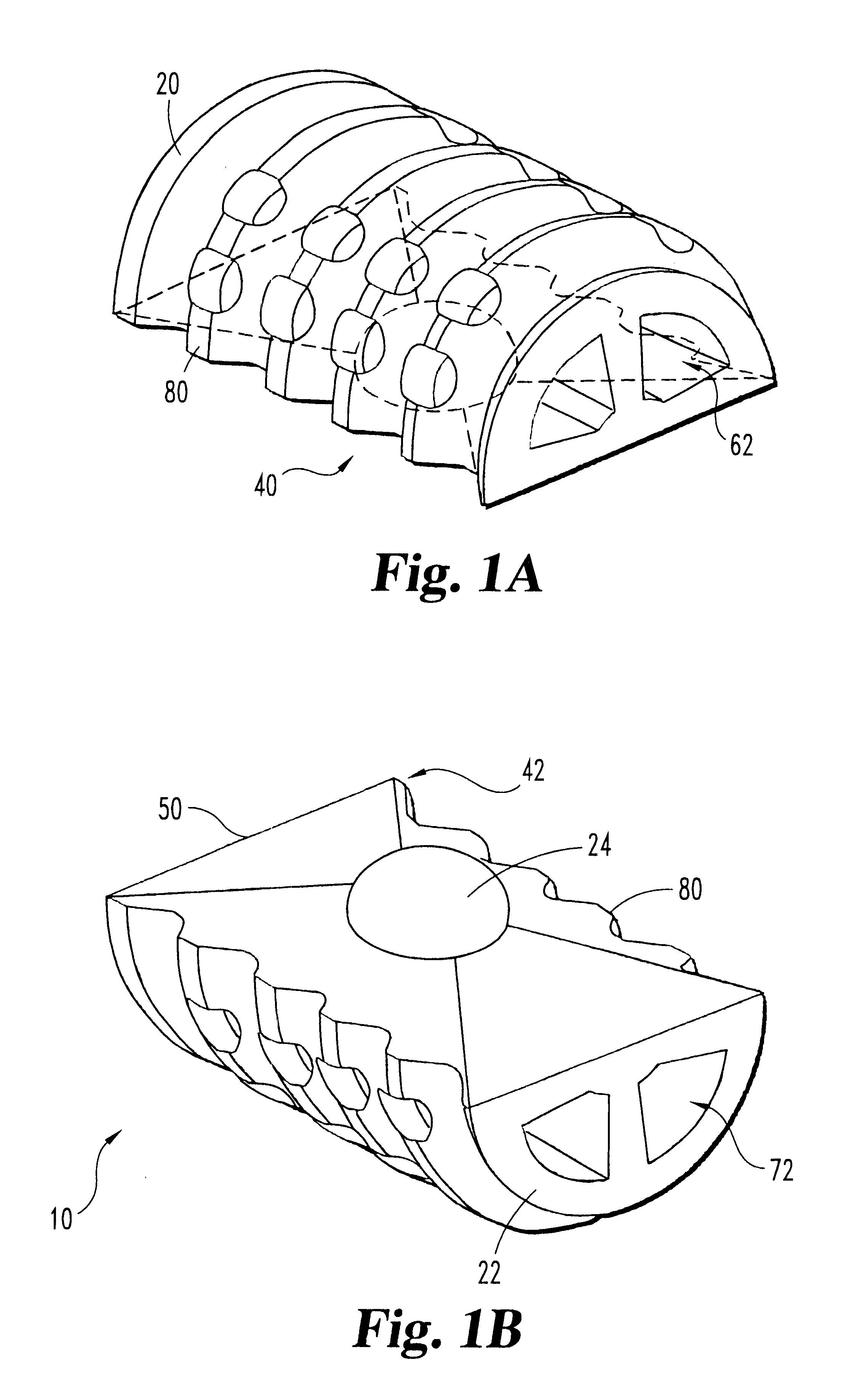
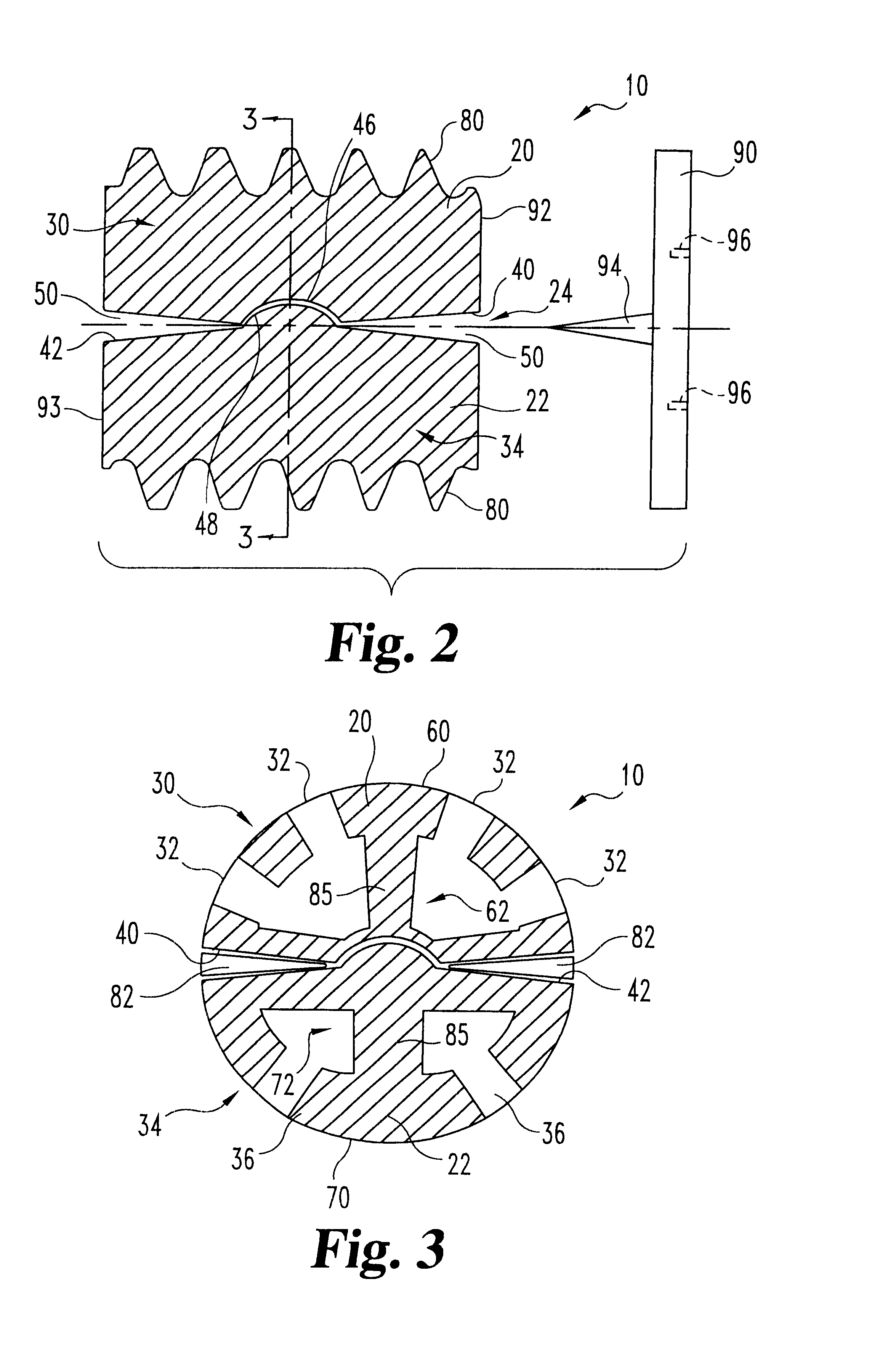
Referring now in detail to the figures wherein like reference numbers represent like parts throughout, preferred forms of the present invention will now be described. As seen in FIGS. 1-3, one embodiment of the present invention comprises a spinal implant 10, generally comprising a first element 20 and a second element 22. The first element 20 is coupled to the second element 22 by an internal articulation means 24 for allowing relative pivotal movement between the first and second elements.
FIGS. 4A and 4B show the spinal implant 10 of the present invention installed in situ, between a first vertebra 12 and a second vertebra 14. The implant 10 is shown implanted into an anterior aspect of the vertebral body, between the fifth cervical and sixth cervical vertebra. The device and method of the present invention, however, are applicable to anterior, lateral, and posterior approaches to the vertebrae.
As seen best in FIGS. 2-3, the first element 20 of the implant 10 comprises first conne...
PUM
| Property | Measurement | Unit |
|---|---|---|
| length | aaaaa | aaaaa |
| width | aaaaa | aaaaa |
| radius | aaaaa | aaaaa |
Abstract
Description
Claims
Application Information
 Login to View More