A particular
advantage of the design in accordance with the invention lies in the fact that for the first time, both the wall with the passageway and the sealing piece in the form of the stopper according to the invention can be made as injection-molded formed plastic parts that can be made available with little manufacturing effort or cost. The passageway in the wall, of the ink container of an ink
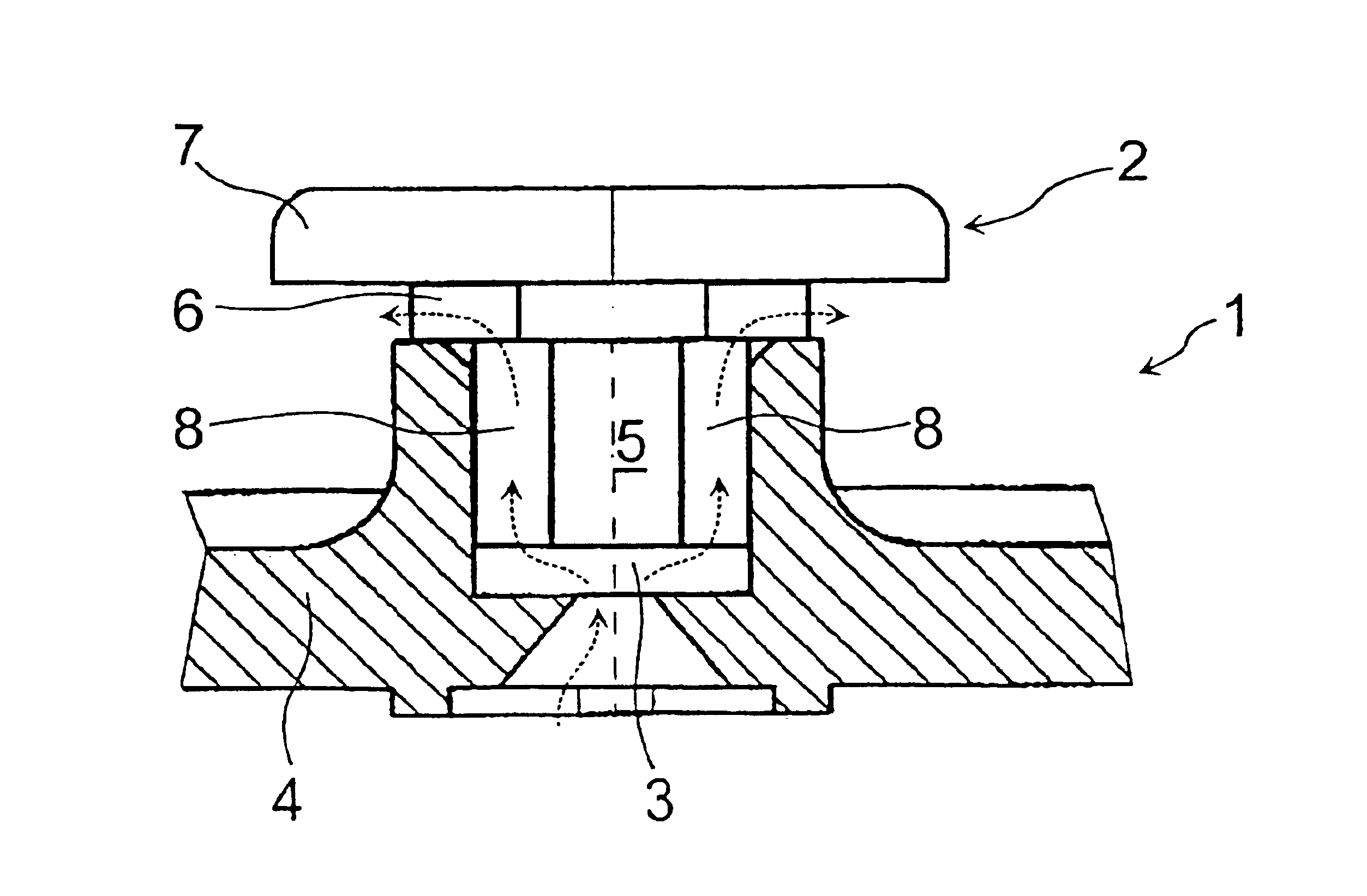
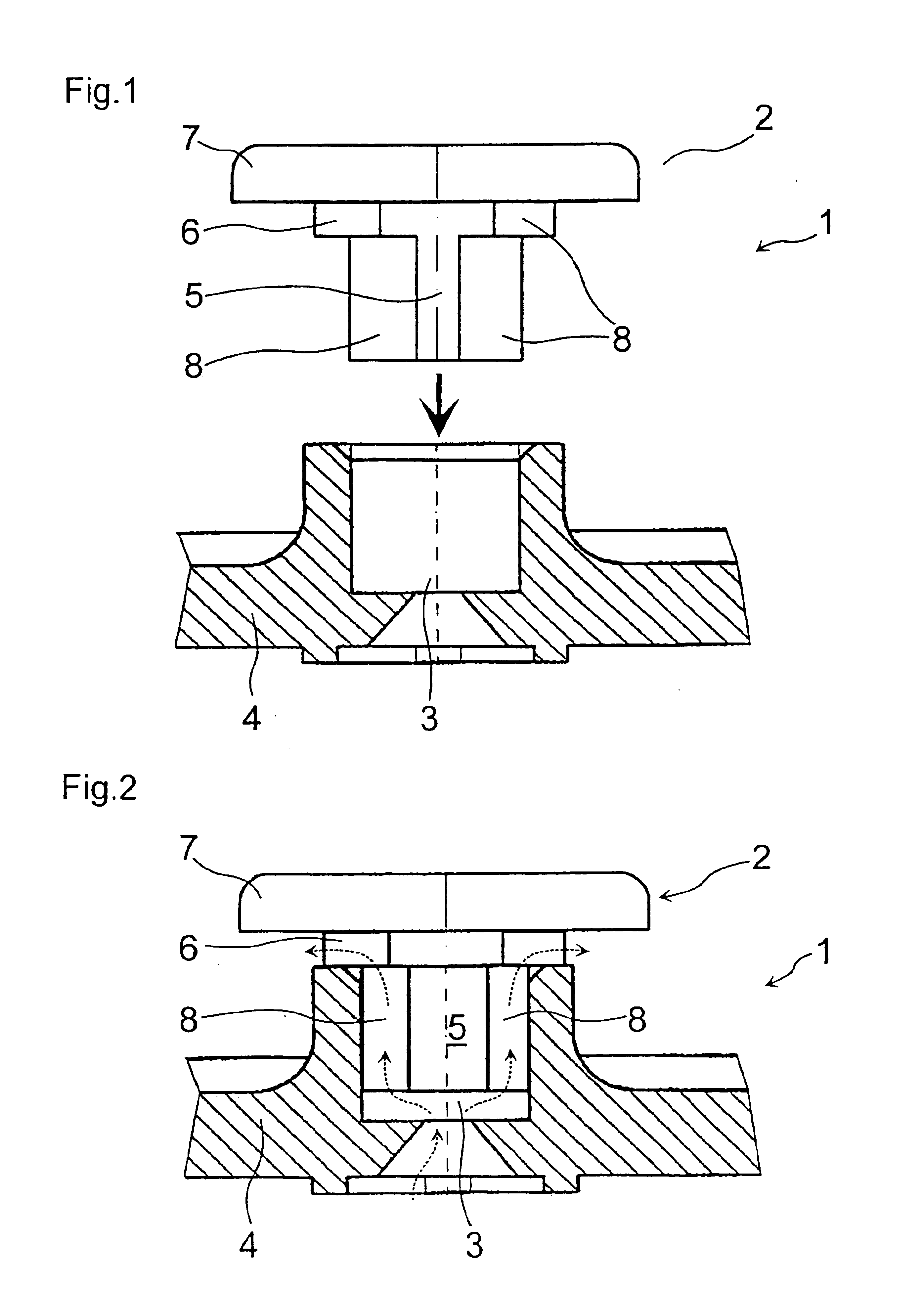
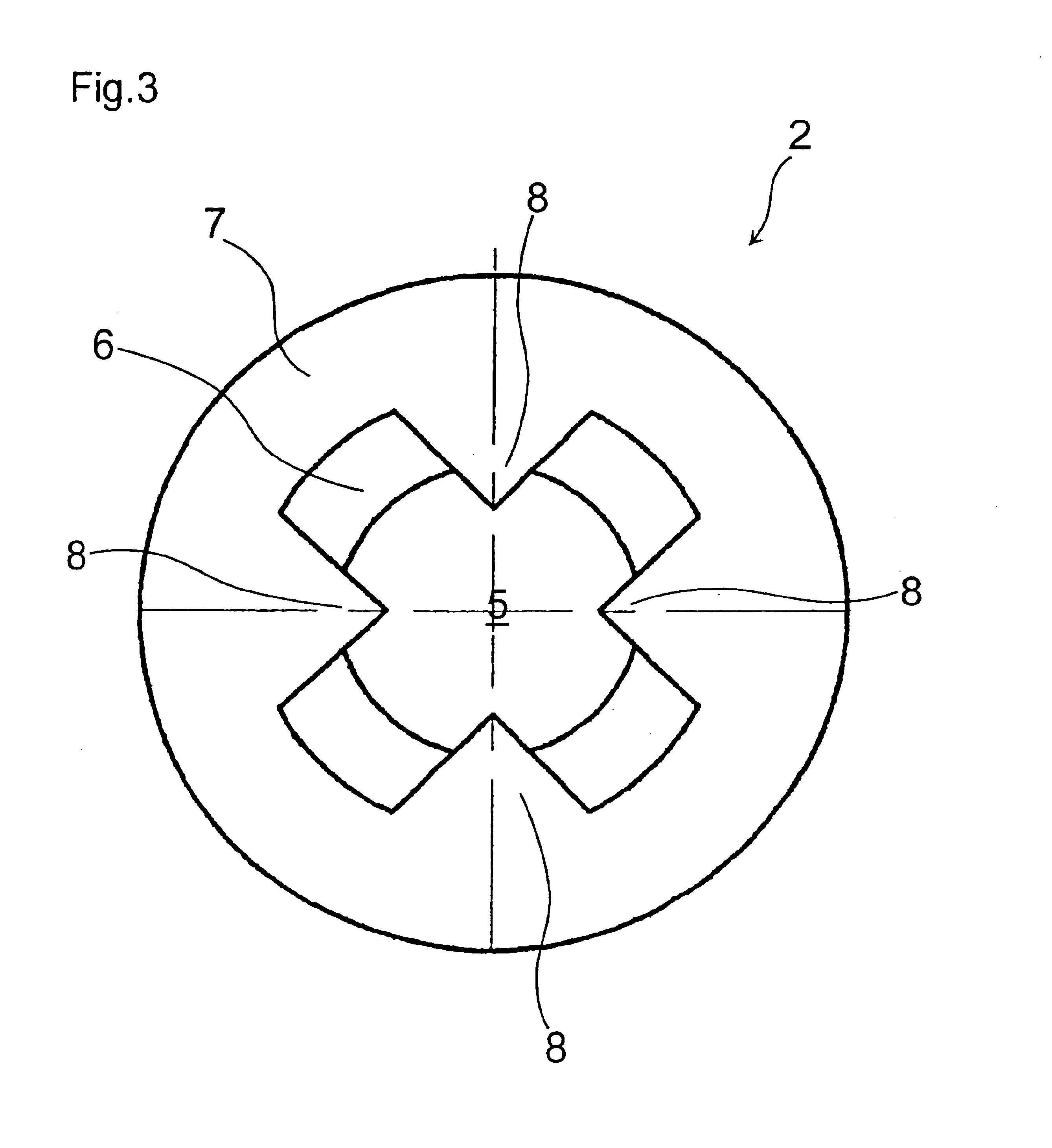
cartridge for an inkjet printer, for example, merely has a round cross section with no ribs or additional depressions as is the case in the state of the art, so that it can be reproducibly created with sufficient high precision using common manufacturing methods. For the sealing piece in accordance with the invention, i.e., the stopper provided with the channel-like depressions, the same holds true as a matter of principle. Specifically, its standard cylindrical form is modified only by the axially continuous channels or grooves that are formed into its outside, which, taking into consideration modern plastic injection-molding manufacturing techniques, can also be carried out with markedly little effort. Sufficiently high precision and reproducibility is likewise assured in every case. Specifically, during the manufacturing of the stopper the depressions are given a larger open cross section than is necessary later for the ventilation apertures formed from it, since the adjustment of this nominal cross section takes place--as has been described earlier--only when it is pressed into the passageway in the housing. The larger open cross section during the manufacturing of the depressions simplifies production when conventional injection molding techniques are used.
In comparison with the state of the art, the use of a sealing piece made of injection-molded plastic has the added
advantage that no additional parts such as
glass spheres, etc., have to be purchased in addition, and the manufacturing is simpler and less expensive as a result.
Moreover, the design according to the invention has the special
advantage that for a given
diameter of the passageway in the wall, through the design of the cross section, the depth, the shape and the number of depressions, the amount of oversize, and the choice of elastic material, it is possible to adjust the properties of the ventilation configuration, and thus the best possible
adaptation to the given requirements can take place.
Preferably, the channel-like depression is given a V-shaped cross section. This shape is easy to manage in terms of
manufacturing technology, and is also especially favorable in terms of the deformation while being pressed into place in the passageway in order to form a fine gap with a defined cross section. The depression can also have a U-shaped or other cross section as well.
The invention also includes the method for manufacturing a ventilation aperture of small cross section in a container wall, specifically, in a ink tank of an inkjet printer as was explained in some detail above. This method makes particular use of knowing how to manufacture an easily produced depression of larger cross section when the stopper is being pressed oversized into a predetermined wall passageway, whereby the depression is squeezed together to the nominal dimension of the cross section of the ventilation aperture while reducing the cross section.
The fastening of the stopper, which, like the wall, is made of a
thermoplastic, can be carried out very easily by means of
ultrasonic welding, whereby only an
ultrasonic excitation of the container wall must be carried out such as is already being done, for example, when the container wall is placed onto and ultrasonically welded to a container. Because of the
mass ratios of wall and stopper, they are placed into relative movement, as a result of which they are nondetachably welded to one another.


 Login to View More
  Login to View More