[0012]We have discovered that glypican-1 expression-both mRNA and
protein—is dramatically up-regulated in human cancers. We have also found that glypican-1 is highly expressed by human
pancreatic carcinoma cell lines
in vitro, and that in such cells glypicans (and no other classes of HSPGs) are uniquely required for FGF2 and HB-EGF induced mitogenesis in the case of pancreatic
cancer and FGF2, HB-EGF and HGF in the case of
human breast cancer. Ten of twenty breast cancer samples exhibited moderate to high levels of glypican-1 mRNA. The glypican-3 mRNA transcript was expressed at moderate to high levels in 5 of 20
normal breast tissue samples. In the breast cancers, it was expressed at moderate to high levels in 6 of 20 samples. The glypican-4 mRNA transcripts were below the level of detection in the normal samples, and present at low levels in 7 of 20 breast cancer samples. The 3.4- and 2.6-kb syndecan-1 mRNA transcripts were present at low levels in all 20
normal breast tissue samples. In contrast, in the breast cancers, both syndecan-1 transcripts were expressed at moderate to high levels in 9 of 20 samples. Enzymatic destruction of glypicans blocked the stimulatory effect of completely blocked the stimulatory effect of HB-EGF and FGF-2
in vitro. Together, these results demonstrate that glypican-1 may play a crucial role in the growth factor signaling pathways underlying aggressive
human cancer.
Transfection of cells with glypican-1 antisense markedly attenuated the growth stimulatory effects of HB-EGF, HRG-α, HRG-β, FGF2 and HGF confirming the importance of glypicans in breast cancer and suggesting the use of antisense or other factors that decrease glypican-1 as therapeutic agents for breast cancer.
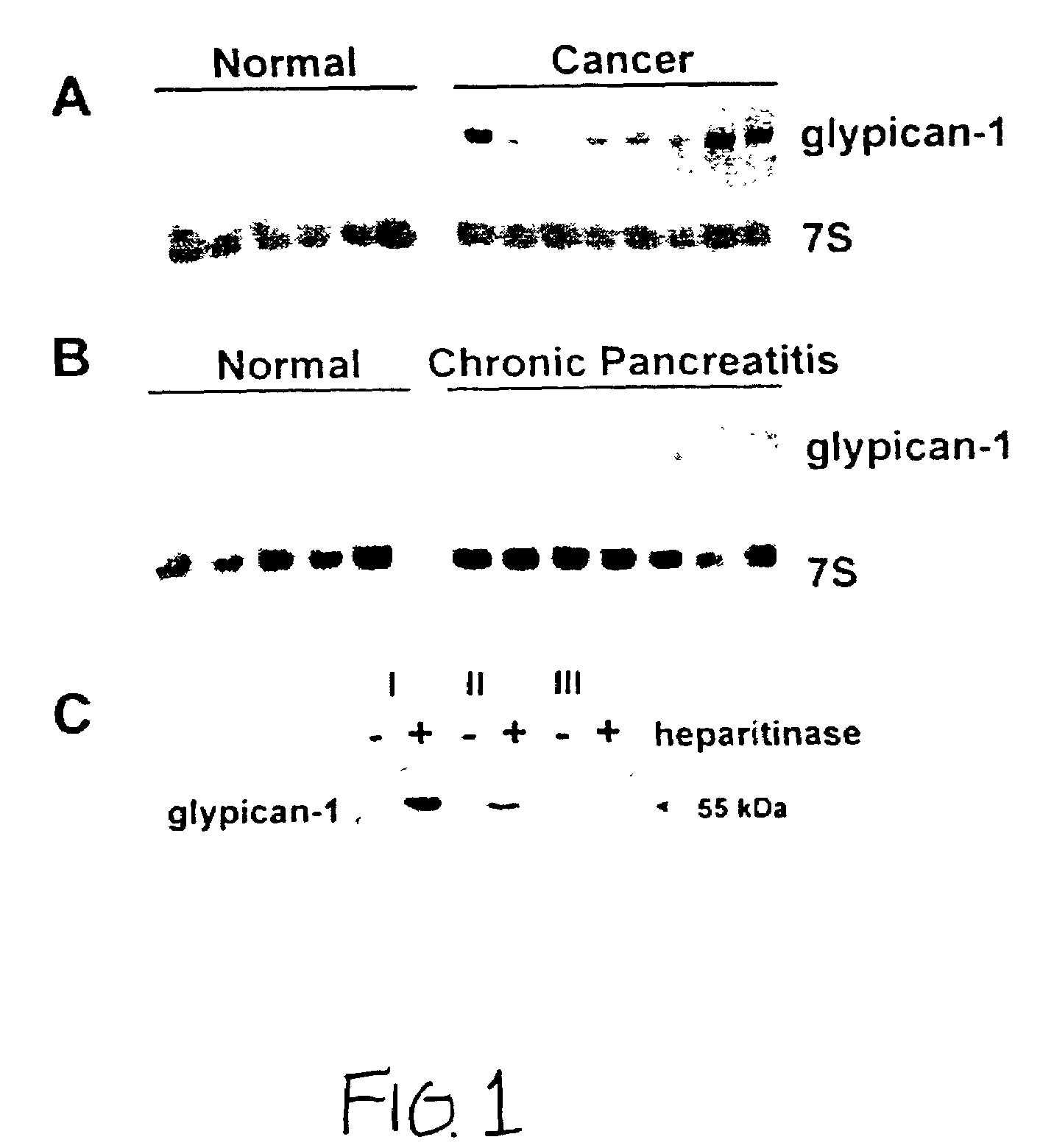
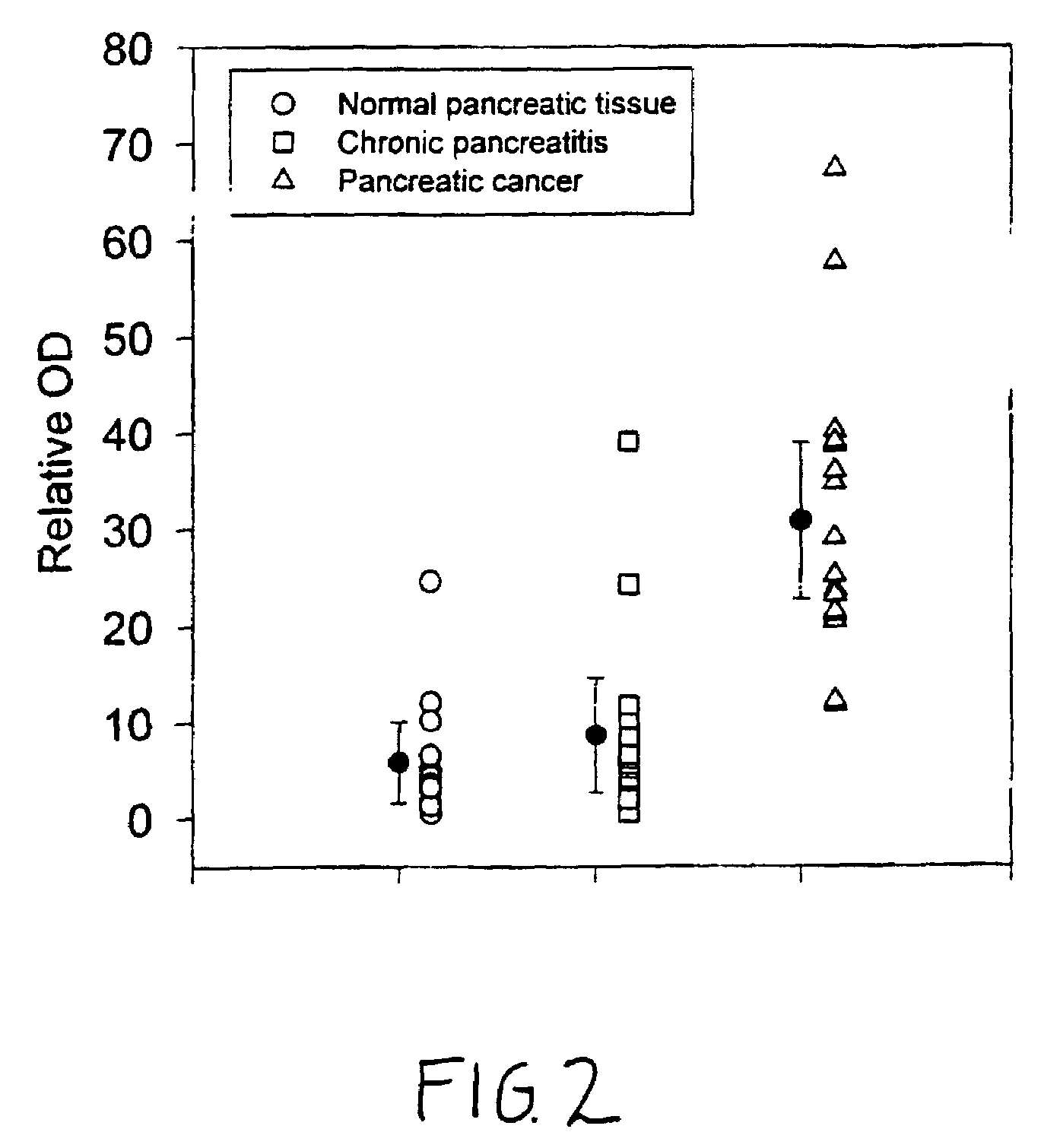
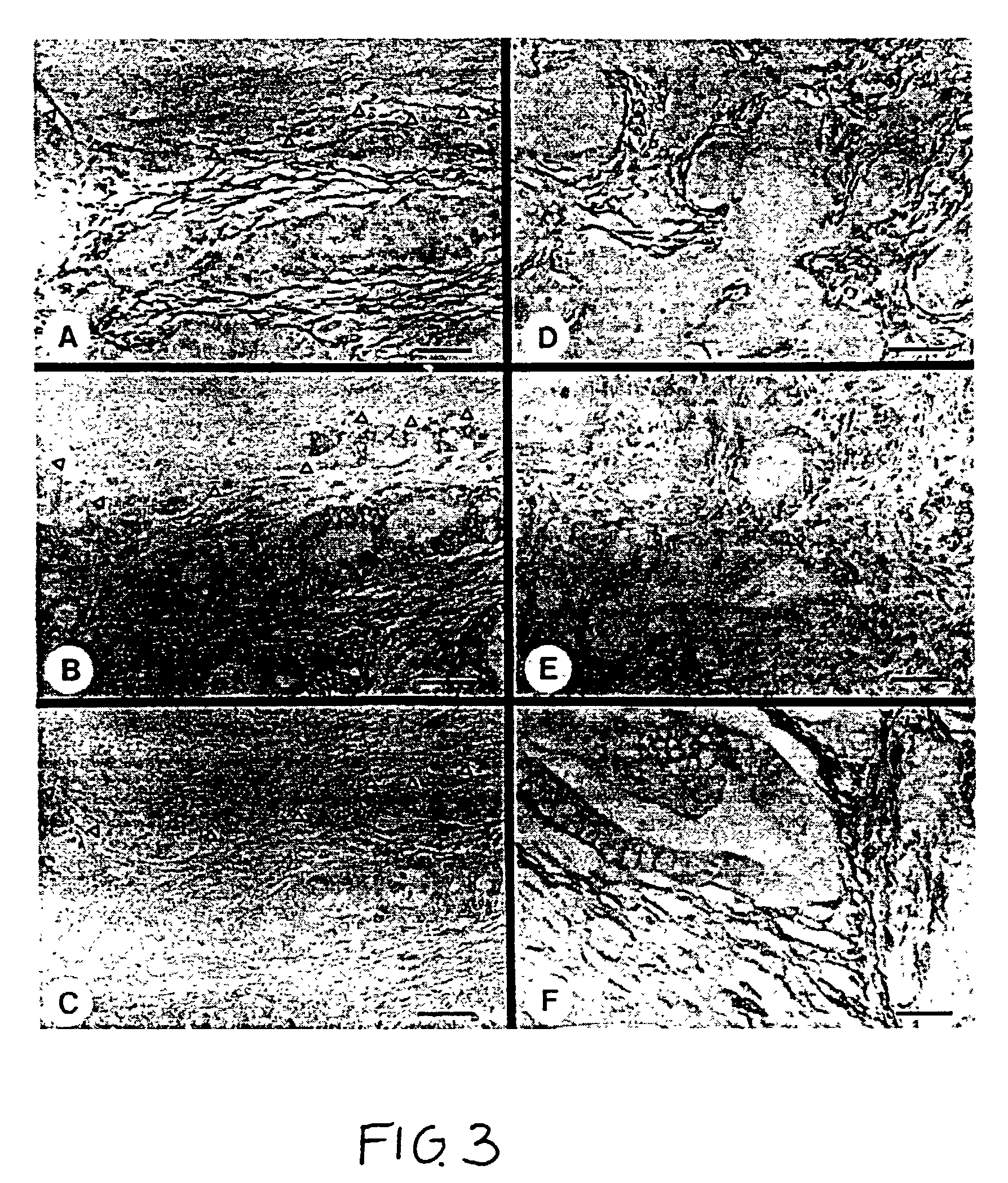
[0014]We have discovered that the glycosylphosphatidylinositol-(GPI-) anchored HSPG glypican-1 is strongly expressed in
human breast and pancreatic cancer—both by the cancer cells and in the case of pancreatic cancer the adjacent fibroblasts—whereas expression of glypican-1 is low in the normal
pancreas and in chronic
pancreatitis. Treatment of two
pancreatic cancer cell lines, which express glypican-1, with the
enzyme phosphoinositide-specific
phospholipase-C (PI-PLC) abrogated their mitogenic responses to two heparin-binding growth factors that are commonly overexpressed in pancreatic cancer:
fibroblast growth factor-2 (FGF2) and heparin-binding EGF-like growth °factor (HB-EGF). PI-PLC did not alter the response to the non-heparin binding growth factors EGF and
insulin-like growth factor-1 (IGF-1). Treatment of MDA-MB-231 and MDA-MB-468
breast cancer cells with phosphoinositide-specific
phospholipase-C (PI-PLC) abrogates the mitogenic response to two heparin-binding growth factors, heparin-binding
epidermal growth factor-like growth factor (HB-EGF) and
fibroblast growth factor-2 (FGF-2). Syndecan-1 is also expressed at high levels in breast cancer tissues as well as
breast cancer cells by comparison with breast normal tissues. However, it is not removed from cell-surface by PI-PLC treatment and clones expressing the glypican-1 antisense did not decrease syndecan-1 levels. Stable expression of a form of glypican-1 engineered to possess a
transmembrane domain instead of a GPI-anchor conferred resistance to the inhibitory effects of PI-PLC on growth factor responsiveness in pancreatic and
breast cancer cells. Furthermore, temporary or permanent
transfection of a glypican-1 antisense construct attenuated glypican-1
protein levels and the mitogenic response to FGF2 and HB-EGF. Thus, glypican-1 plays an essential role in the responses of pancreatic and breast cancer cells, and most likely in other glypican-responsive carcinomas as well, to certain mitogenic stimuli, that it is relatively unique in relation to other HSPGs.
Glypican can be used to detect the
carcinoma in vitro and therapeutics that either bind to (e.g., antibodies or drugs), remove (e.g., enzymes) or prevent the expression (e.g., antisense constructs) of surface of the
extracellular domain of glypican-1 are effective in retarding the growth of glypican-responsive carcinomas such as human breast cancer.


 Login to View More