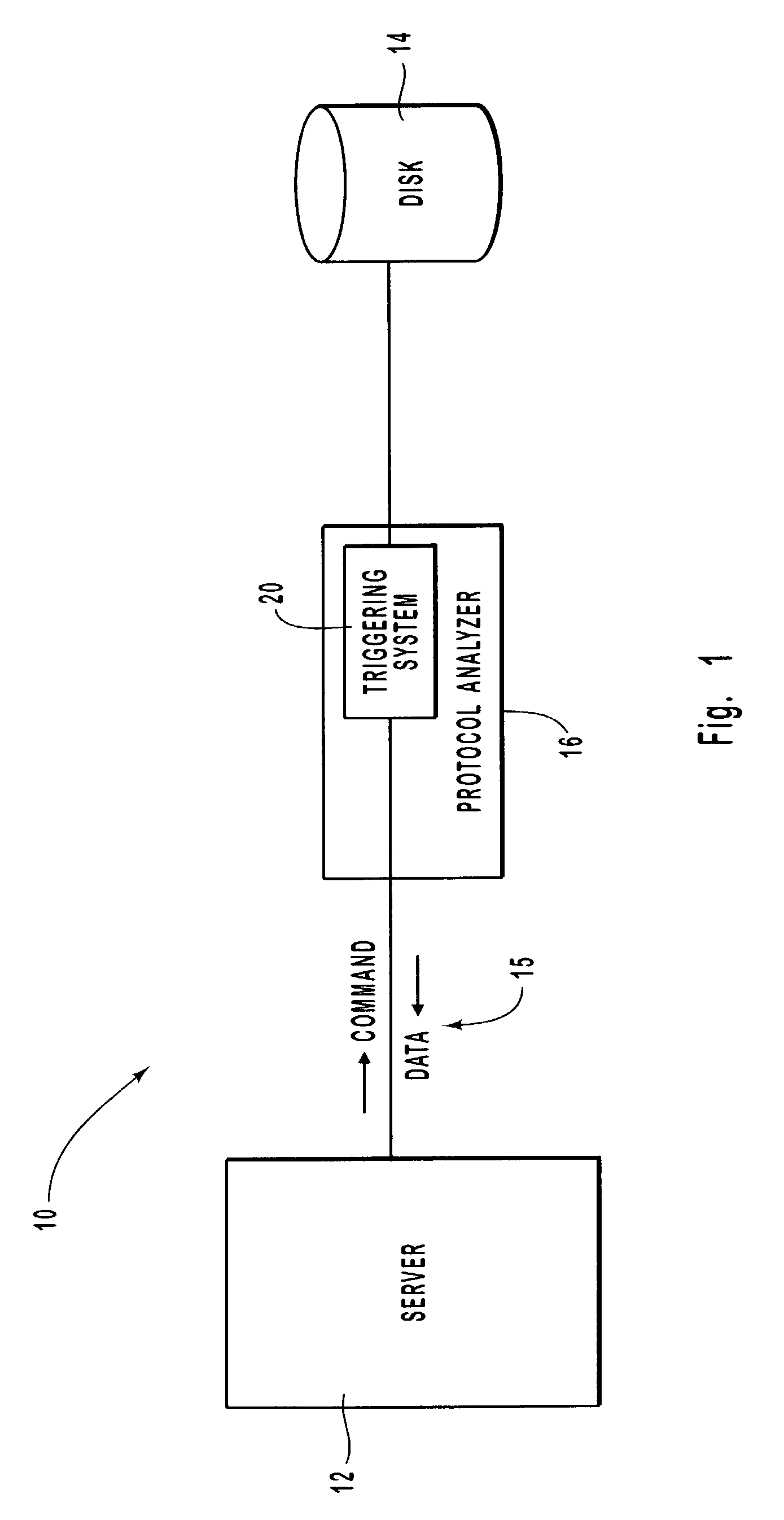
[0011]The present invention has been developed in response to the above and other needs in the art. Briefly summarized, embodiments of the present invention are directed to a system and method for triggering data capture in a high-speed communications network. The present triggering system is preferably incorporated as a component of a protocol analyzer (“PA”) or other appropriate
data processing device. In contrast to known triggering systems, which require difficult identification and
programming of triggers based on specific bit patterns in the communications
network data stream, the present invention enables the
end user to easily select triggers for data capture based on recognizable and definable characteristics of the
data stream. Moreover, the present triggering system enables triggering based on a wider range of network traffic characteristics than what is possible with known protocol analyzers.
[0012]The statistics or characteristics of the data packets contained in the
data stream of the communications network are synchronously analyzed and accumulated by embodiments of the present system on a real-time, line speed basis, thereby providing a higher level of information about the data
stream than what is possible in known PAs. This enables the PA to perform comprehensive
data analysis and capture on communications networks operating at line speeds exceeding one and two Gbits per second without suffering unintended
data loss because of subsequent overwriting of the capture buffer. Significantly, the present invention enables the data to be analyzed at a rate equal to the line speed of the communications network, thereby allowing desired data portions to be captured for later analysis by a
technician or other user. This serves as a significant advancement over known systems, where initial analysis of the data
stream at a rate synchronous with the line speed is not possible.
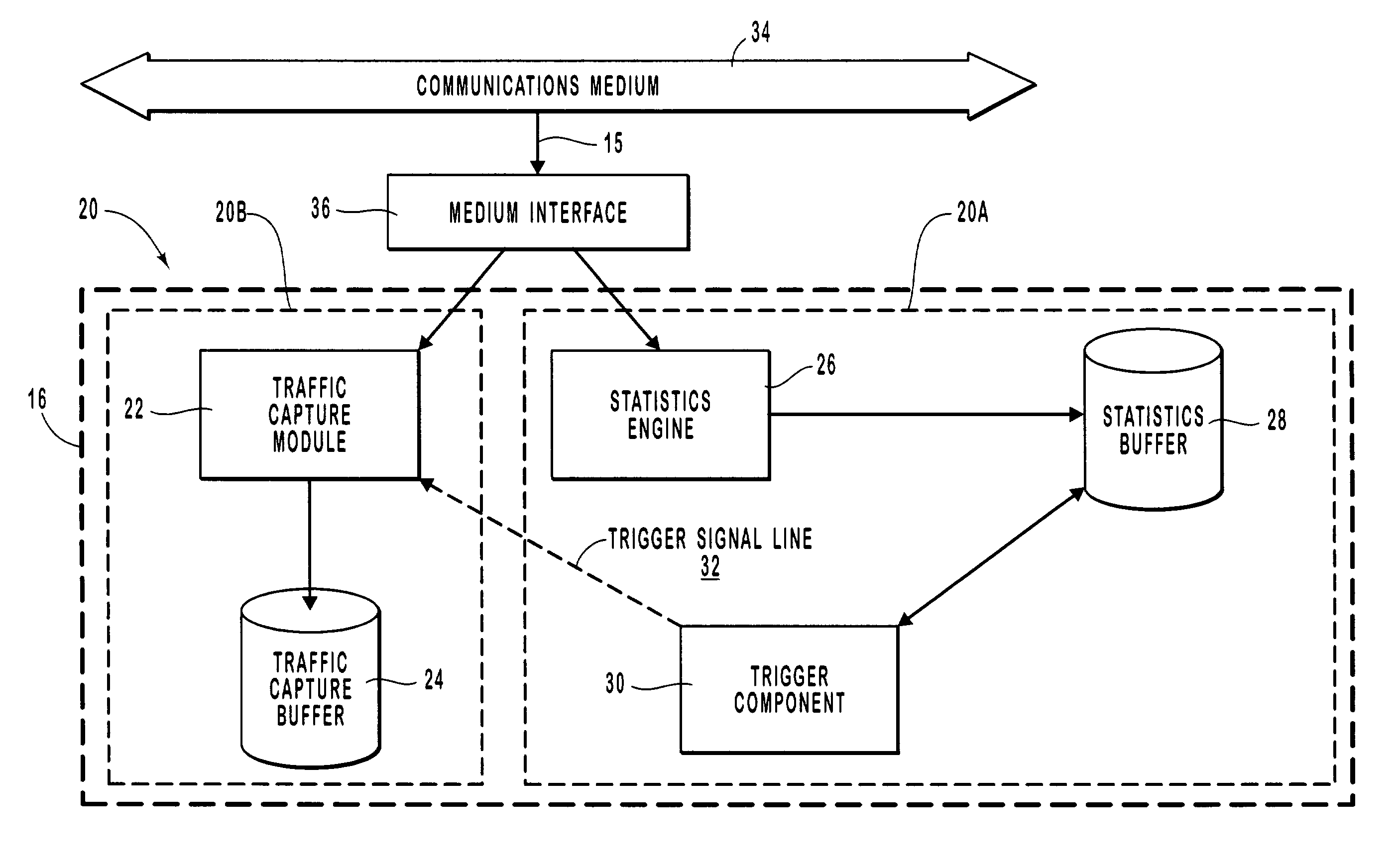
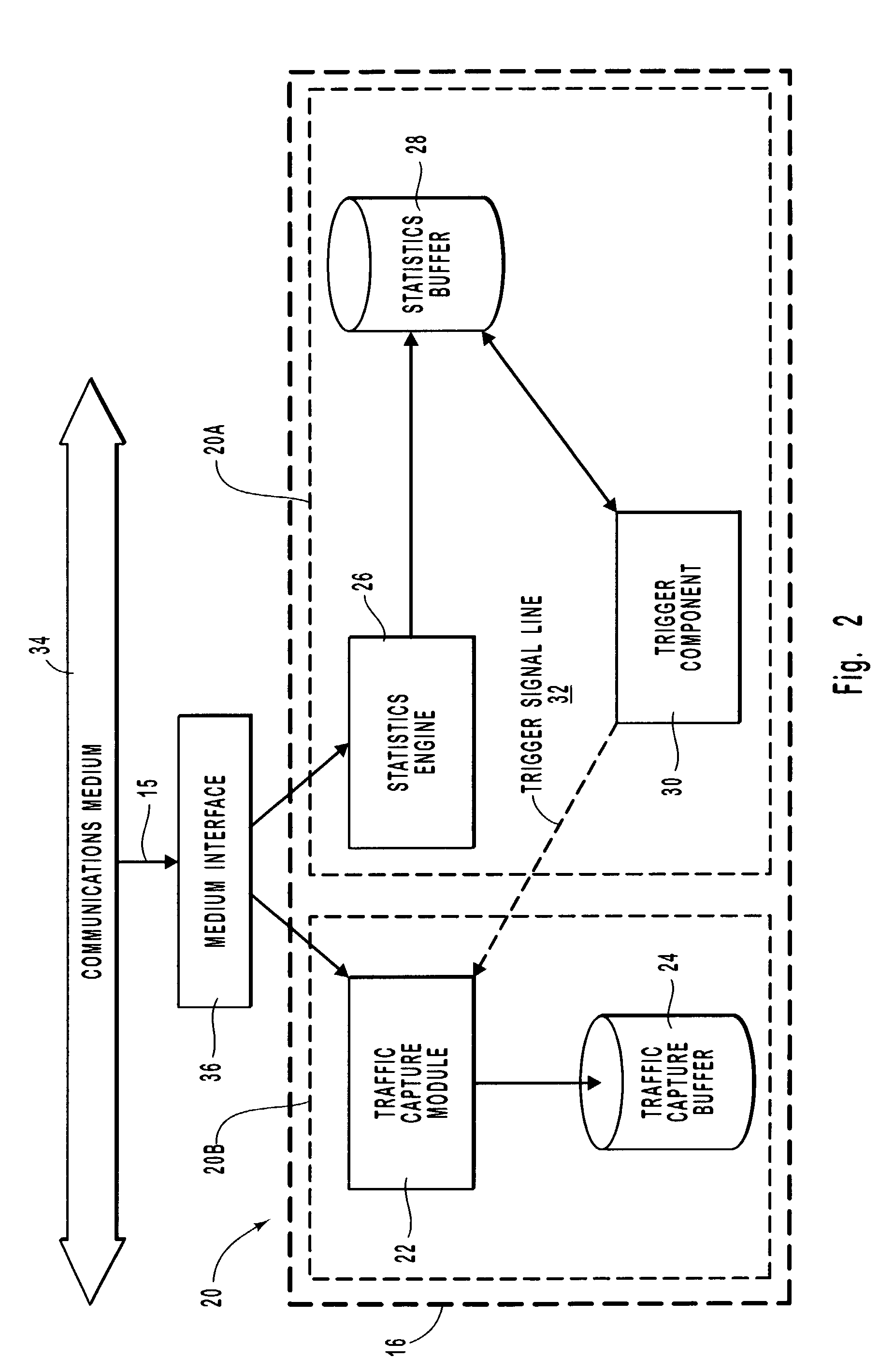
[0013]The triggering system generally comprises a statistics engine, a statistics buffer, a trigger component, and traffic capture components. The statistics engine performs high-level analysis on communications traffic that is inputted to it via a communications medium. Pertinent statistical and transactional information relating to a chosen trigger is derived from analysis of the data by the statistics engine and is stored in the statistics buffer. The trigger component monitors the information stored by the statistics buffer to determine when the trigger condition of the selected trigger has been met. The traffic capture components respond to instruction by the trigger component to retain the portion of the communications traffic relating to the trigger condition. As already mentioned, these components operate at line speed so as to eliminate any latency between discovery of the trigger condition and retention of the data relating to it.
[0014]The trigger condition utilized by the trigger can comprise statistical and transactional characteristics of the data stream. Trigger conditions that are based on these characteristics are more easily definable than conditions based on specific bit patterns. For example, the present triggering system can be set to trigger on a characteristic of an atomic (multiple event) transaction, such as when the transactional
response time between two specified network devices exceeds a certain time value. Known bit pattern triggering systems are unable to perform such time-based, transactional triggering. Thus, instead of requiring the user of the protocol analyzer to set a discrete
event trigger based on particular
data content, more abstract symptomatic characteristics of the data stream, such as average transactional data
throughput or average error rates over time, may be chosen as trigger conditions. This enables an
end user with limited knowledge of the protocol and nature of the communications network to more easily and accurately set triggers, thereby allowing the protocol analyzer to capture the desired data for subsequent analysis.
[0017]In sum, the present system expands the functionality of protocol analyzers by triggering data capture based on high level statistical characteristics of the communications network data stream, including transactional elements. Thus, triggers based on such statistical elements can be used by the PA in order to capture the desired data for further analysis at a later time and correction of problem conditions present in the data stream.



 Login to View More
  Login to View More