
Methods and apparatus for electrophoretic mobility determination using phase light scattering analysis
a phase light scattering and electrophoretic technology, applied in the field of electrophoretic mobility determination, can solve the problems of (usually irreversible) agglomeration, inaccurate and/or ineffective, and frequency shift method limitation
- Summary
- Abstract
- Description
- Claims
- Application Information
AI Technical Summary
Benefits of technology
Problems solved by technology
Method used
Image

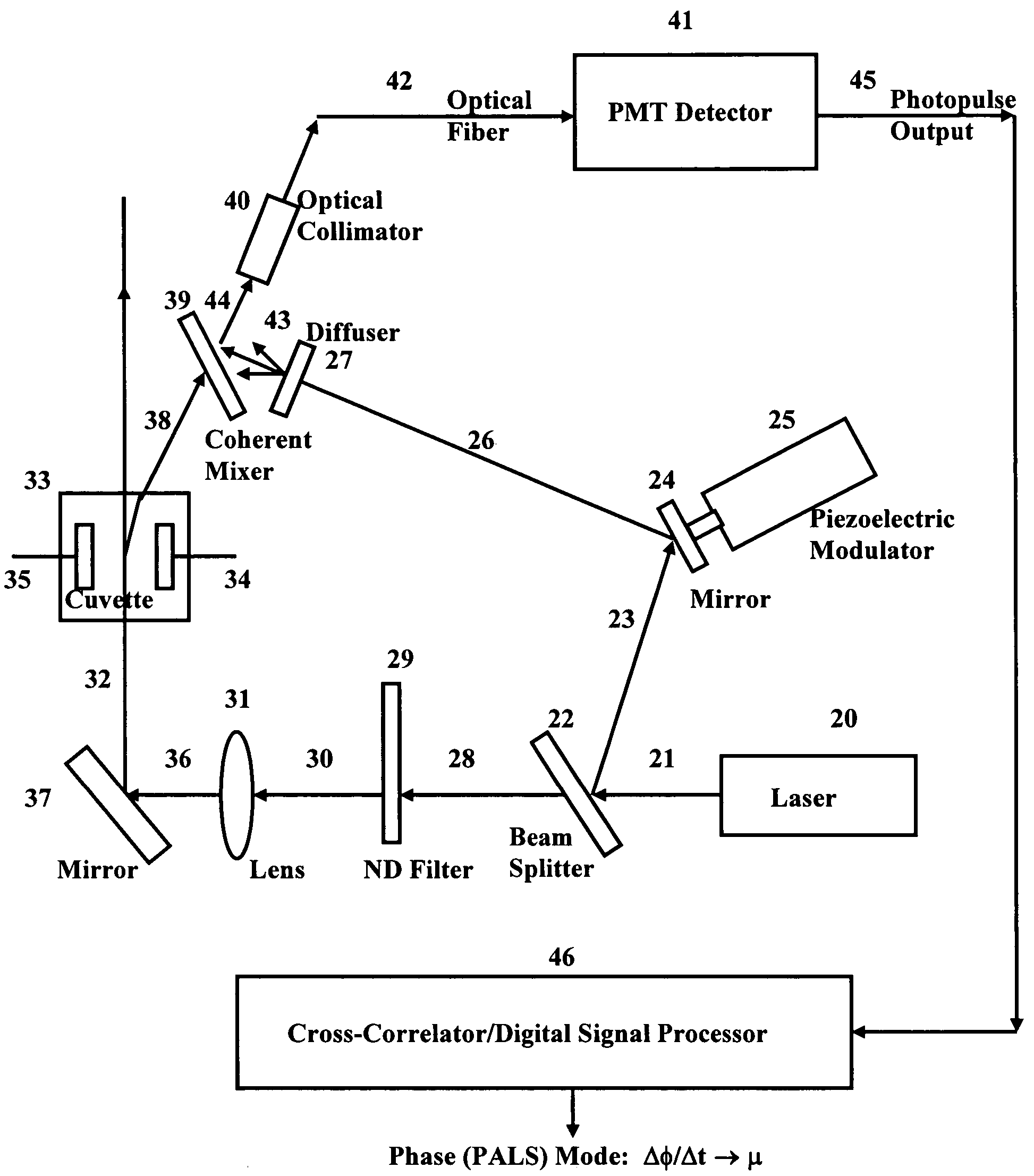
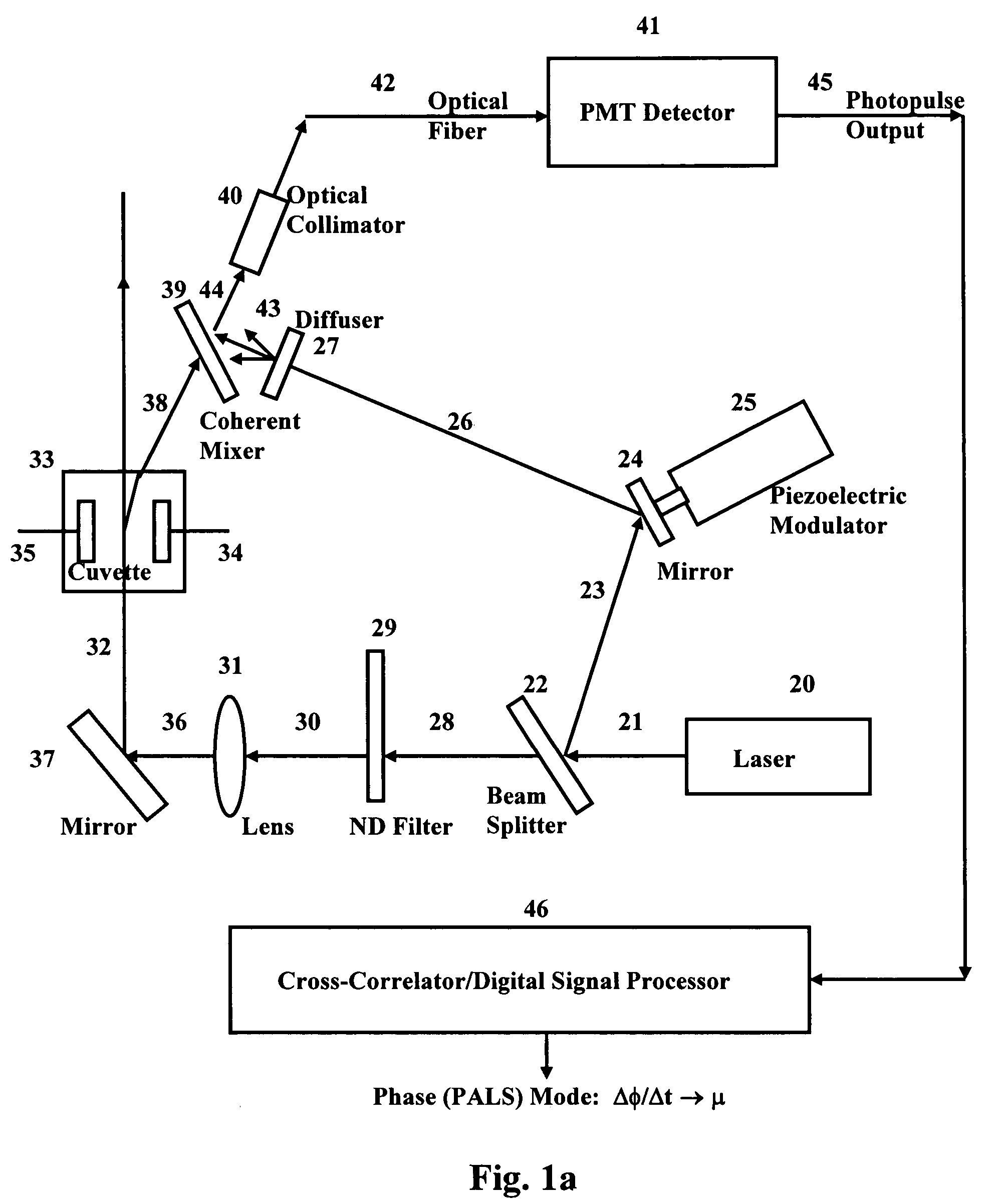
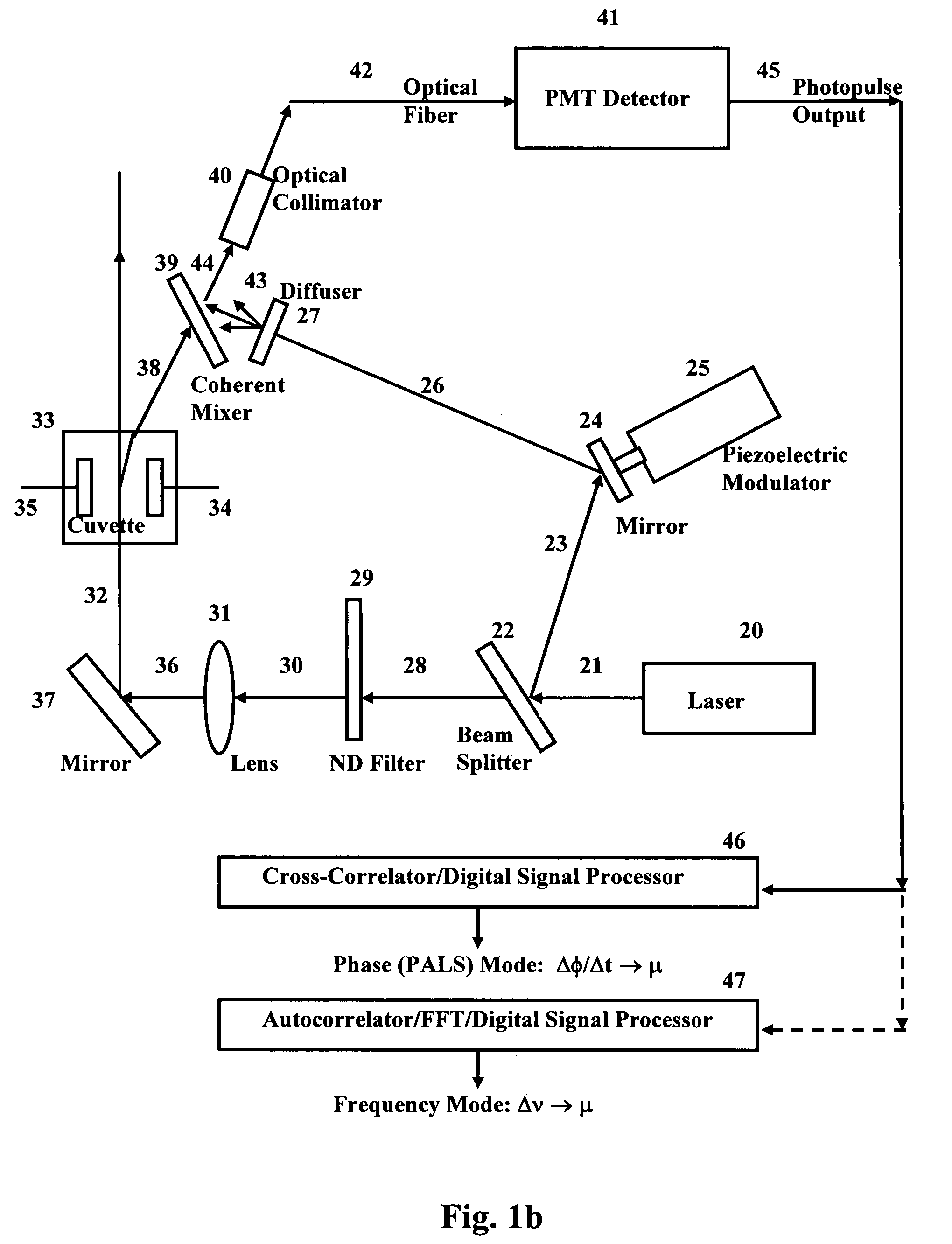
Examples
Embodiment Construction
[0025]Various aspects will now be described in connection with exemplary embodiments, including certain aspects described in terms of steps that can be performed by elements of a computer system. For example, it will be recognized that in each of the embodiments, computations and analyses can be performed by specialized circuits or circuitry, by program instructions being executed by one or more processors, or by a combination of both. Thus, the various aspects can be embodied in many different forms, and all such forms are contemplated to be within the scope of what is described.
[0026]In an exemplary embodiment, a particle moving under the influence of an applied electric field and illuminated by an incident laser light wave gives rise to a scattered light wave that is shifted in phase with respect to the incident wave. The extent of the phase shift depends on the angle of scattering, θ, and the velocity of the particle, v, which in turn depends on its electrophoretic mobility, μ, ...
PUM
| Property | Measurement | Unit |
|---|---|---|
| velocity | aaaaa | aaaaa |
| velocity | aaaaa | aaaaa |
| viscosity | aaaaa | aaaaa |
Abstract
Description
Claims
Application Information
 Login to View More