
System for control of fusing member temperature
a technology of temperature control and fusing member, applied in the field of printing, can solve the problems of excessive toner offset, fuser roller may not have returned to working temperature, and degradation of the throughput rate of the receiver, and achieve the effect of improving the efficiency and accuracy of fuser control, and improving the temperature control of the fuser
- Summary
- Abstract
- Description
- Claims
- Application Information
AI Technical Summary
Benefits of technology
Problems solved by technology
Method used
Image

Examples
Embodiment Construction
[0031]The present description will be directed in particular to elements forming part of, or cooperating more directly with, apparatus and methods in accordance with the present invention. It is to be understood that elements not specifically shown or described may take various forms well known to those skilled in the art.
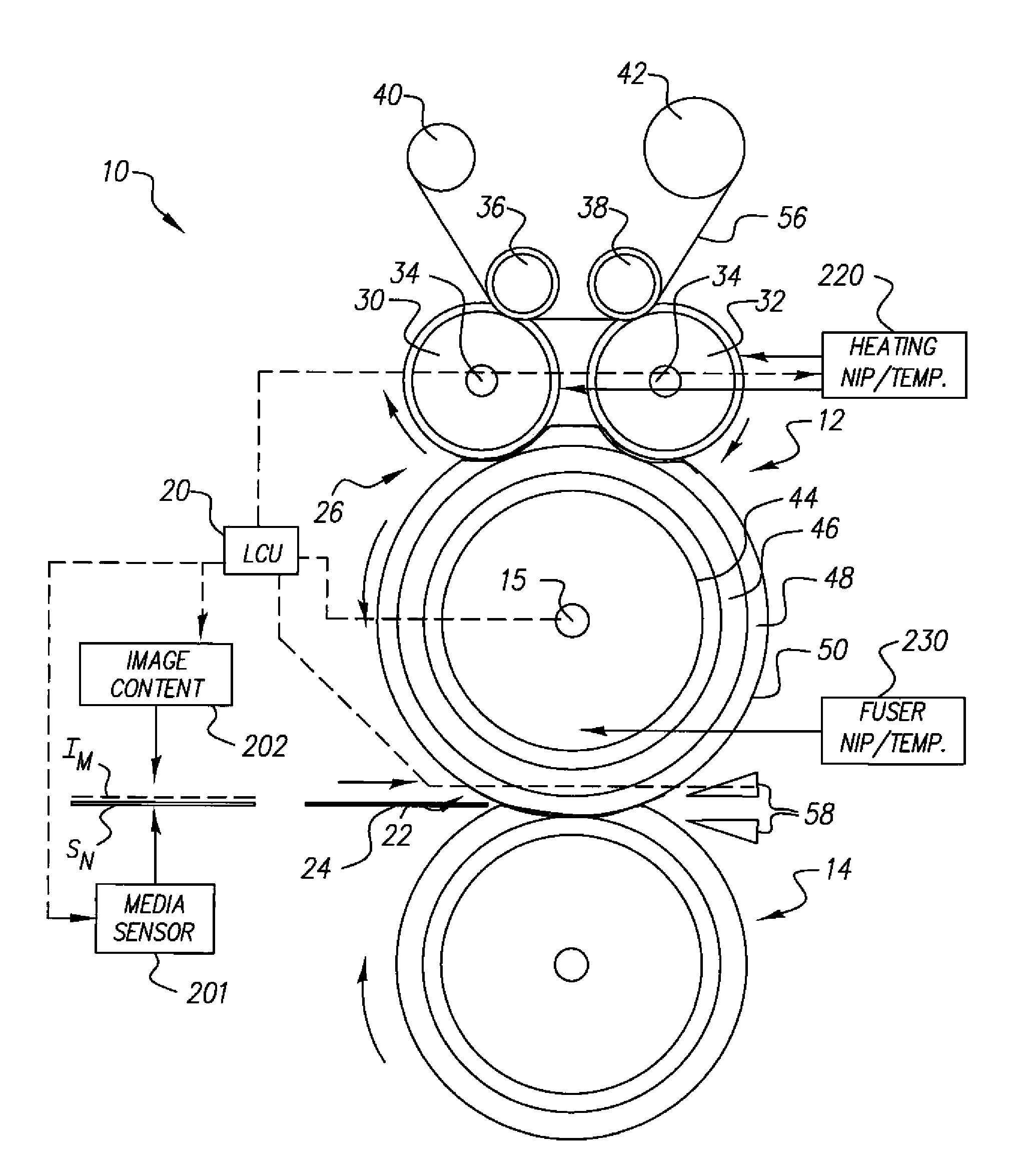
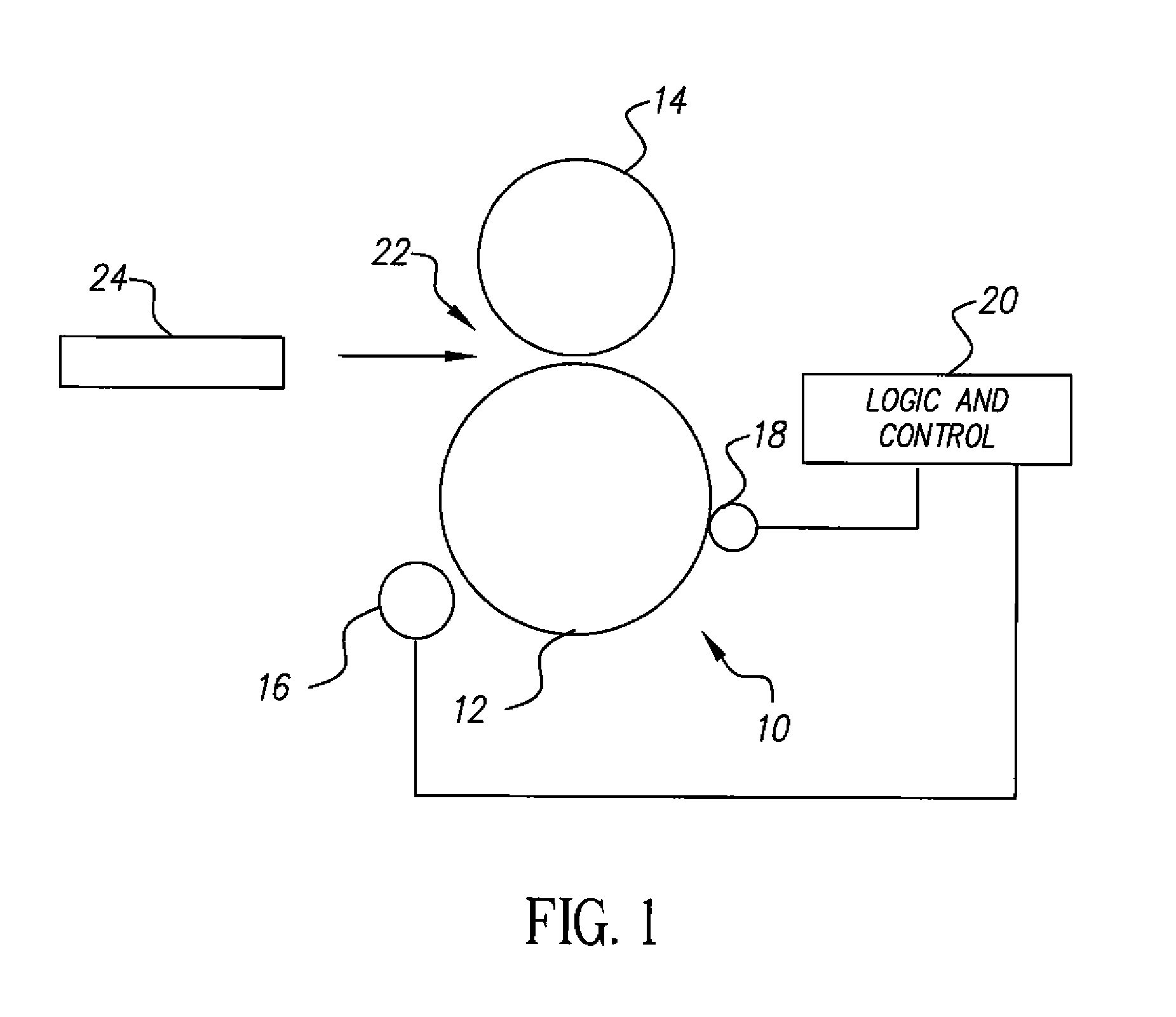
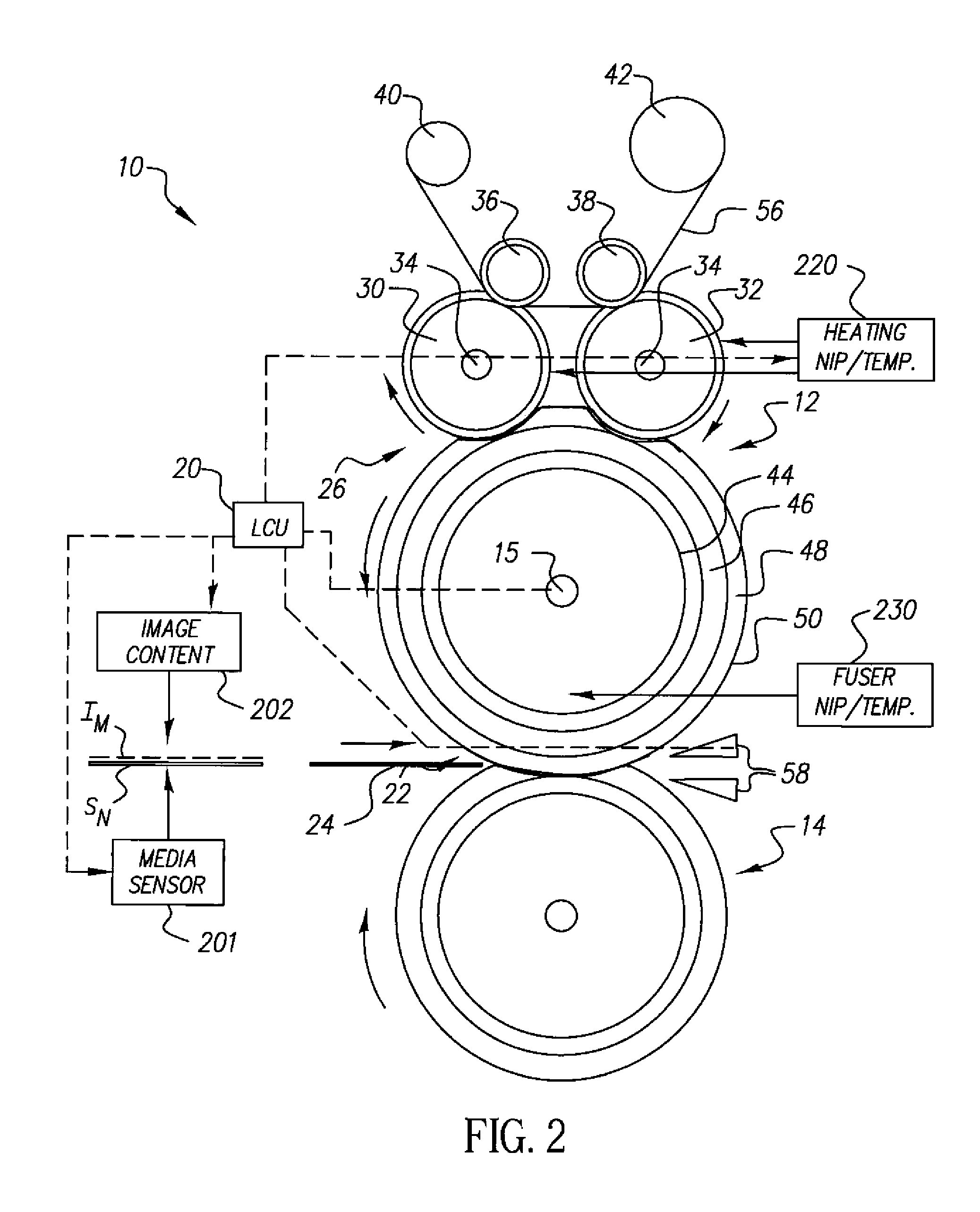
[0032]Various aspects of the invention are presented in FIGS. 1-7 which are not drawn to scale and in which like components are numbered alike. According to one aspect of the invention, the thermal response of the fuser with sheets being fed through the fuser is simulated in the fuser prior to feeding sheets through the fuser. The thermal response may be simulated in a manner that minimizes thermal droop, or it may be simulated in a manner that maintains a tentering force, or it may be simulated in a manner that accomplishes both. According to a further aspect of the invention, the thermal response of the fuser with sheets being fed through the fuser is controlled ...
PUM
 Login to View More
 Abstract
Description
Claims
Application Information
 Login to View More