Rotating shaft and motor rotor having the same

a technology of rotating shaft and motor rotor, which is applied in the direction of magnetic circuit rotating parts, dynamo-electric machines, etc., can solve the problems of rotor being stuck in the stator, delamination, and disturbance of normal operation of the motor rotor, so as to reduce the number of elements to be used, simplify the assembling operation, and simplify the structure

US7888835B2Inactive Publication Date: 2011-02-15SEMICON COMPONENTS IND LLC
22 Cites 13 Cited by

Patent Information

Authority / Receiving Office
US · United States
Patent Type
Patents(United States)
Current Assignee / Owner
Publication Date
2011-02-15
Estimated Expiration
Not applicable · inactive patent

Smart Images

  • Figure 1
    Figure 1
  • Figure 2
    Figure 2
  • Figure 3
    Figure 3
Patent Text Reader

Abstract

A rotating shaft disclosed by the present invention includes a plurality of bumps spacedly formed along an outer circumferential surface thereof. The bumps are each formed with two engagement portions extending outwardly and bilaterally and a deformation space therebetween. The engagement portions undergo resilient deformation toward the deformation space when subjected to a force, thus providing stable engagement with a magnetic body, protecting the magnetic body from cracks and damages during assembling, and enhancing yield. The present invention further discloses a motor rotor having the above-described rotating shaft.
Need to check novelty before this filing date? Find Prior Art

Description

BACKGROUND OF THE INVENTION

[0001] 1. Field of the Invention

[0002] The present invention relates generally to a motor rotor, and more particularly to a motor rotor and rotating shaft thereof having engagement structure for fixing magnetic bodies to the rotating shaft.

[0003] 2. Description of Related Art

[0004] A motor (electromotor) is used to convert electrical energy into mechanical energy so as to provide rotary motion. Besides directly providing rotary motion, the motor also can convert rotary mechanical energy into linear motion or vibrating motion by combining with different mechanisms.

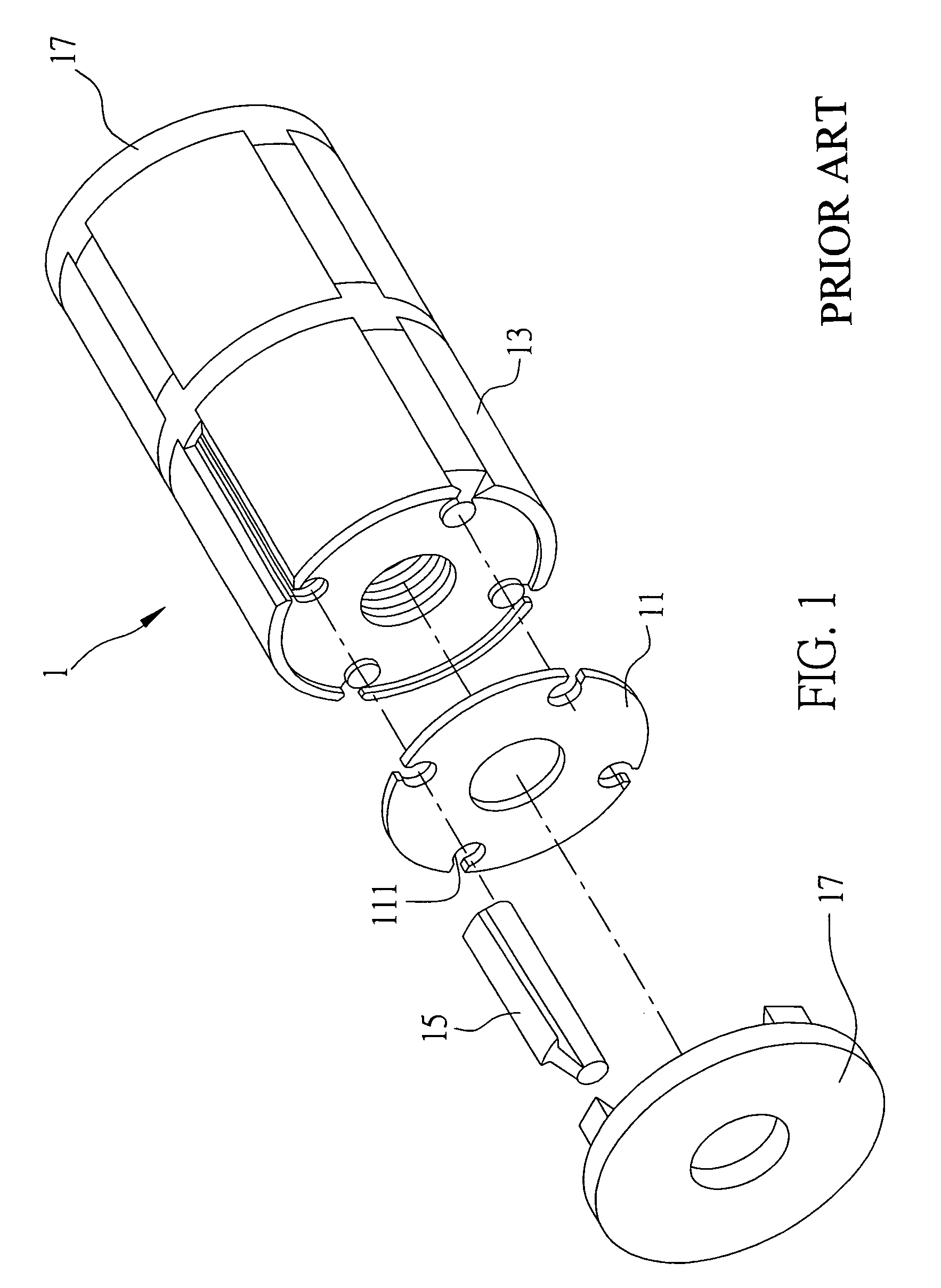
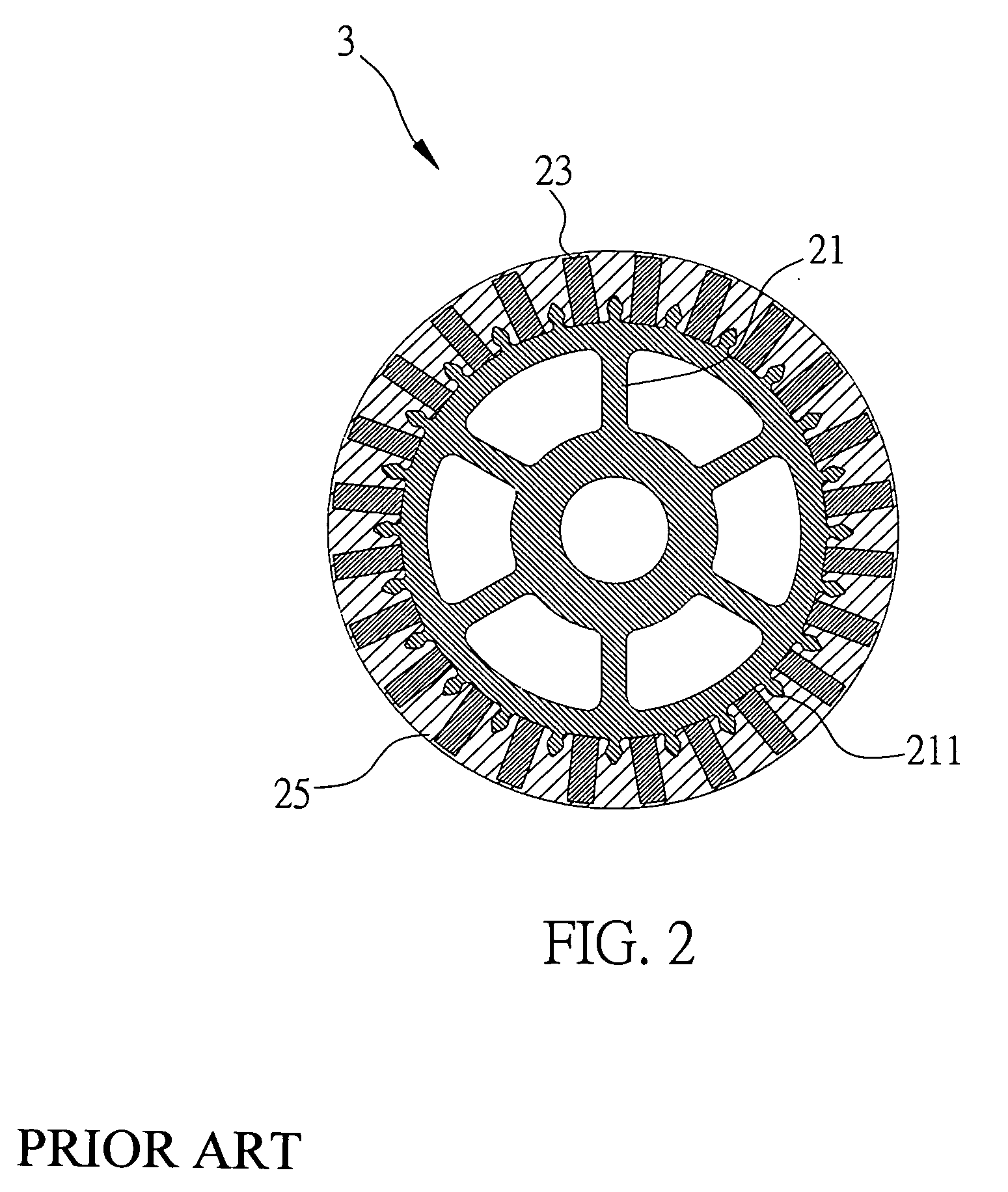
[0005] A motor for providing rotary motion comprises a stator and a rotor, wherein the stator is the stationary part of the motor, which provides a magnetic field; the rotor is the rotary part of the motor, which rotates according to the magnetic field. The rotor generally comprises a rotating shaft formed by stacking a plurality of silicon steel sheets and a plurality of permanent magnets spacedly adh...

Examples

Embodiment Construction

[0029]The following illustrative embodiments are provided to illustrate the disclosure of the present invention, these and other advantages and effects can be apparent to those skilled in the art after reading the disclosure of this specification.

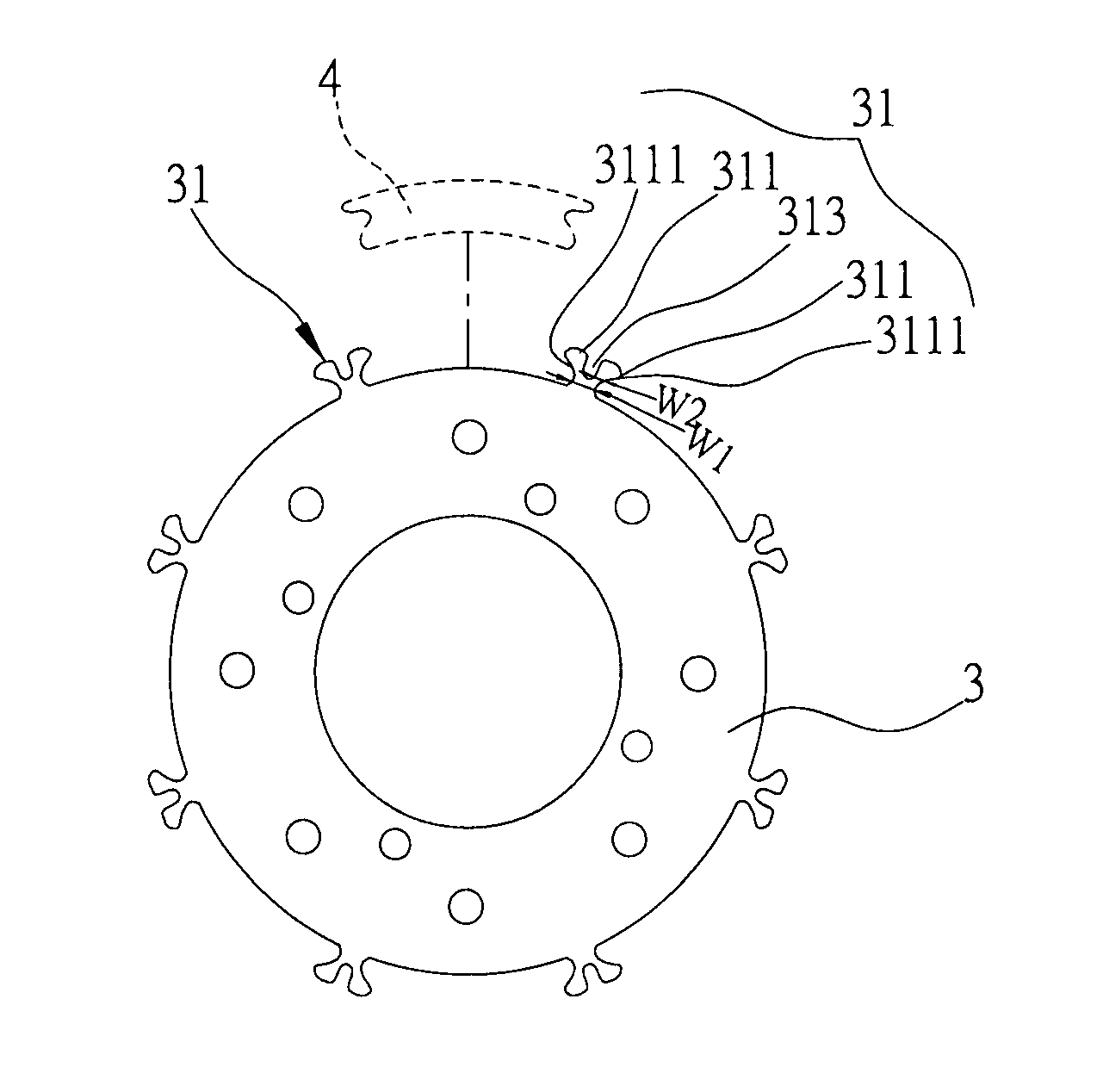
[0030]FIG. 3A is a structural diagram of a rotating shaft according to a preferred embodiment of the present invention and FIG. 3B is a locally enlarged view of FIG. 3A. As shown in FIGS. 3A and 3B, the rotating shaft 3 of the present invention has a plurality of bumps 31 spacedly formed along an outer circumferential surface thereof such that magnetic bodies 4 can be embedded between adjacent bumps 31, wherein, the bumps 31 are each formed with two engagement portions 311 extending outwardly and bilaterally and a deformation space 313 between the engagement portions 311, the engagement portions 311 can undergo resilient deformation toward the deformation space 313 when subjected to a force.

[0031]In the present embodiment, the rotating shaf...