[0009]The invention is a
system that allows a
technician to remotely control an MM scanner. The system of the present invention achieves this
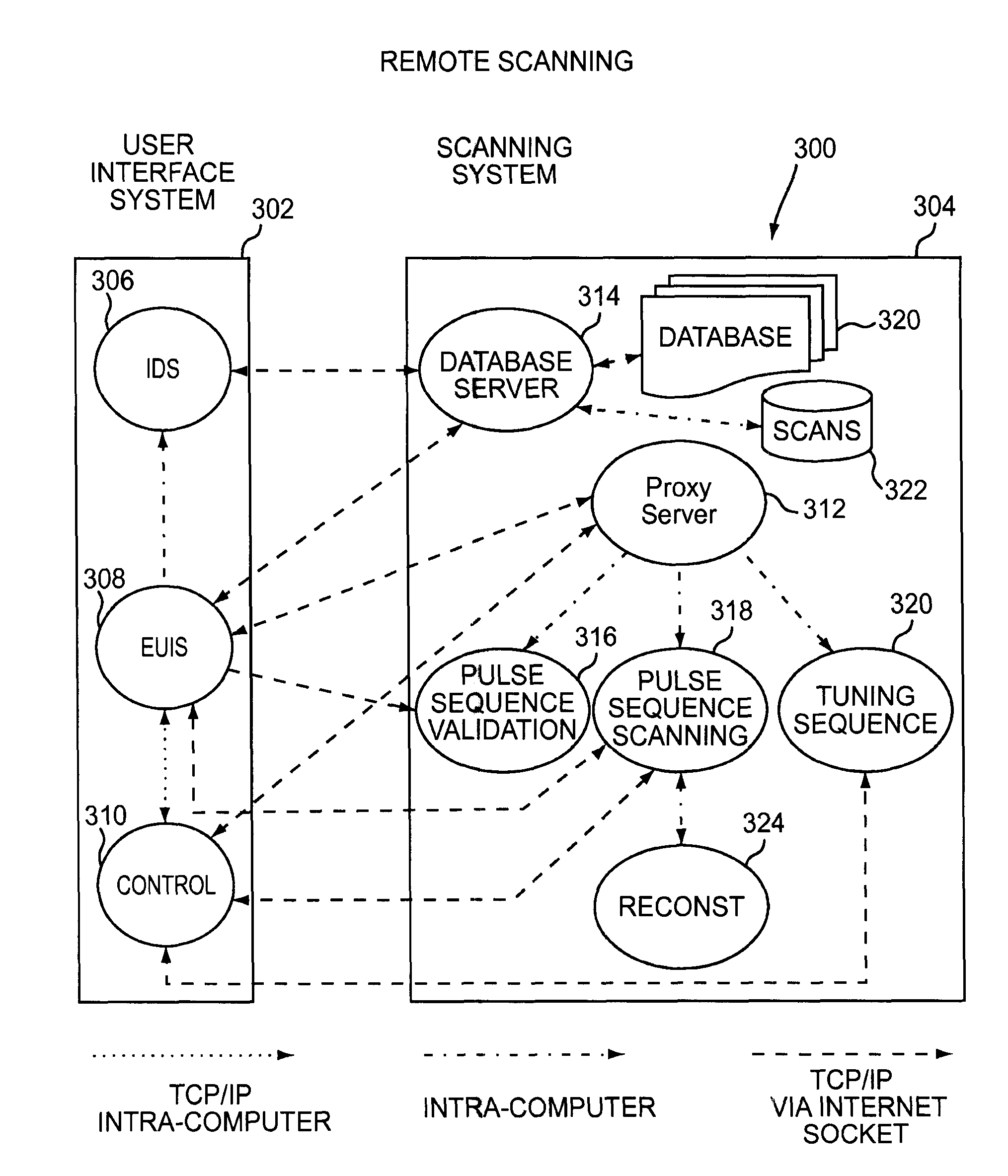
remote control capability by executing, through a proxy program, those portions of the software that directly interact with the MRI hardware at the MRI scanner computer. The software components that do not interact with the scanner are run on the local computer. Programs that must interact with
peripheral components of the scanner also use the proxy program. This communication linkage is established through a
library module, which can detect when a program must communicate through the proxy. Thus, the same
software modules can operate locally as well as remotely. This design distributes the
processing so that a user interface is provided to the remote operator that is the same as the user interface that would be provided to the
local operator. In addition to the user interface, the functionality of the MRI scanner related to scanning and image process enabled at the remote space is the same as that available locally at the scanner. Distributing the
processing in this manner also minimizes utilization of bandwidth on the communications channel used.
[0010]The invention is also a method of controlling an MRI scanner and remotely viewing
MRI image. According to the process of the invention, a technician at a location that is remote from the scanner location supervises preparation of the patient by a local assistant, initializes the scanner, runs the scan procedure, reviews images, and saves image data, much as a technician at the scanner would perform the process. The flexibility provided by the present invention allows the remote technician, the scanner, and the
image storage space to be located anywhere with respect to each other. The different spaces can be separated by floors within the same building, or can be located in different buildings in completely different geographical areas.
[0012]The invention is also a cooperative business method of
pooling personnel and equipment resources for performing MRI diagnostic scanning and imaging, to provide a shared capability that does not exist with conventional scanning systems. This capability provides advantages, for example, in rural areas where scanners and scanning technicians are in short supply. According to the business method of the present invention, a technician's skills can be shared by widely dispersed communities. Likewise, scanner resources can be shared within communities, by allowing a technician to control several scanners within, for example, a metropolitan region.
[0015]A
highly skilled radiologist or scanning technician in one location can control and supervise the operation of a scanner in another location, regardless of the distance. In addition, a
highly skilled scanning technician can operate many scanning centers from a central location, thereby reducing the overall operating expenses of the scanning centers.
[0016]Exemplary embodiments of the invention include a local MRI scanner, a
network connection (for example, a
local area network,
wide area network,
metropolitan area network,
satellite network,
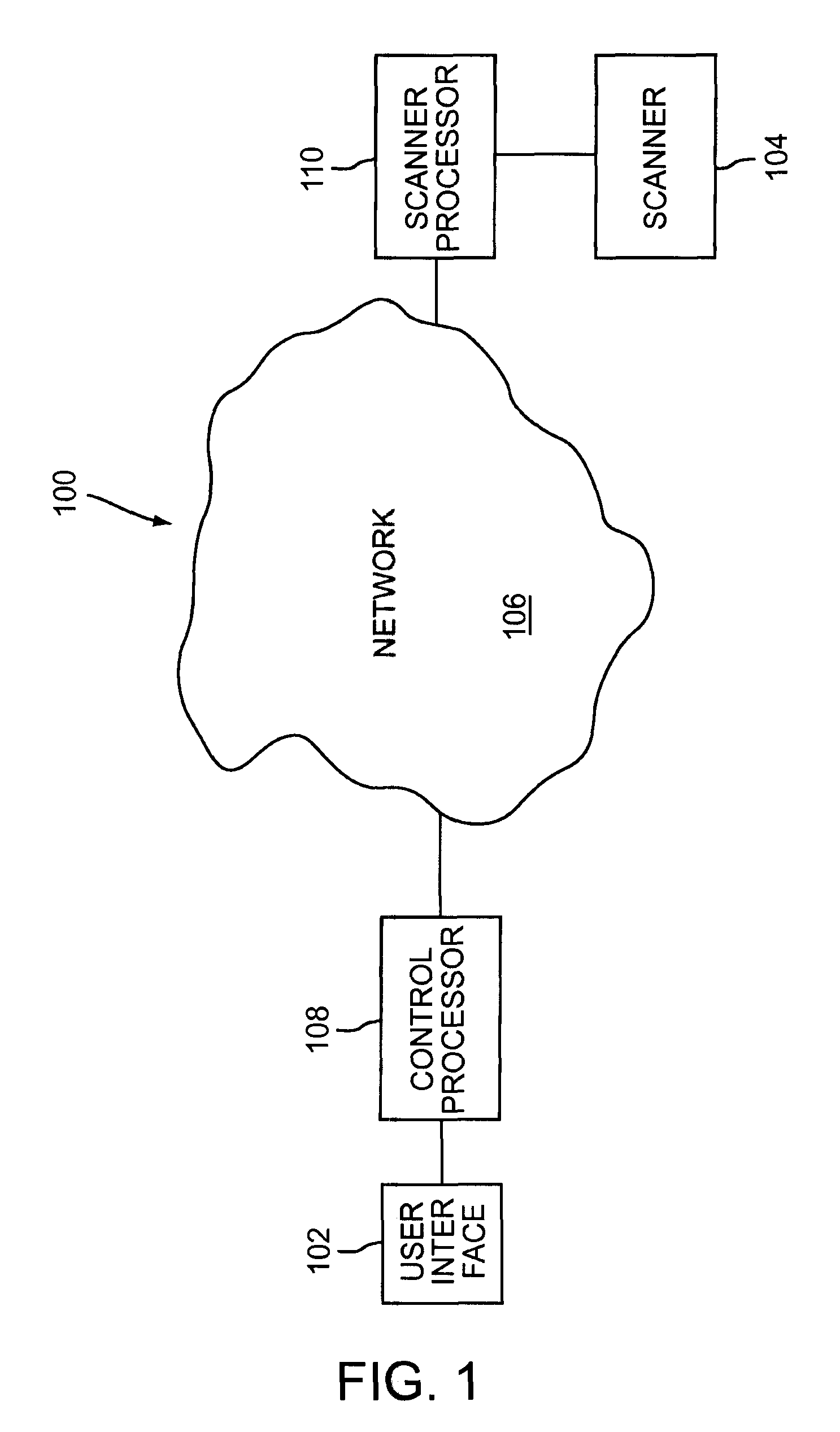
intranet, Internet) and a remote scan control console to enable a remote operator to have control of at least some aspects of an MRI scanner. For example, by using
the Internet through a
broadband connection, a remote, high-speed link between the
remote control subsystem and the MRI scanner subsystem is achieved. Utilizing a LAN would be practical for controlling several MM scanners within a single hospital, whereas connection via
the Internet or a
satellite network might be necessary over greater distances. Use of the Internet is advantageous in that a
standard protocol is used, so that control subsystems and scanner subsystems can be connected to an existing cooperative system quickly and easily, and new systems can be initiated by providing an Internet connection at a controller computer and at a scanner computer, and by installing the appropriate
control software at each location.


 Login to View More
  Login to View More