
Roadside handling for alternate-propulsion systems
a technology of alternate propulsion and roadside handling, which is applied in the direction of nuclear elements, instruments, tractors, etc., can solve the problems of high-capacity electrical cell charging and discharging, the number of vehicles and the different charging and discharging methods, and the difficulty of charging and discharging high-capacity electrical cells. the discharge rate is also often limited, and the charge rate is not high enough
- Summary
- Abstract
- Description
- Claims
- Application Information
AI Technical Summary
Benefits of technology
Problems solved by technology
Method used
Image

Examples
Embodiment Construction
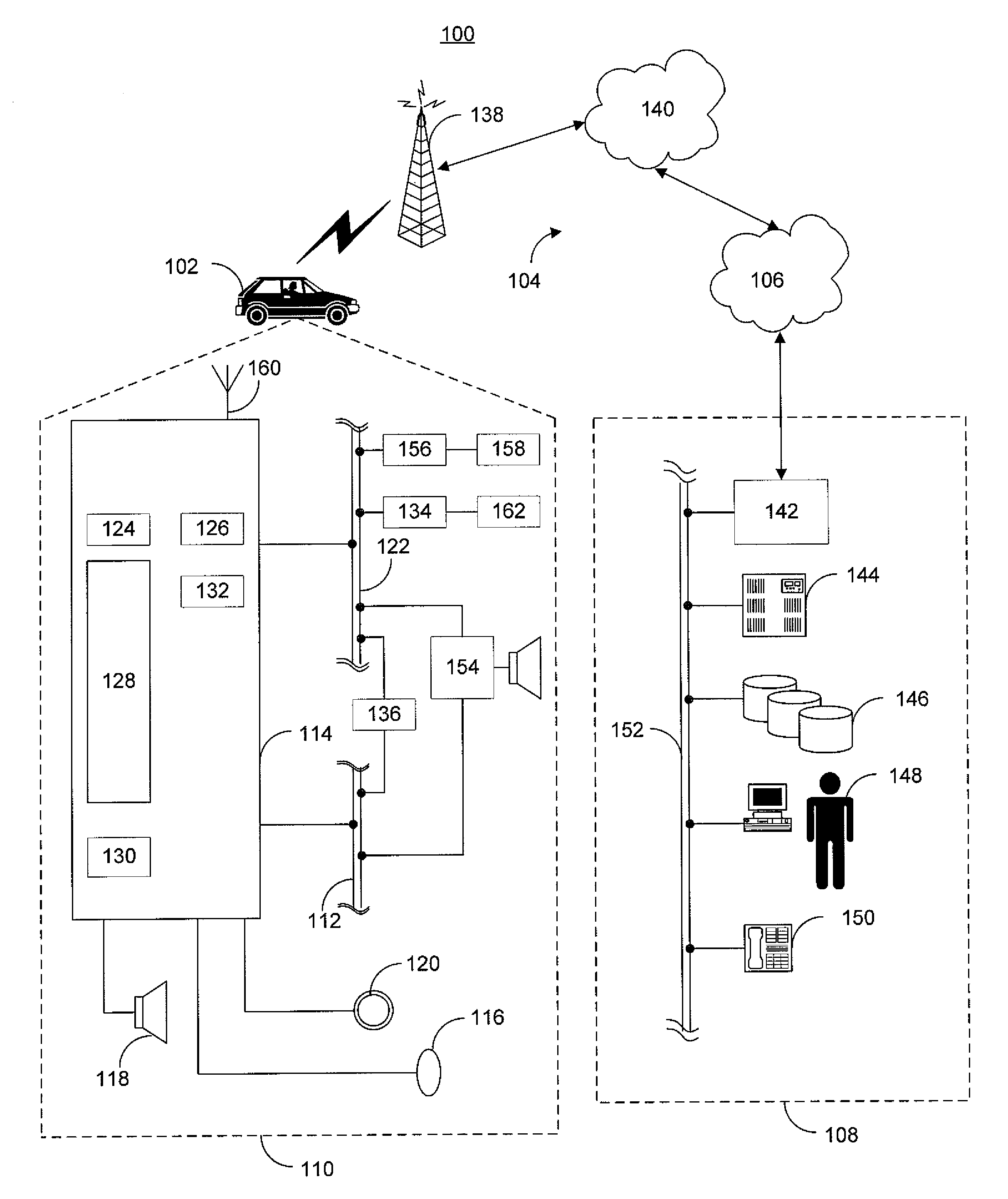
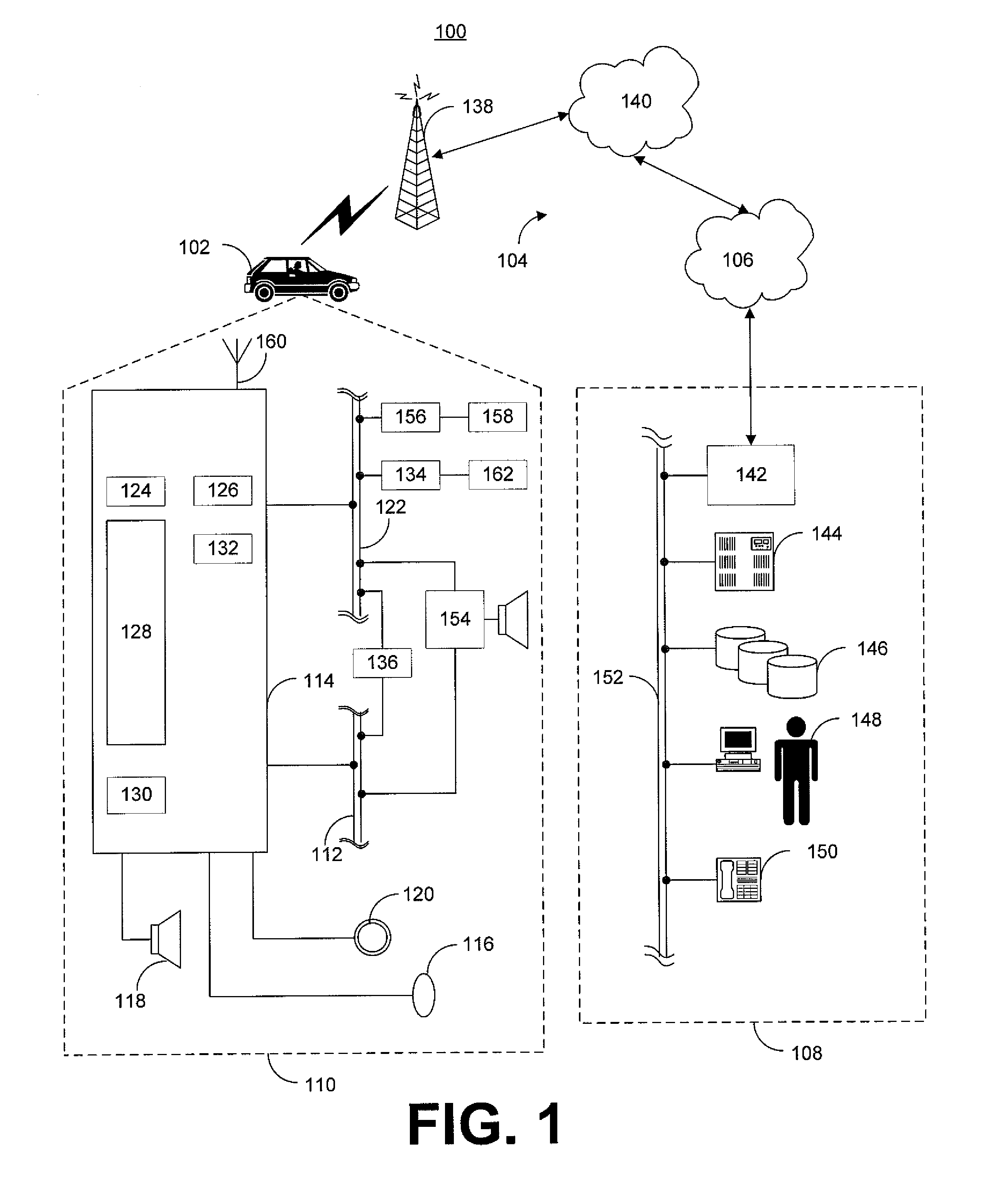
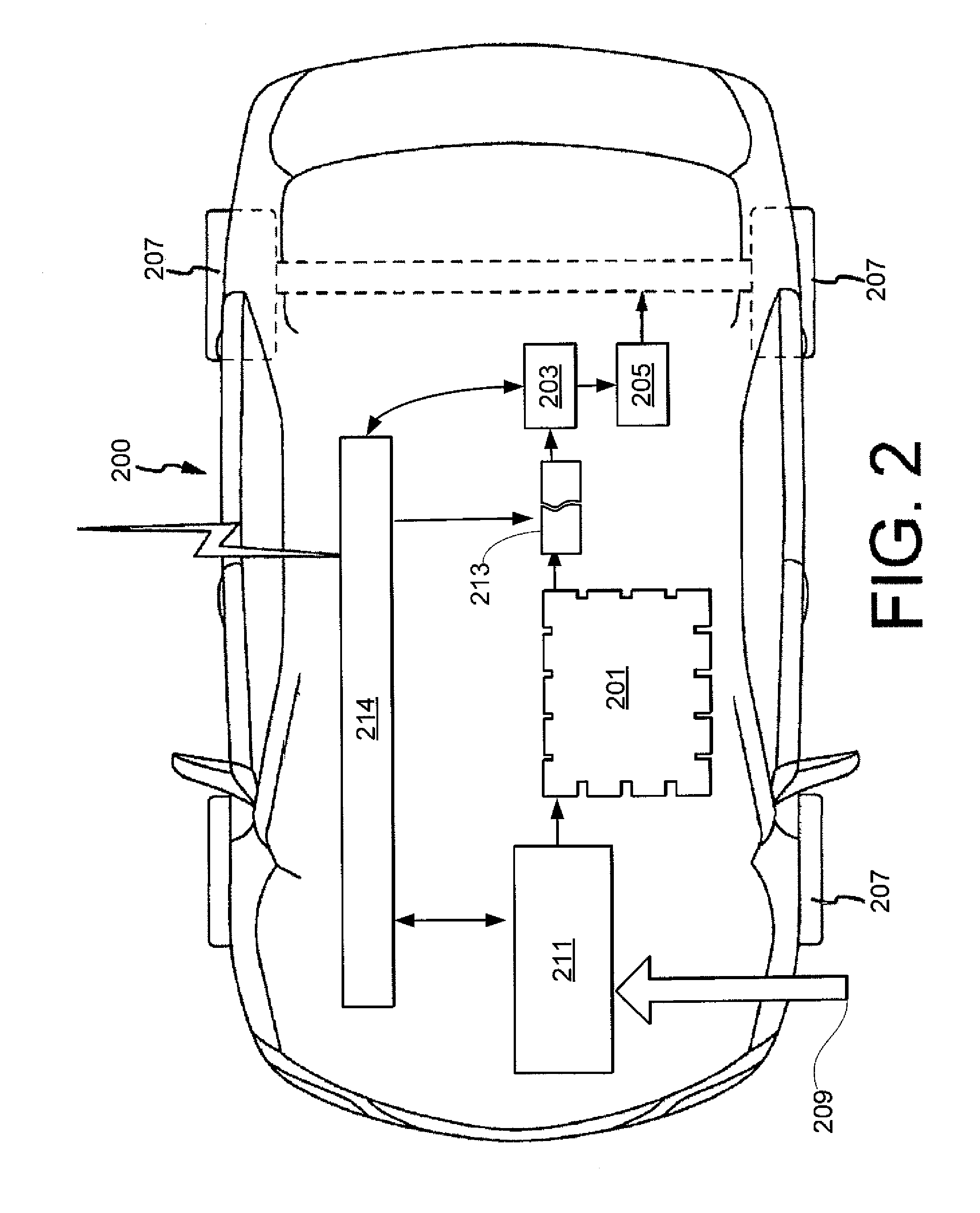
[0013]Before discussing the details of the invention and the environment wherein the invention may be used, a brief overview is given to guide the reader. In general terms, not intended to limit the claims, the invention is directed to a system and method for remotely assisting a user or service personnel regarding an electric vehicle. Specifically, the system allows a telematics service provider to remotely trigger the vehicle to be prepared for towing and to receive a message back from the vehicle to verify the vehicle status. Specific activities that may be undertaken to prepare the vehicle for towing are: high-voltage battery disconnect, charge disabling if the vehicle is plugged in, and turning off of regenerative braking systems to allow the vehicle to be more easily towed.
[0014]In the event that the high voltage battery contactors have been disengaged, the system allows a telematics system to remotely command the contactors to re-engage after performing a remote validation th...
PUM
 Login to View More
 Abstract
Description
Claims
Application Information
 Login to View More