
Multistage heat exchanging duct comprising a parallel conduit
a heat exchanger and parallel conduit technology, applied in the field of heat exchangers, can solve the problems of increasing driving energy, increasing electrical current consumption, and reducing cooling efficiency, and achieve the effect of small required space and good performan
- Summary
- Abstract
- Description
- Claims
- Application Information
AI Technical Summary
Benefits of technology
Problems solved by technology
Method used
Image

Examples
Embodiment Construction
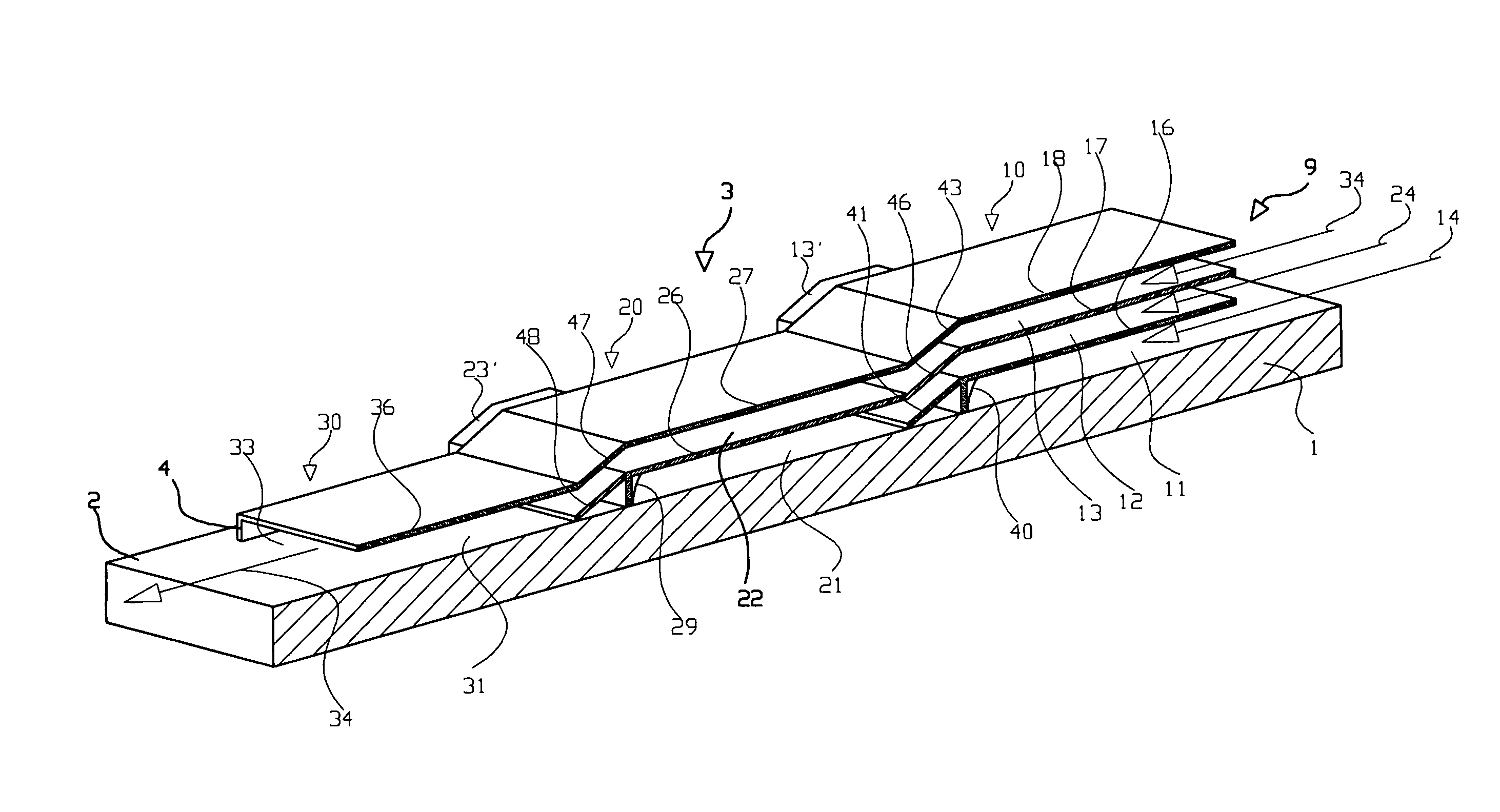
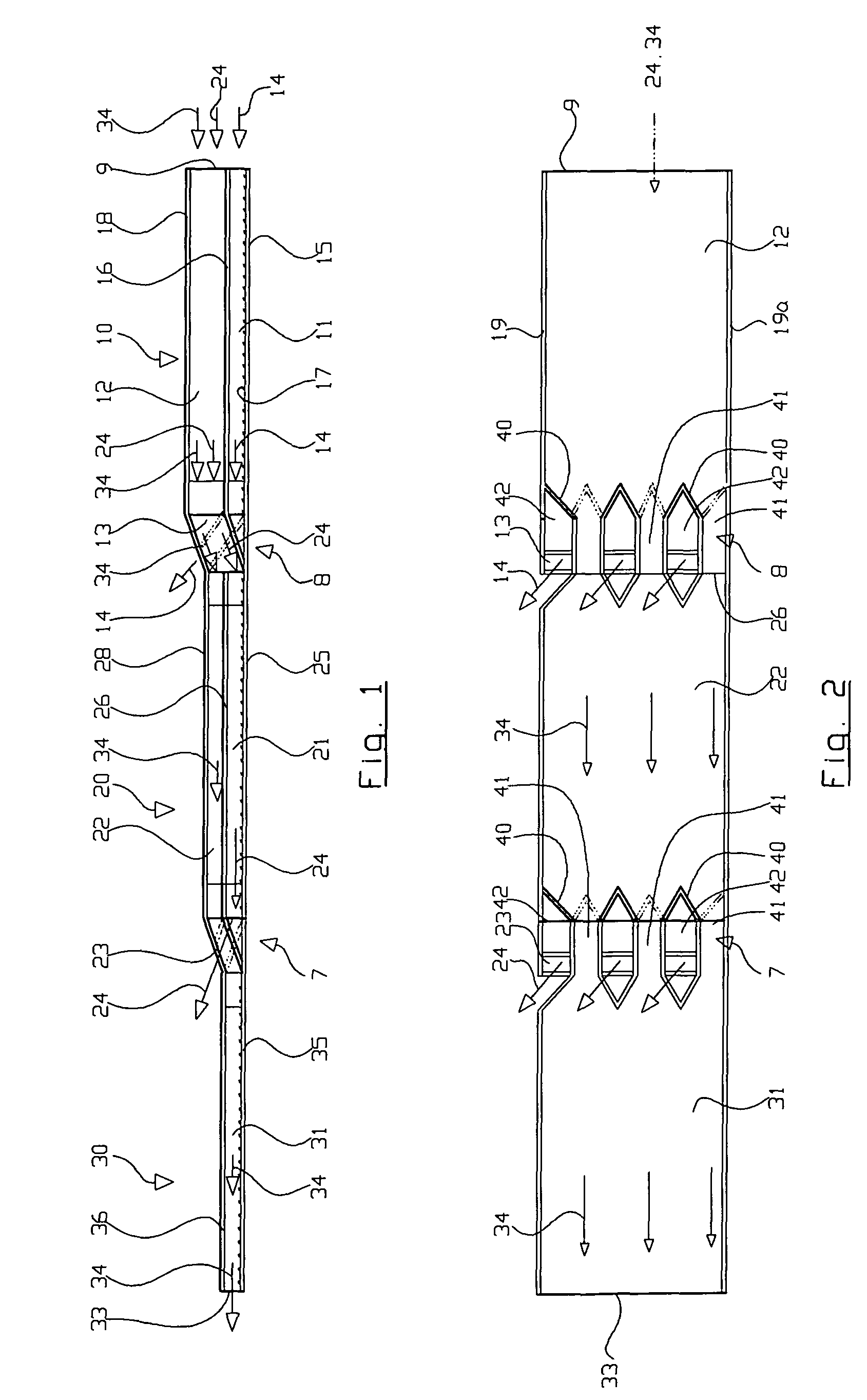
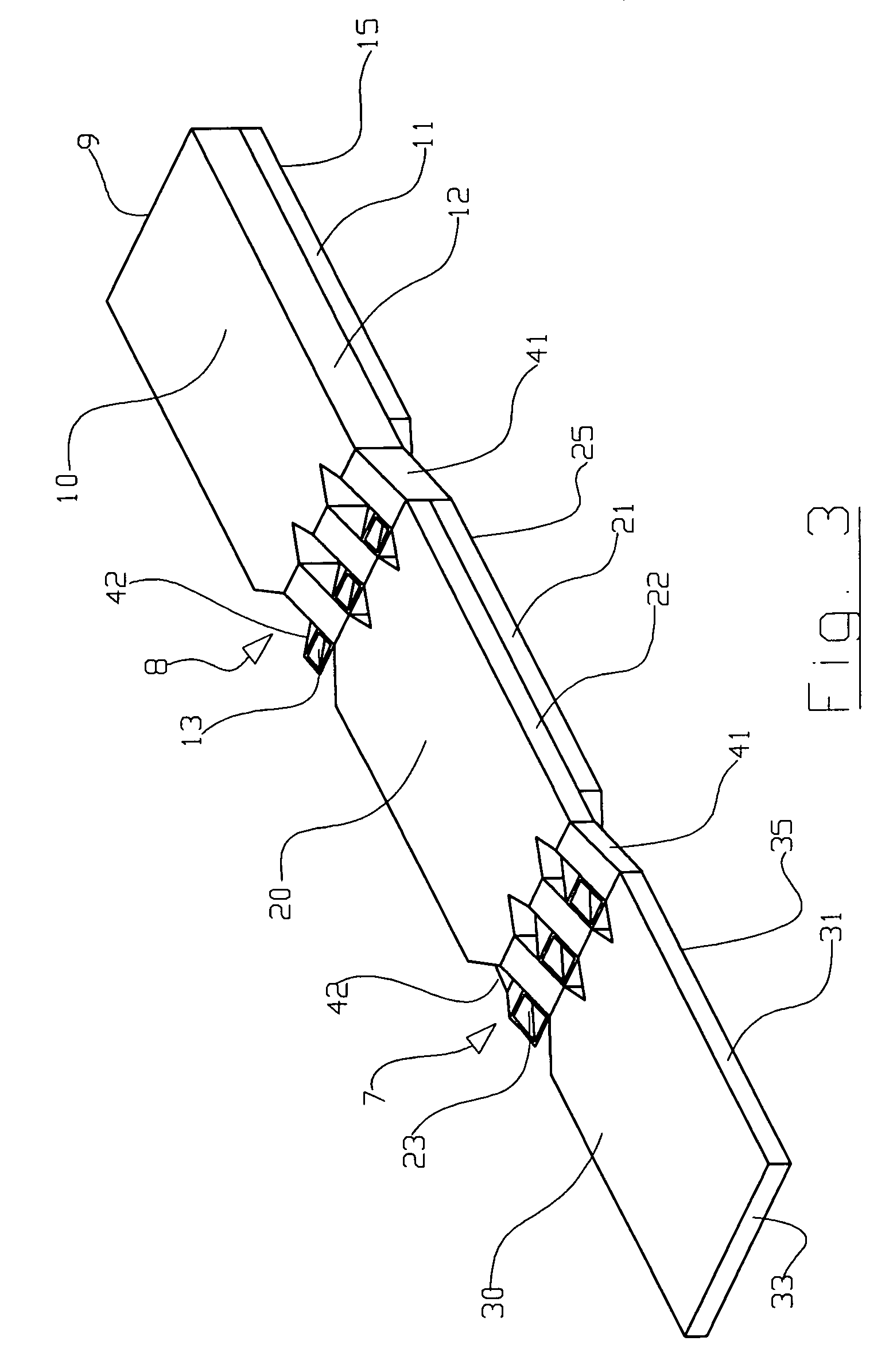
[0029]FIG. 1 shows a schematic side view of the heat exchanger, which here has three stages 10, 20 and 30. The first stage 10 has a heat exchanging channel 11, wherethrough a fluid, like for example air, may flow, namely with a first part flow 14, which is denoted by an arrow. The heat exchanging channel 11 has a heat transfer wall 15, which is in a heat transferring interaction with the part flow 14, wherein this wall 15 may comprise elements on its inner side, which improve a heat transfer, as for example cooling ribs, roughnesses or micro ribs according to DE 102 33 736 B3.
[0030]The heat exchange channel 11 further has a dividing wall 16, which separates the heat exchanging channel 11 from a guiding channel 12 lying thereabove. The guiding channel 12 is closed by a topwall 18. Both channels 11 and 12 are closed at their sides by common side walls 19 and 19a (compare FIG. 2). Both channels have a common inlet 9 for a fluid, which is separated by the dividing wall 16 into part flow...
PUM
 Login to View More
 Abstract
Description
Claims
Application Information
 Login to View More