An Ad hoc network invasion detecting method and system based on trust model

A network intrusion detection and trust model technology, applied in the field of communication security, can solve problems such as one-sided evaluation of nodes, malicious nodes, and difficulties in intrusion detection, achieving good stability and security, low false alarm rate and false alarm rate, and good The effect of scalability

CN101217396AInactive Publication Date: 2008-07-09HUAZHONG UNIV OF SCI & TECH
0 Cites 34 Cited by

Patent Information

Authority / Receiving Office
CN · China
Patent Type
Applications(China)
Current Assignee / Owner
Publication Date
2008-07-09
Estimated Expiration
Not applicable · inactive patent

Smart Images

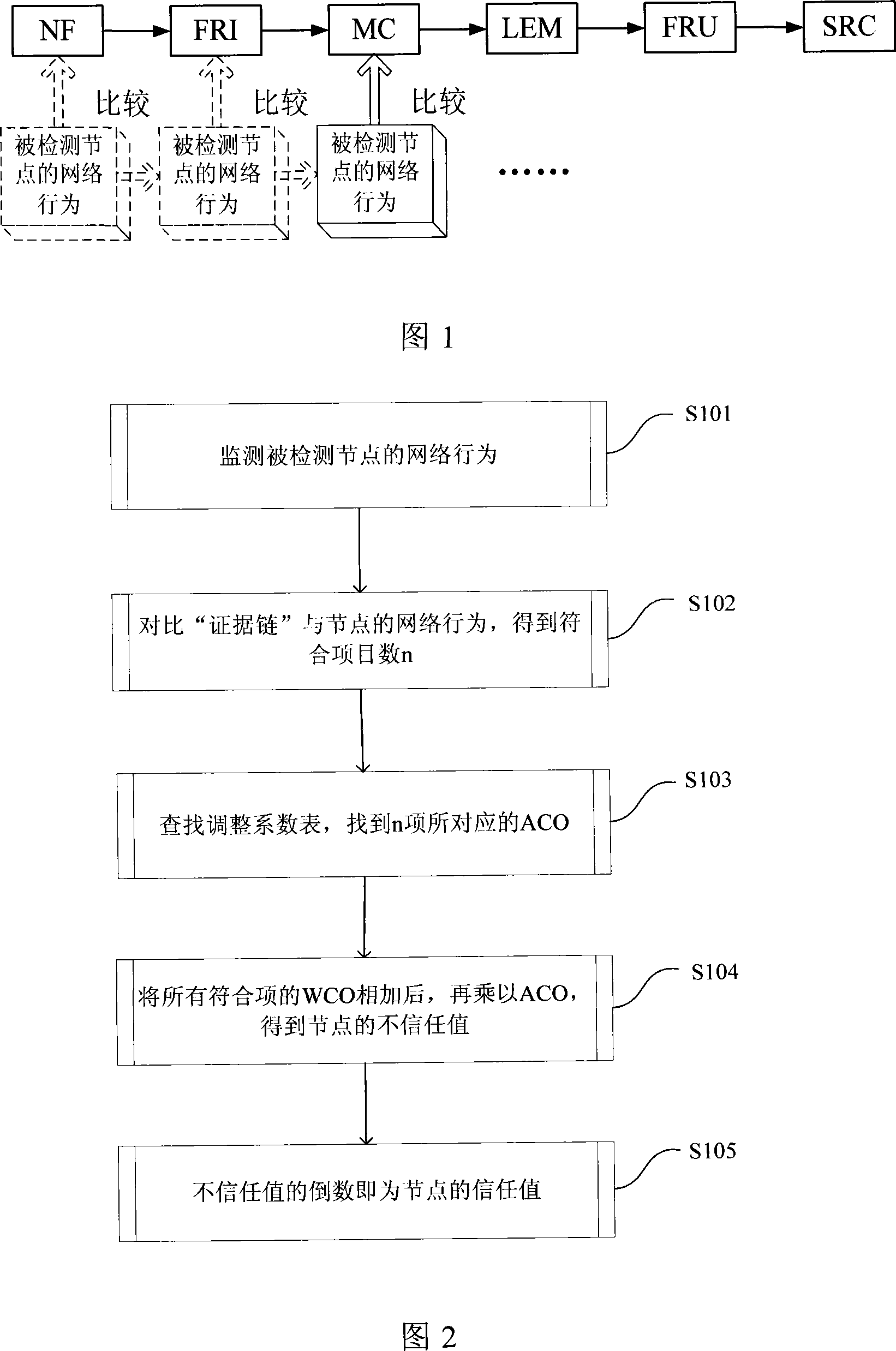
  • Figure 1
    Figure 1
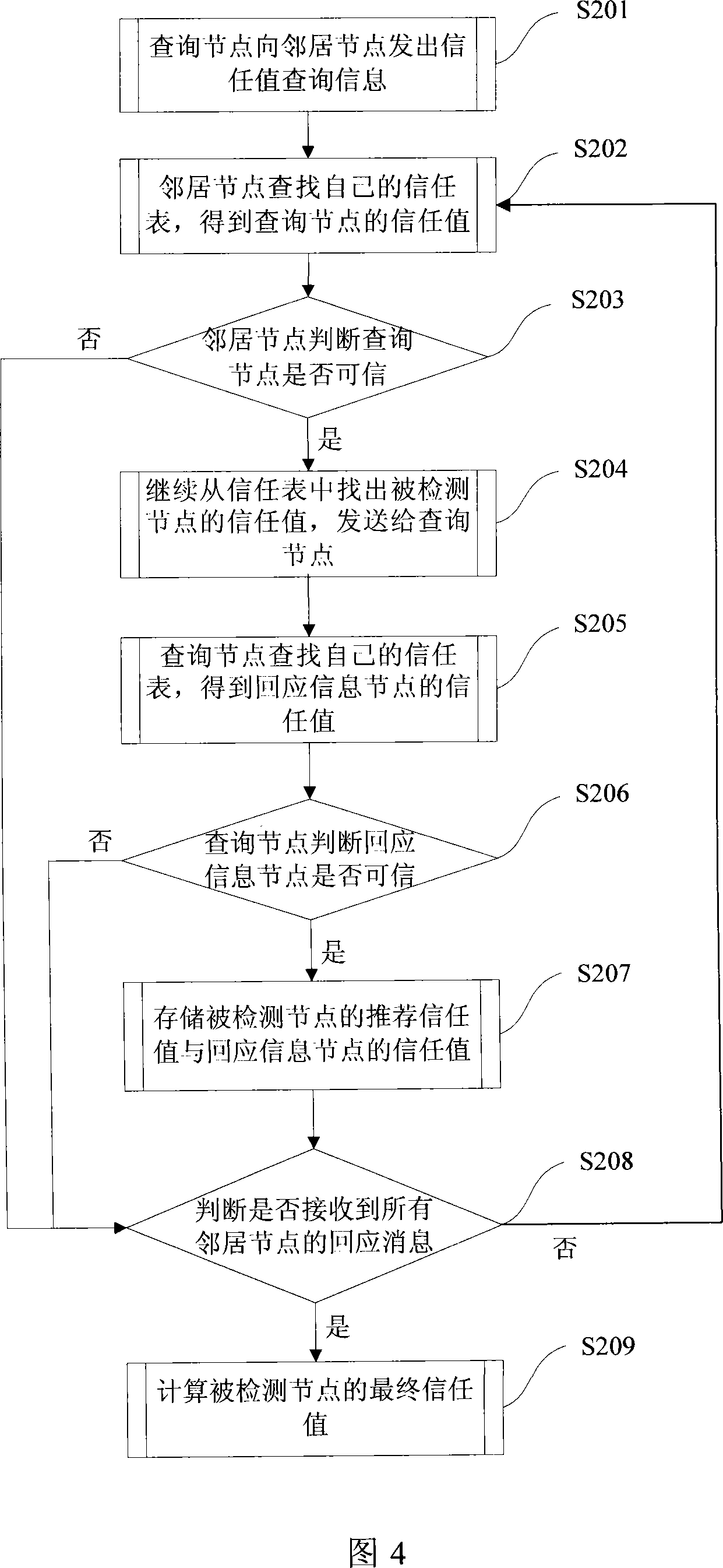
  • Figure 2
    Figure 2
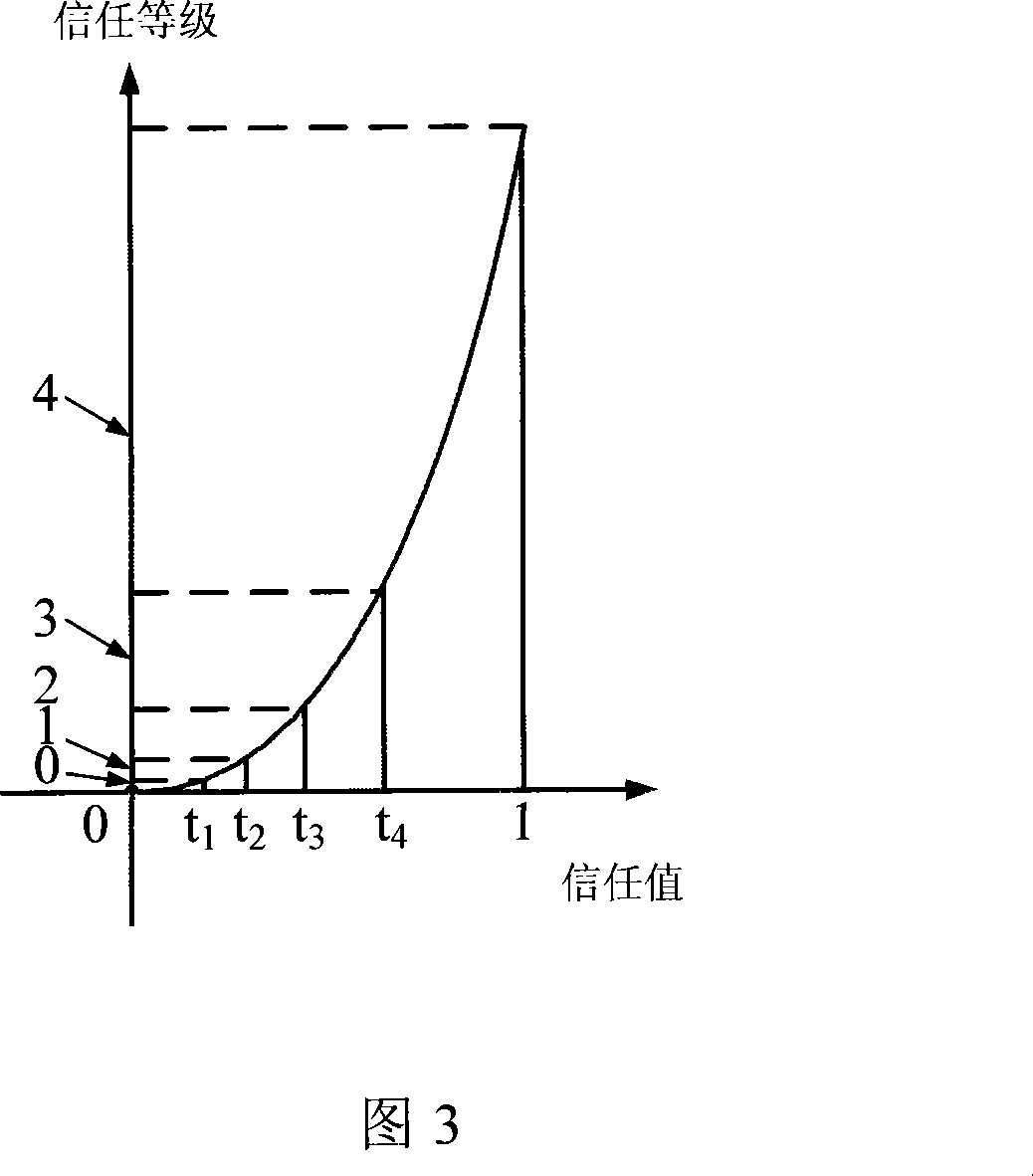
  • Figure 3
    Figure 3
Patent Text Reader

Abstract

The invention provides a detection method for the Ad hoc network intrusion based on a trust model and comprises the following steps that the first step is that a local node detects network behaviors of a detected node, gets and records a trust value of the detected node in a trust table by comparing the network behaviors with typical malicious behaviors; the second step is that the local node gets the trust value of the detected node recommended by a neighboring node; the third step is to obtain the ultimate trust value of the node by integrating the locally calculated trust value and the recommended trust value returned by all the trust neighboring nodes and to judge whether the nodes are malicious nodes by inquiring the trust value ranges of the trust nodes. The invention has the advantages that the invention is simple in model and can detect malicious nodes early without great effect on the system performance; with the consideration of the effect of the surrounding nodes on the ultimate trust values of the nodes, the invention is smaller in false alarm ration and plays a good protection role on the stability and safety of the networks and has good expandability.
Need to check novelty before this filing date? Find Prior Art

Description

technical field

[0001] The invention belongs to the field of communication security and relates to a method for detecting malicious nodes in an Ad hoc network, in particular to a trust model-based Ad hoc network intrusion detection method and system. Background technique

[0002] The wireless Ad hoc network is a multi-hop temporary autonomous system composed of a group of mobile terminals with wireless transceiver devices. The deployment or deployment of the network does not need to rely on any preset network infrastructure and centralized organization and management. An independent network can be formed quickly and automatically. Since the wireless signal transmission range of each node is limited, two nodes that are not within each other's signal coverage need to forward messages through multiple intermediate nodes to achieve communication, so each node in the Ad hoc network is both a terminal and a routing and forwarding function. However, the characteristics of the mobi...

Examples

Embodiment Construction

[0062] Relevant technical content and detailed description of the present invention, now cooperate accompanying drawing to explain as follows:

[0063] The present invention provides an Ad hoc network intrusion detection method based on a trust model, which detects several known types of attack behaviors through the means of node self-observation and mutual notification, and obtains a comprehensive evaluation of the node—trust value, so that Nodes in the network bypass possible malicious nodes when routing.

[0064] The present invention provides a method for detecting malicious nodes by way of "evidence chain". When the trust value of a node is lower than a certain threshold, other nodes will refuse to provide services to it, thereby excluding malicious nodes from the network. The invention compares the behavior of the node with a series of typical behaviors of malicious nodes specified in advance to obtain a local evaluation of the node. In addition, in order to avoid the ...