
Polypeptide carrier used for improving targeting ability and transfection efficiency of medicine/gene, and purpose thereof
A technology of transfection efficiency and targeting, which is applied in the direction of non-active ingredients of polymer compounds, gene therapy, drug combination, etc., can solve the problems of poor targeting and low transfection efficiency, and achieve strong targeting and high efficiency. To modify and reduce the effect of non-specific side effects
- Summary
- Abstract
- Description
- Claims
- Application Information
AI Technical Summary
Problems solved by technology
Method used
Image

Examples
Embodiment 1
[0060] Synthesis and Characterization of Polypeptide TATp-Cys-LHRHp
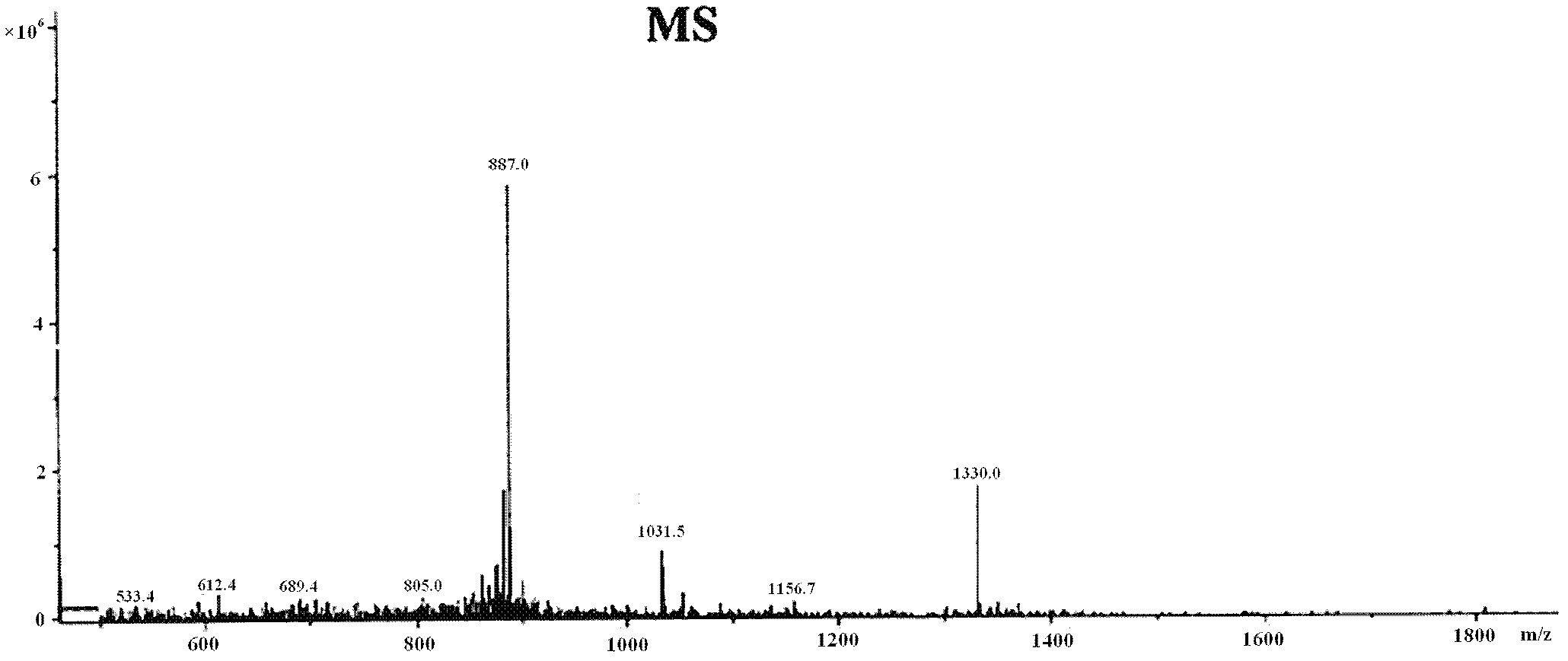
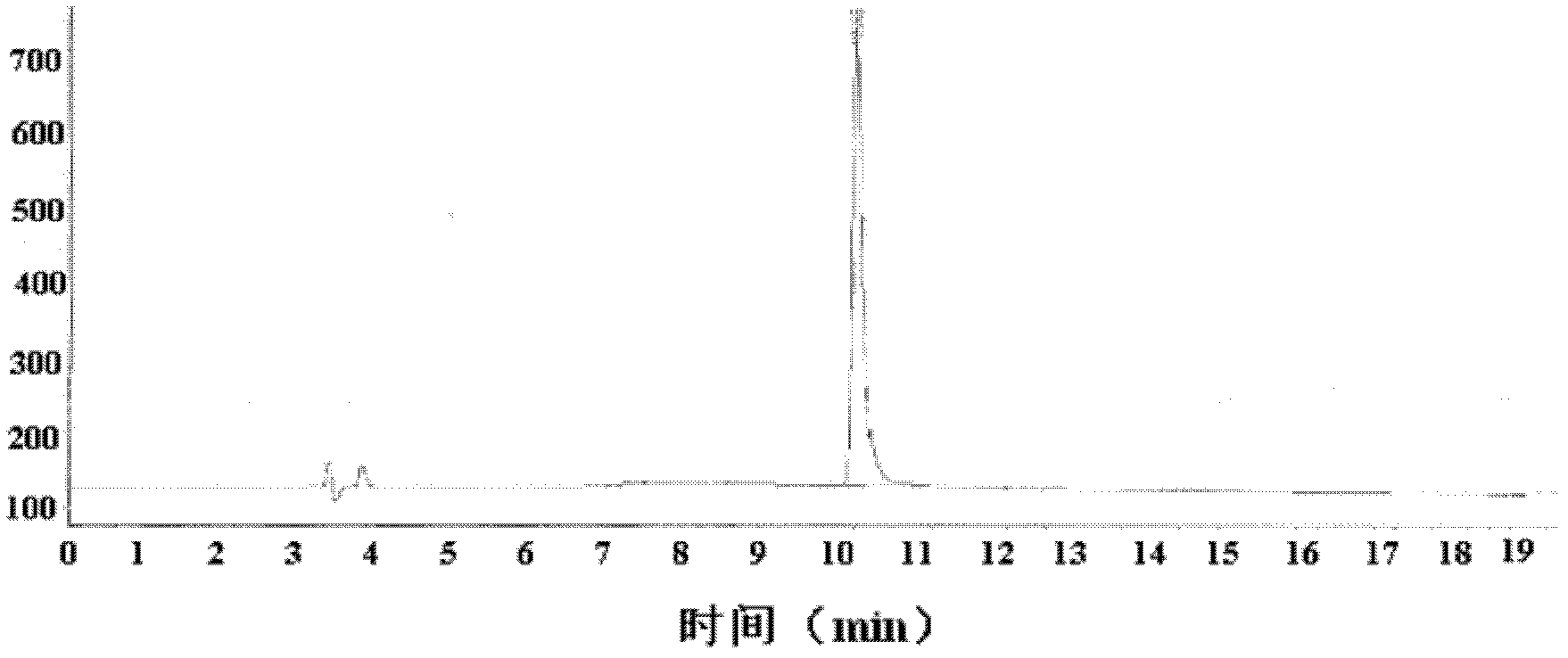
[0061] Apply peptide synthesizer, adopt solid-phase peptide synthesis technology to carry out peptide synthesis, the result of mass spectrometry analysis shows that its molecular ion peak is 2657 (see figure 1 ), consistent with the expected molecular weight of the polypeptide, analyzed by HPLC, its purity is greater than 99% (see figure 2 )
Embodiment 2
[0063] Preparation of TATp-Cys-LHRHp gene-carrying nanoparticles
[0064] Dissolve the polypeptide carrier (TATp-Cys-LHRHp) and plasmid DNA in water to prepare an aqueous solution, and then place the two aqueous solutions in a water bath at 37°C for 10 minutes; N / P (is it a molar ratio?) ratio of 10:1 The two solutions were quickly mixed and vortexed for 50 seconds to obtain TATp-Cys-LHRHp gene-carrying nanoparticles. The average particle size of the nanoparticles is about 82nm, and the zeta potential is 26mV.
[0065] N / P can be selected from 2:1 to 20:1, and the shaking time is selected from 40 to 60 seconds. The obtained TATp-Cys-LHRHp gene-carrying nanoparticles have an average particle size of about 70-90 nm and a zeta potential of 20-40mY.
Embodiment 3
[0067] Cell transfection experiments of TATp-Cys-LHRHp gene-carrying nanoparticles
[0068] According to the preparation method of TATp-Cys-LHRHp gene-loaded nanoparticles in Example 2, TATp-Cys-LHRHp gene-loaded nanoparticles with an N / P ratio of 10:1 were prepared, and then the nanoparticles were transfected into human liver cancer cells BEL-7402 and For normal human liver cells LO2, the amount of transfected nanoparticles is 5 μg DNA / ml calculated by DNA. After 24 hours of transfection, the results of high-content live cell imaging show that the nanoparticles have strong targeting effect on liver cancer cells BEL-7402 , its transfection efficiency is high, but the normal liver cell LO2 transfection efficiency is very low.
PUM
| Property | Measurement | Unit |
|---|---|---|
| The average particle size | aaaaa | aaaaa |
| The average particle size | aaaaa | aaaaa |
| Particle size | aaaaa | aaaaa |
Abstract
Description
Claims
Application Information
 Login to View More