Bidirectional authentication method of radio frequency identification system

An identification system and two-way authentication technology, applied in the field of information security

CN103413109AActive Publication Date: 2013-11-27徐州虹智智能科技有限公司
4 Cites 33 Cited by

Patent Information

Authority / Receiving Office
CN · China
Patent Type
Applications(China)
Current Assignee / Owner
Publication Date
2013-11-27

Smart Images

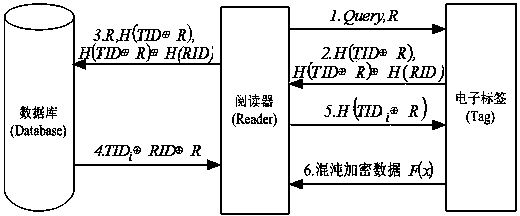
  • Figure 1
    Figure 1
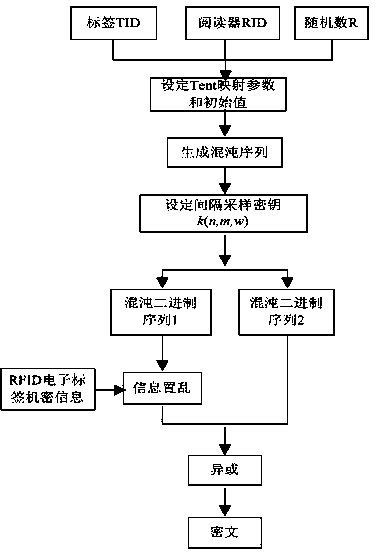
  • Figure 2
    Figure 2
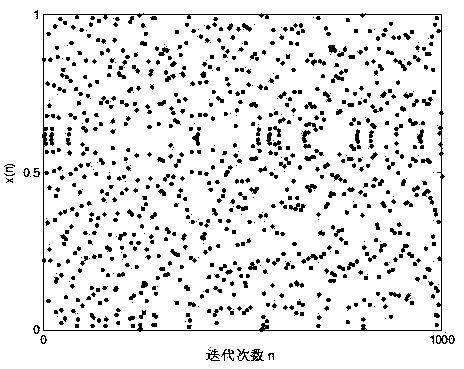
  • Figure 3
    Figure 3
Patent Text Reader

Abstract

Disclosed is a bidirectional authentication method of a radio frequency identification system. The simple and rapid method with chaotic mapping combined with the Hash function, the exclusive-or operation and the like is adopted, filter operation is conducted together with bidirectional authentication, search and computing loads of a back-end data base are reduced, the safety problems of impersonation, retransmission attack, tracing and the like are avoided, a label of the radio frequency identification system and TID and RID of the unique mark amount of a reader are used as an initial value and parameters of the chaotic mapping, and chaotic scrambling and exclusive-or encryption are performed on confidential information of the label by being combined with the authentication process. On the basis of taking full consideration of saving the cost of the passive radio frequency identification label, data encryption and safety authentication are organically combined, and accordingly the safety problems such as illegal access, counterfeiting and cheating and data leakage in the radio frequency identification system can be solved.
Need to check novelty before this filing date? Find Prior Art

Description

technical field

[0001] The invention belongs to the technical field of information security and relates to encryption of confidential data and two-way authentication between RFID tags and readers in the Internet of Things. Background technique

[0002] Radio Frequency Identification (RFID) is a non-contact automatic identification technology. Its basic principle is to use the spatial coupling (inductive coupling or electromagnetic backscatter coupling) transmission characteristics of radio frequency signals to realize automatic identification of identified objects. identify. RFID systems usually consist of tags ( tag ),Reader( reader ) and the backend database ( Database ) consists of three parts. The communication between the reader and the tag is carried out on a wireless, non-contact channel. With the wide application of RFID technology in an open system environment, the information exchange between the tag and the reader is vulnerable to various interference and at...

Examples

Embodiment Construction

[0079] The invention will be further illustrated by the following examples.

[0080] Specific simulation standard data selection.

[0081] (1) The tag TID is 1000100010001000; the corresponding tent mapping initial value:

[0082] x 0 =(1000100010001000) 2 '1.5259'10 -5 =0.5348.

[0083] (2) The RID of the reader is 0010001000100010; the corresponding Tent mapping parameters:

[0084] α= (0010001000100010) 2 '1.5259'10 -5 =0.1337.

[0085] (3) The random number R generated by the reader during the authentication process is 0000000000111010; according to the "set interval sampling key" introduced in the encrypted technical solution S4 in the summary of the invention k ( n , m , w )", the key can be obtained:

[0086] k ( n , m , w )=(0000000000111010) 2 ⊕(2 16 -1)=(1111111111000101) 2 = k (512,3,10).

[0087] (4) Suppose the confidential information text stored in the RFID tag is "one world one dream", and the ASCII code corresponding to the information...