
Unit for recovering thermal energy from exhaust gas of an internal combustion engine
A technology for internal combustion engines and exhaust gas recovery, applied in the direction of internal combustion piston engines, engine components, combustion engines, etc., can solve the problems of reducing the efficiency of the heat recovery process, and achieve the effect of simple structure
- Summary
- Abstract
- Description
- Claims
- Application Information
AI Technical Summary
Problems solved by technology
Method used
Image

Examples
Embodiment Construction
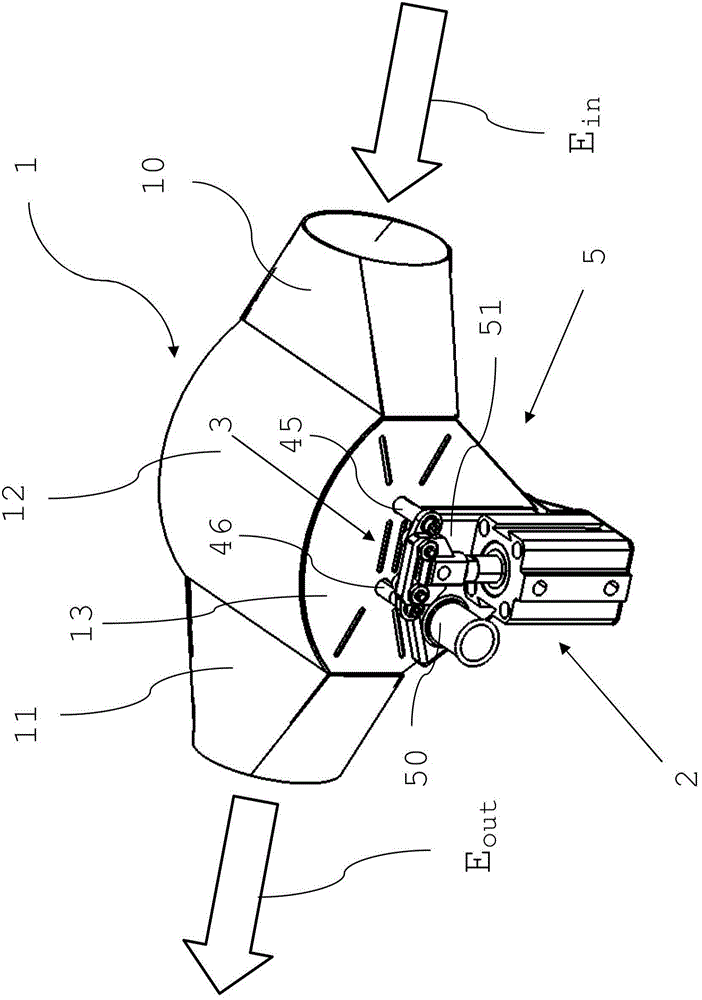
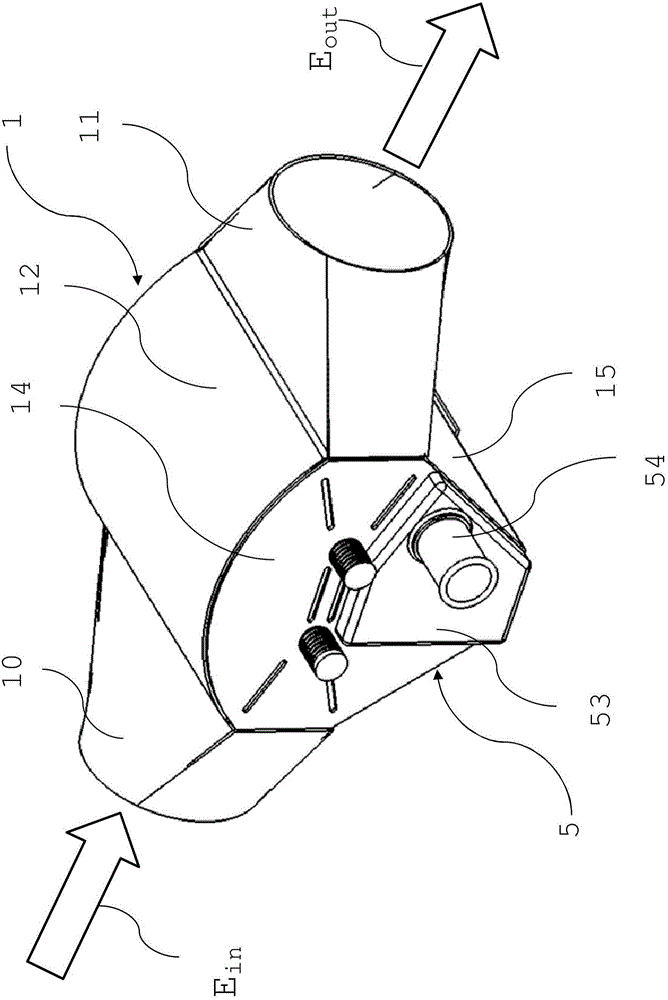
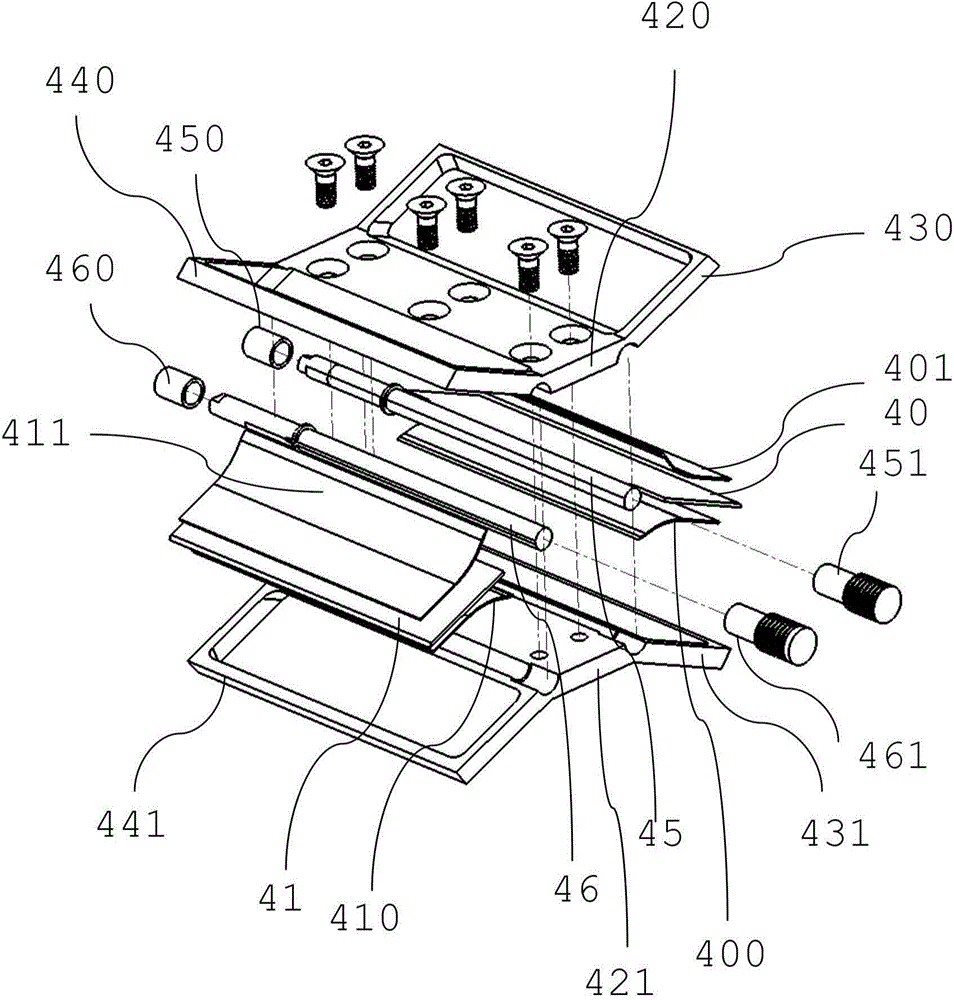
[0030] figure 1 and figure 2 are perspective views viewed from opposite sides (front view and rear view) of an embodiment of a thermal energy recovery unit according to the invention. As can be seen, the inflow exhaust gas Ein from the internal combustion engine or from a catalytic converter arranged downstream of the engine enters the thermal energy recovery unit via the inlet 10 of the housing 1 of the thermal energy recovery unit, flows through the thermal energy recovery unit, The thermal energy recovery unit then exits as outgoing exhaust gas Eout via outlet 11 of the housing. The housing 1 also includes a top wall 12 , two side walls 13 and 14 and a bottom 15 . as available from figure 1 It can be seen that the actuator 2 of the thermal energy recovery unit is coupled to the first shaft 45 of the first disc 40 by means of the mechanical linkage system 3 (see image 3 or Figure 4 ) and is coupled to the second shaft 46 of the second disc 41 (see image 3 or Figu...
PUM
 Login to View More
 Abstract
Description
Claims
Application Information
 Login to View More