

AFLP finger-print chromatogram construction of metalaxyl resistance by phytophthora sojae
A technology of Phytophthora soybean, fingerprinting, applied in the direction of microbe-based methods, microbiological measurement/testing, microbiology, etc., can solve problems such as low specificity, difficult application, and difficult to reach the practical application level
- Summary
- Abstract
- Description
- Claims
- Application Information
AI Technical Summary
Problems solved by technology
Method used
Image

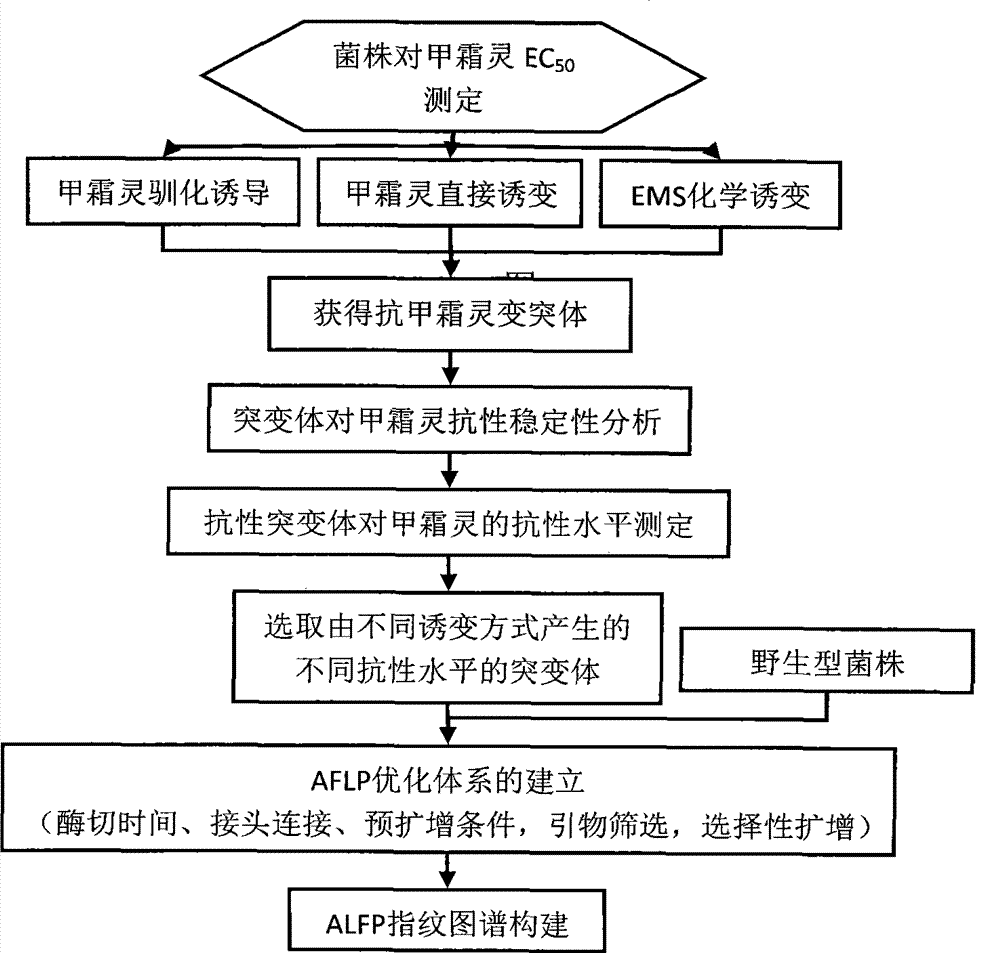

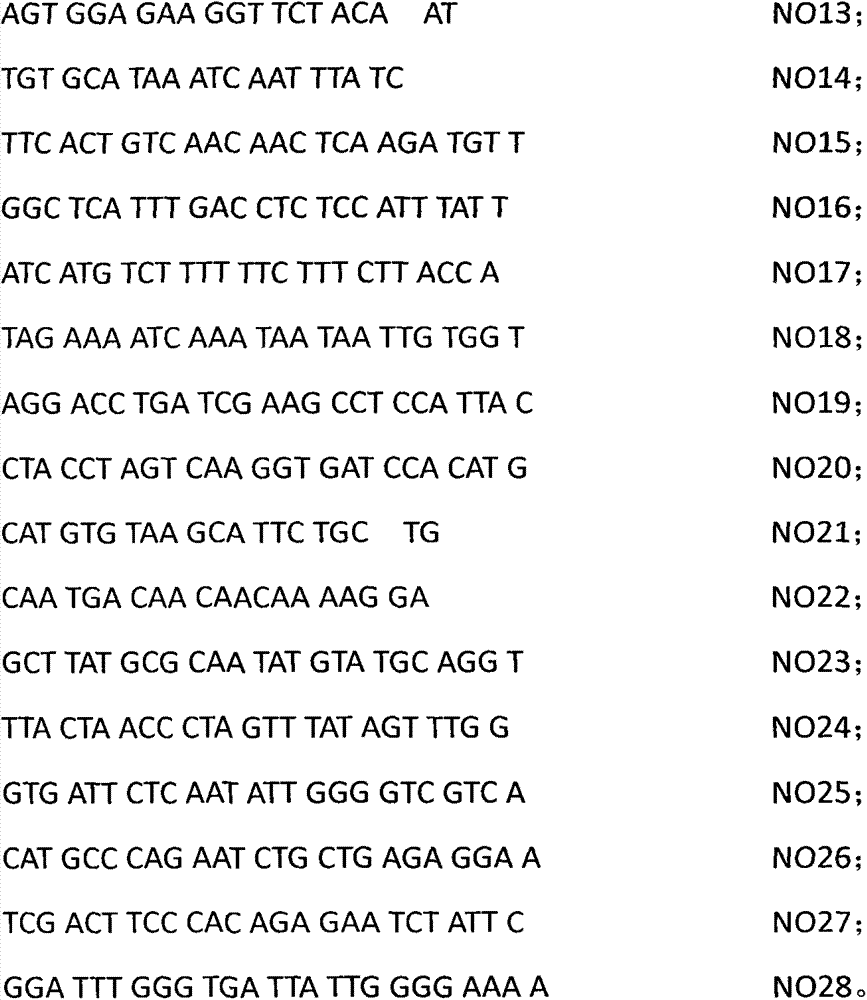
Examples
Embodiment Construction
[0043] Experimental material preparation process
[0044] 1 experimental strain
[0045] 1.1 Isolation of soil strains
[0046] 1.1.1 Collection location: Phytophthora soybean outbreak site in Lindian area, Daqing City, Heilongjiang Province.
[0047] 1.1.2 Collection method:
[0048] 1.1.3 Examination of diseased tissue: Cut the diseased tissue into small pieces of 1 cm, place it in 10% KOH aqueous solution, and place it at room temperature for 4 hours. After the diseased tissue is transparent, peel off the epidermis, and observe the pathogens in the tissue under a microscope.
[0049] 1.1.4 Soil preparation: Air-dry the collected diseased soil at room temperature, crush it, sieve it (aperture 2mm), and store it in a refrigerator at 4°C for 30-60 days, so that P.s in the diseased soil exists in the form of oospores .
[0050]1.1.5 Leaf disc trapping method: the test leaf disc is an American variety that does not give up the Rps gene. Weigh 5g of diseased soil, 5g of ster...
PUM
 Login to View More
 Abstract
Description
Claims
Application Information
 Login to View More