
Surface anisotropic topography processing method based on electronic dynamic regulation
An electronic dynamic control and anisotropic technology, applied in metal processing equipment, manufacturing tools, welding equipment, etc., can solve problems such as complex processing technology, environmental pollution, and complex parameter adjustment, and achieve efficient processing methods and simplified processes. Effect
- Summary
- Abstract
- Description
- Claims
- Application Information
AI Technical Summary
Problems solved by technology
Method used
Image

Examples
Embodiment 1
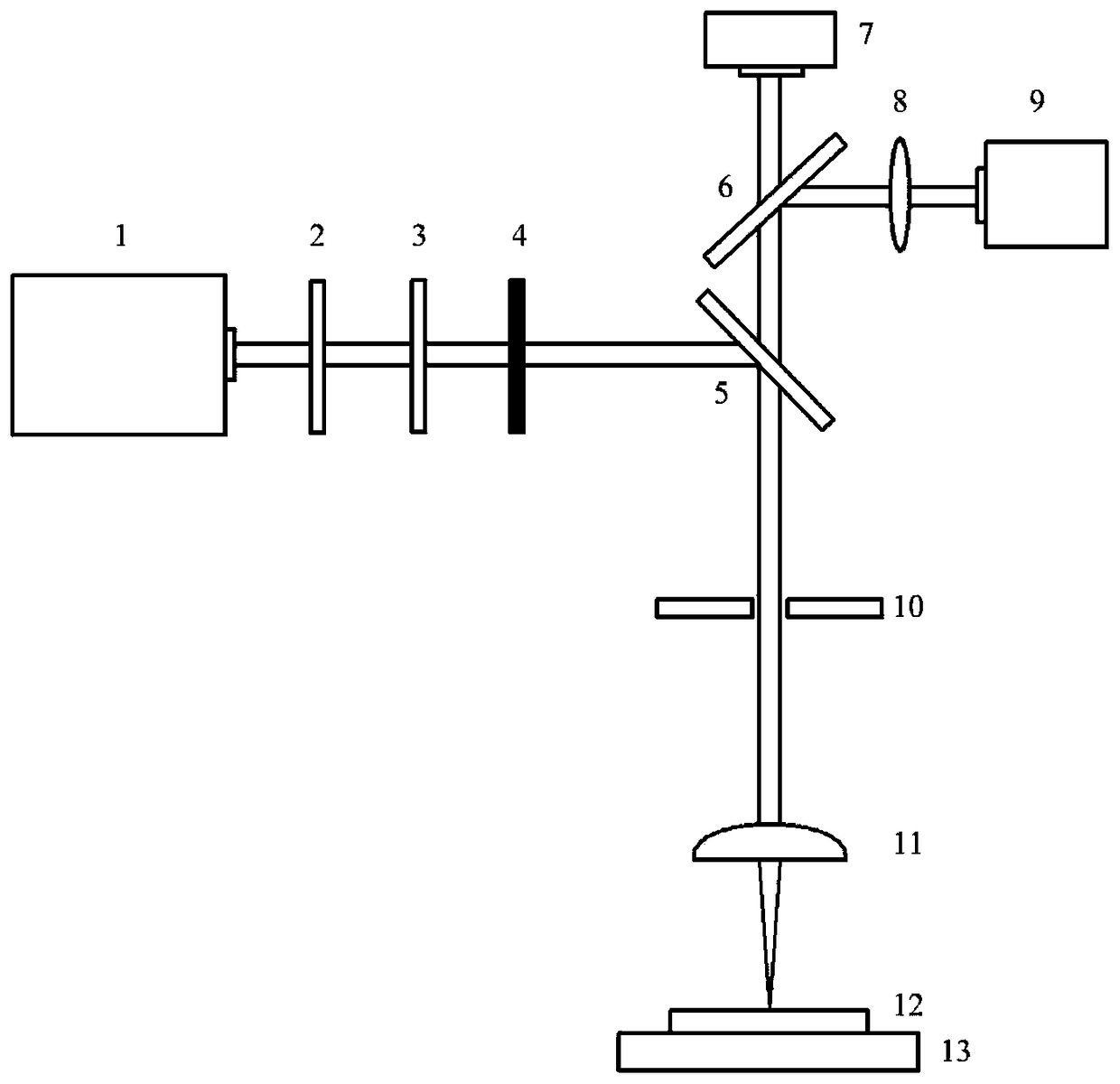
[0018] The method of surface anisotropic topography processing based on electronic dynamic control, the specific steps are as follows:
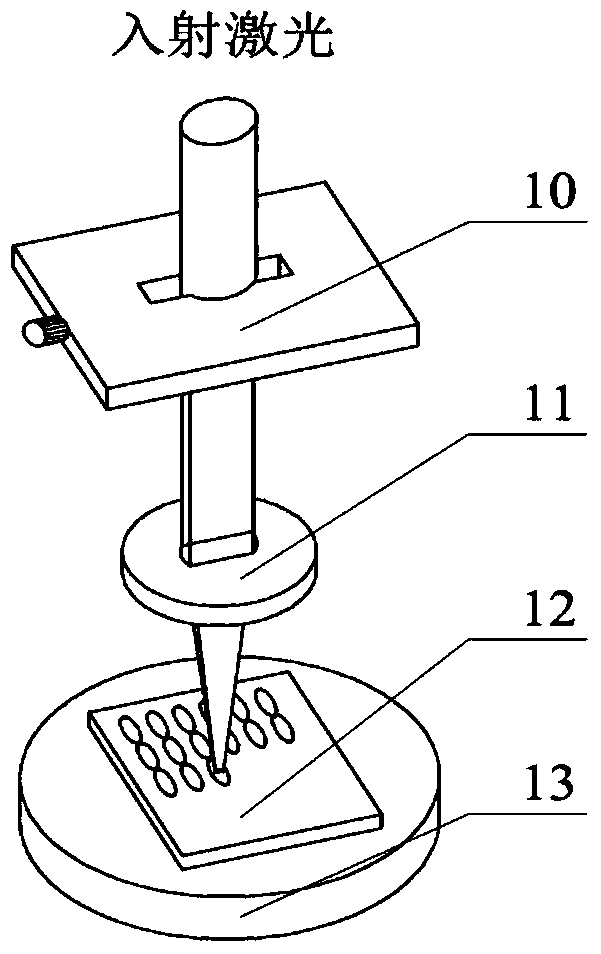
[0019] Step 1: Adjust the optical path of the femtosecond laser system to ensure that the laser can be vertically incident on the surface of the sample placed horizontally;
[0020] Step 2: Place the slit where the light path passes, adjust the position of the slit, and adjust the width of the slit to the desired size to ensure that the laser passes through the center of the slit vertically; the smaller the slit width, the more anisotropic the surface of the material obtained. The larger the ratio of the long and short axes of the anisotropic topography, the ratio of the long and short axes of the anisotropic topography can be continuously adjusted through the slit width;
[0021] Step 3: Carry out imaging with the help of imaging CCD9 and white lighting light source 7, observe the surface morphology and processing process of the processed ma...
PUM
 Login to View More
 Abstract
Description
Claims
Application Information
 Login to View More