
Closed loop dual-mode reduced-order model prediction control method for Buck type DC-DC converter
A model predictive control, DC-DC technology, applied to conversion equipment without intermediate conversion to AC, DC power input conversion to DC power output, output power conversion devices, etc., can solve the problems of limited application and large amount of calculation
- Summary
- Abstract
- Description
- Claims
- Application Information
AI Technical Summary
Problems solved by technology
Method used
Image

Examples
Embodiment Construction
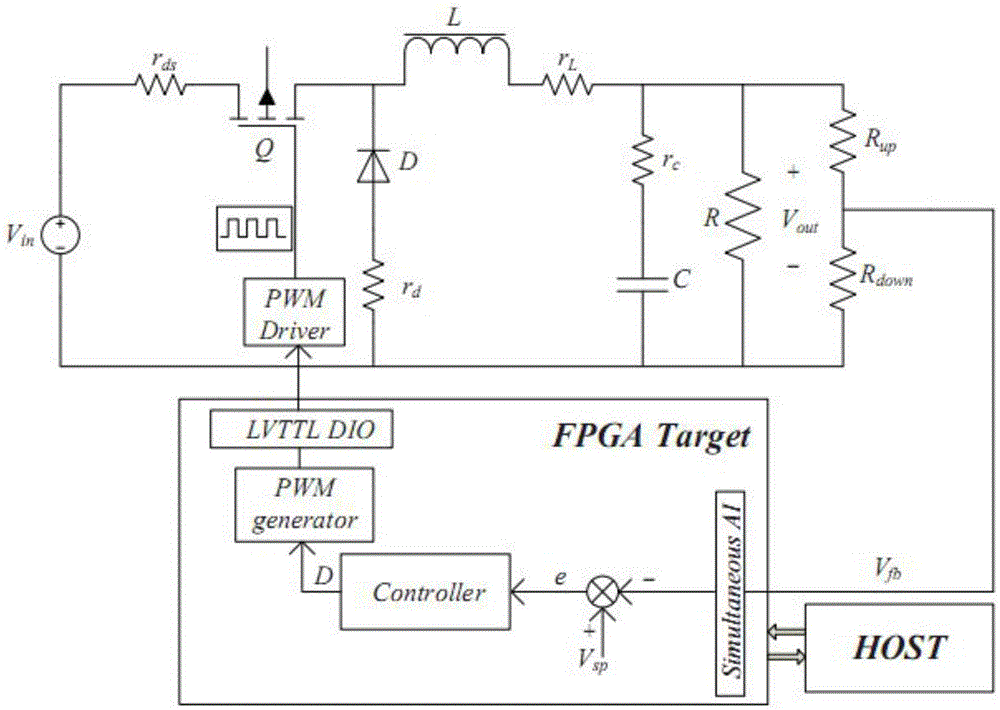
[0066] In order to describe the present invention more specifically, the technical solutions of the present invention will be described in detail below in conjunction with the accompanying drawings and specific embodiments.
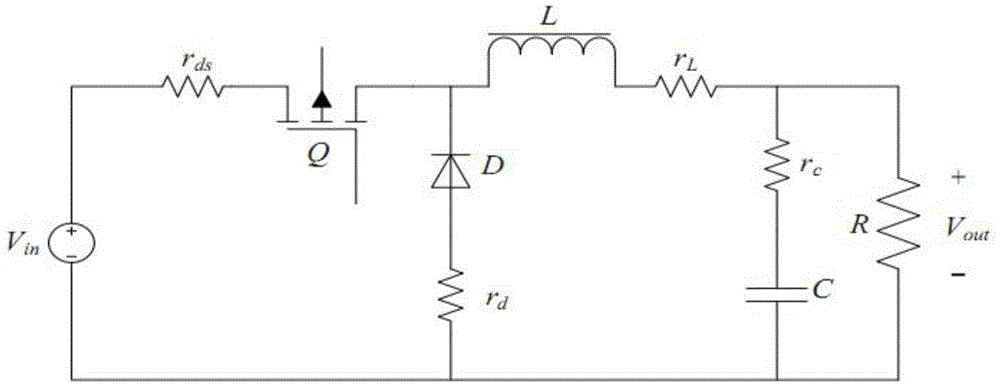
[0067] The modeling work of the present invention is based on the switching converter working in the CCM mode, obtains the constant frequency dynamic model by the state-space averaging method:
[0068] G o ( S ) = u ^ o ( s ) d ^ ( s ) = [ U i n ...
PUM
 Login to View More
 Abstract
Description
Claims
Application Information
 Login to View More