A method for the simultaneous determination of 12 opes residues in water samples and sediments
A sediment and water sample technology, applied in the field of organic phosphate determination, can solve the problems of insufficient sensitivity, poor anti-interference ability, and low detection limit, and achieve high detection sensitivity, good stability, and low detection limit Effect
- Summary
- Abstract
- Description
- Claims
- Application Information
AI Technical Summary
Problems solved by technology
Method used
Image

Examples
Embodiment Construction
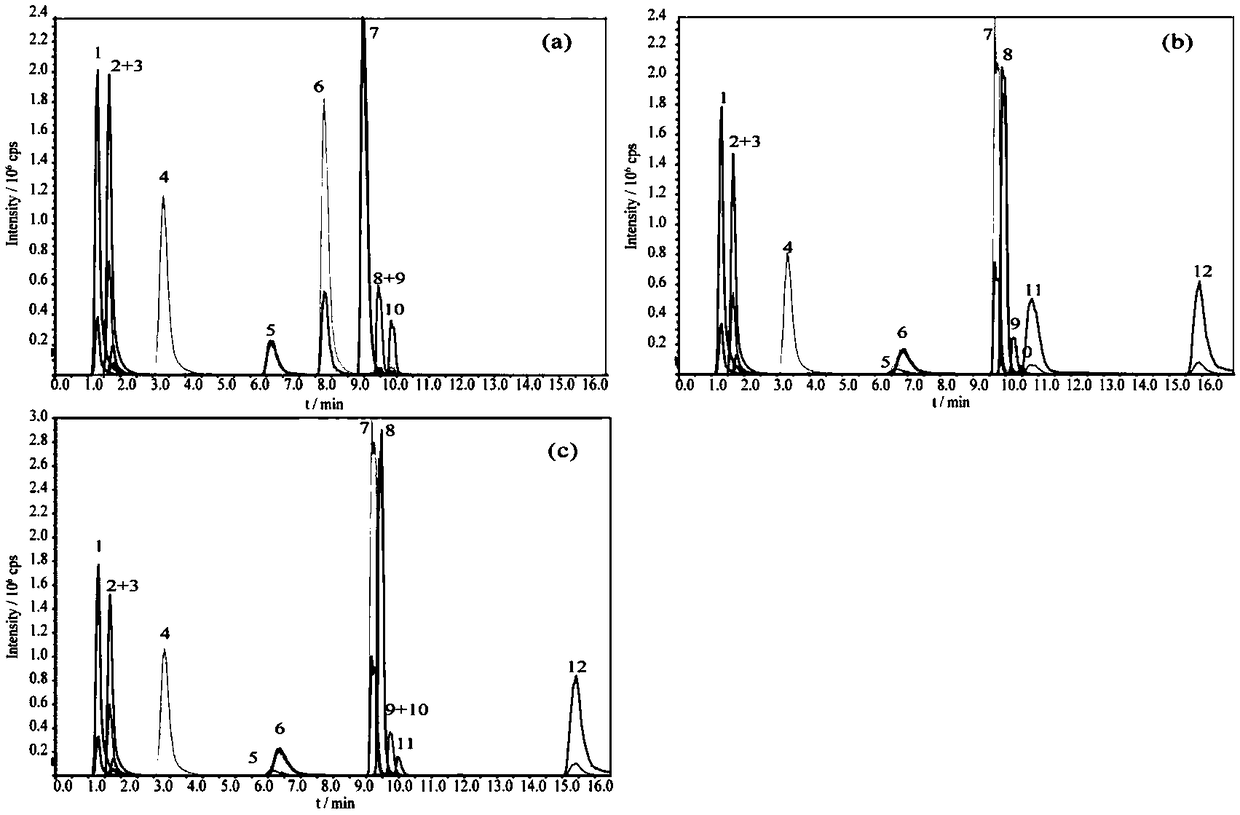
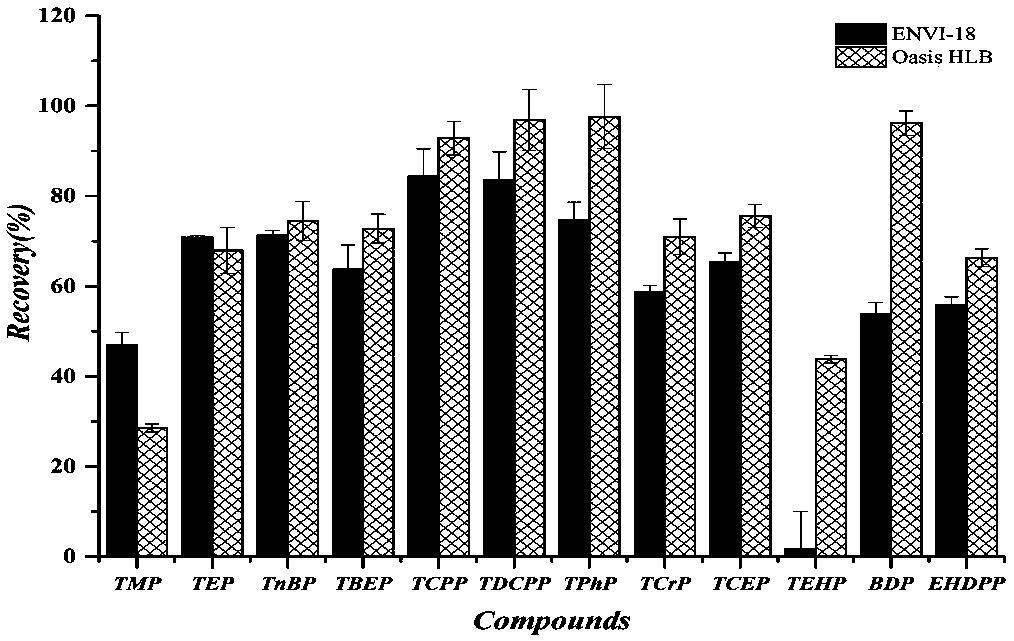
[0038] Taking the samples collected at 25 sampling points set up in Taihu Lake and its tributaries entering the lake in November 2016 as an example, the following 12 kinds of OPEs residues in water samples and sediments were simultaneously determined. The 12 kinds of OPEs include trimethyl phosphate ( Trimethylphosphate, TMP), Triethyl phosphate (TEP), Tri-n-butylphosphate (TnBP), Tributoxyethyl phosphate (Tributoxyethyl phosphate, TBEP), Tris(2-chloroisopropyl)phosphate (Tri(chloropropyl)phosphate, TCPP), Tris(1,3-dichloro-2-propyl)phosphate (Tri(dichloropropyl)phosphate, TDCP), Triphenylphosphate Triphenyl phosphate, TPhP, Tricresyl phosphate, TCrP, Tri(2-chloroethyl) phosphate, TCEP, Tris(2-ethylhexyl) phosphate Esters (Tri(2-ethylhexyl)phosphate, TEHP), tris(2,3-dibromopropyl)phosphate (tris(2,3-Dibromopropyl)phosphate, TDBPP), 2-ethylhexyl diphenylphosphate (2-Ethylhexyl diphenyl phosphate, EHDPP); the assay method includes the following steps:
[0039] S1: Sample colle...
PUM
| Property | Measurement | Unit |
|---|---|---|
| pore size | aaaaa | aaaaa |
| recovery rate | aaaaa | aaaaa |
Abstract
Description
Claims
Application Information
 Login to View More