Three-dimensional reconstruction method of excited fluorescence tomography based on deep learning

A fluorescence excitation and deep learning technology, applied in the field of biomedical molecular imaging, can solve problems such as easy changes in optical properties and difficulty in accurately obtaining organ optical parameters, and achieve the effect of improving accuracy and speed

CN109191564AActive Publication Date: 2019-01-11INST OF AUTOMATION CHINESE ACAD OF SCI
5 Cites 10 Cited by

Patent Information

Authority / Receiving Office
CN · China
Current Assignee / Owner
Publication Date
2019-01-11

Smart Images

  • Figure 1
    Figure 1
  • Figure 2
    Figure 2
  • Figure 3
    Figure 3
Patent Text Reader

Abstract

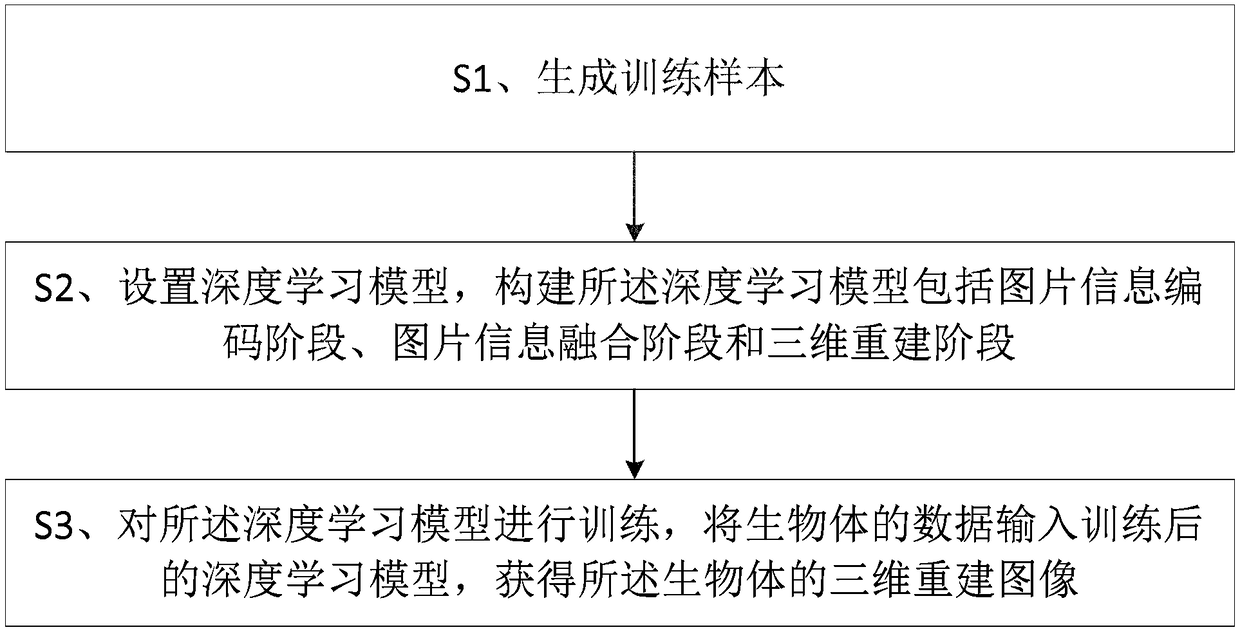
The invention provides a three-dimensional reconstruction method of excited fluorescence tomography based on deep learning. The method comprises the following steps: S1, generating a training sample;S2, setting a deep learning model, and constructing that deep learning model comprising a picture information coding stage, a picture information fusion stage and a three-dimensional reconstruction stage; and S3, training the deep learning model, inputting the data of the organism into the deep learning model after training, and obtaining the three-dimensional reconstruction image of the organism.Based on statistical learning, the method trains the forward and reverse processes of photon propagation, and improves the precision and speed of three-dimensional reconstruction of biologically excited fluorescence computed tomography.
Need to check novelty before this filing date? Find Prior Art

Description

Technical field

[0001] The invention relates to the field of biomedical molecular imaging, in particular to a three-dimensional reconstruction method of excited fluorescence tomography. Background technique

[0002] Fluorescence Molecular Imaging (FMI) technology is an emerging molecular imaging technology in recent years. Compared with other optical molecular imaging technologies, FMI technology has the characteristics of a wide variety of probes, high signal intensity, rich collection of information, and real-time in vivo imaging. FMI technology is widely used in research related to in vivo imaging of small animals. Fluorescence Molecular Tomography (FMT) is based on FMI technology, combined with structural tomography technology (such as X-ray computed tomography, nuclear magnetic resonance imaging, etc.) to generate three-dimensional images of fluorescence in the body, so as to accurately locate and target Biological tissues, and obtain the three-dimensional intensity distri...

Examples

Embodiment Construction

[0036] In order to make the objectives, technical solutions, and advantages of the embodiments of the present invention clearer, the technical solutions in the embodiments of the present invention will be described clearly and completely in conjunction with the accompanying drawings in the embodiments of the present invention. Obviously, the described embodiments It is a part of the embodiments of the present invention, not all the embodiments. Based on the embodiments of the present invention, all other embodiments obtained by those of ordinary skill in the art without creative work shall fall within the protection scope of the present invention.

[0037] The terms used in the embodiments of the present invention are only for the purpose of describing specific embodiments, and are not intended to limit the present invention. Unless otherwise defined, the technical or scientific terms used in the present invention shall have the usual meanings understood by those with ordinary sk...