Ferromagnetic material defect detection system based on ultrasonic and magnetic flux leakage

A magnetic material and defect detection technology, which is applied to the magnetic variables of materials and the use of sound waves/ultrasonic waves/infrasonic waves to analyze solids, etc., can solve the problems of increasing the complexity and cost of the detection system, low detection efficiency, etc., and achieve good application prospects and measurement accuracy The effect of high height and wide measuring range

CN109856242APending Publication Date: 2019-06-07CHINA JILIANG UNIV
2 Cites 0 Cited by

Patent Information

Authority / Receiving Office
CN · China
Patent Type
Applications(China)
Current Assignee / Owner
Publication Date
2019-06-07

Smart Images

  • Figure 1
    Figure 1
  • Figure 2
    Figure 2
  • Figure 3
    Figure 3
Patent Text Reader

Abstract

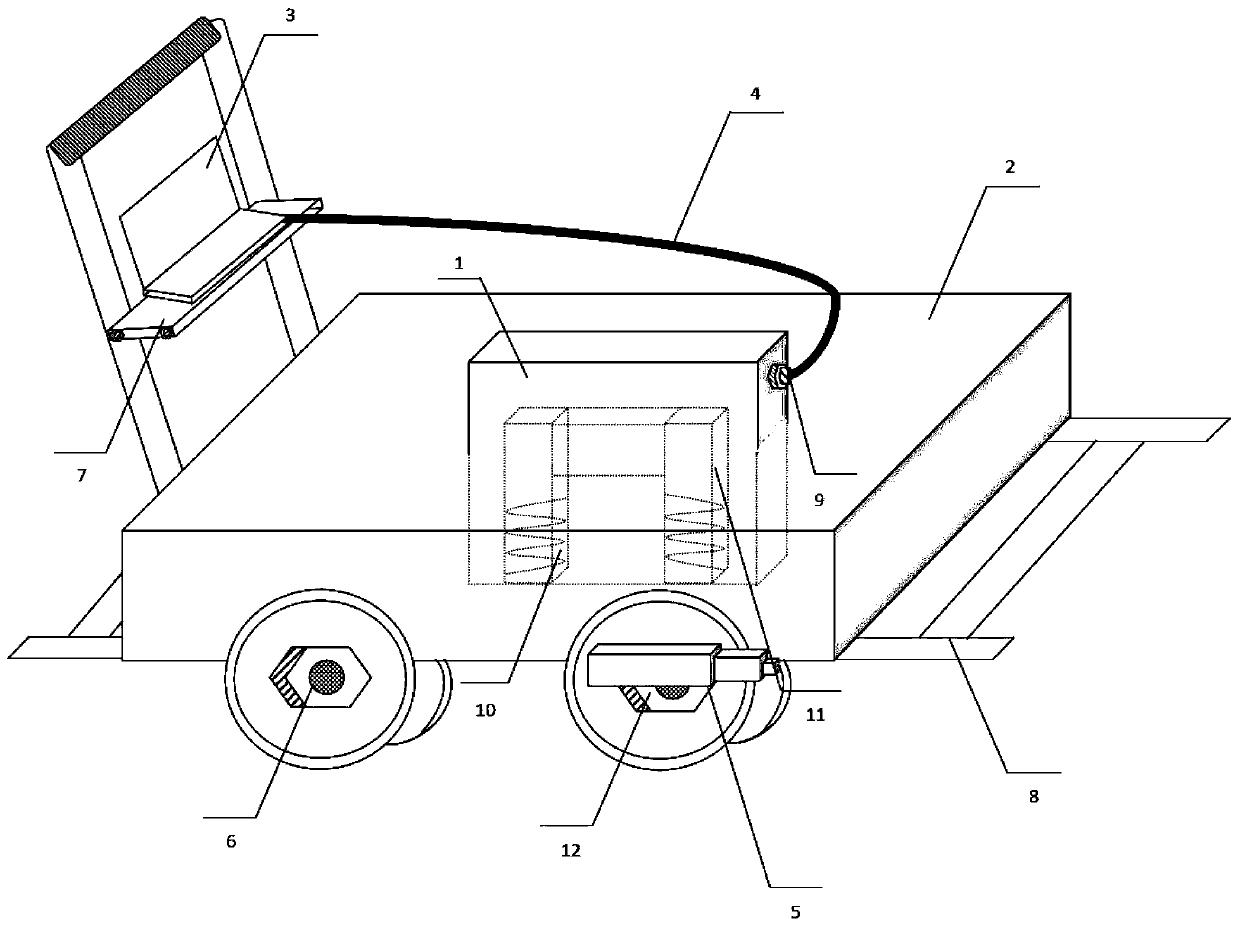
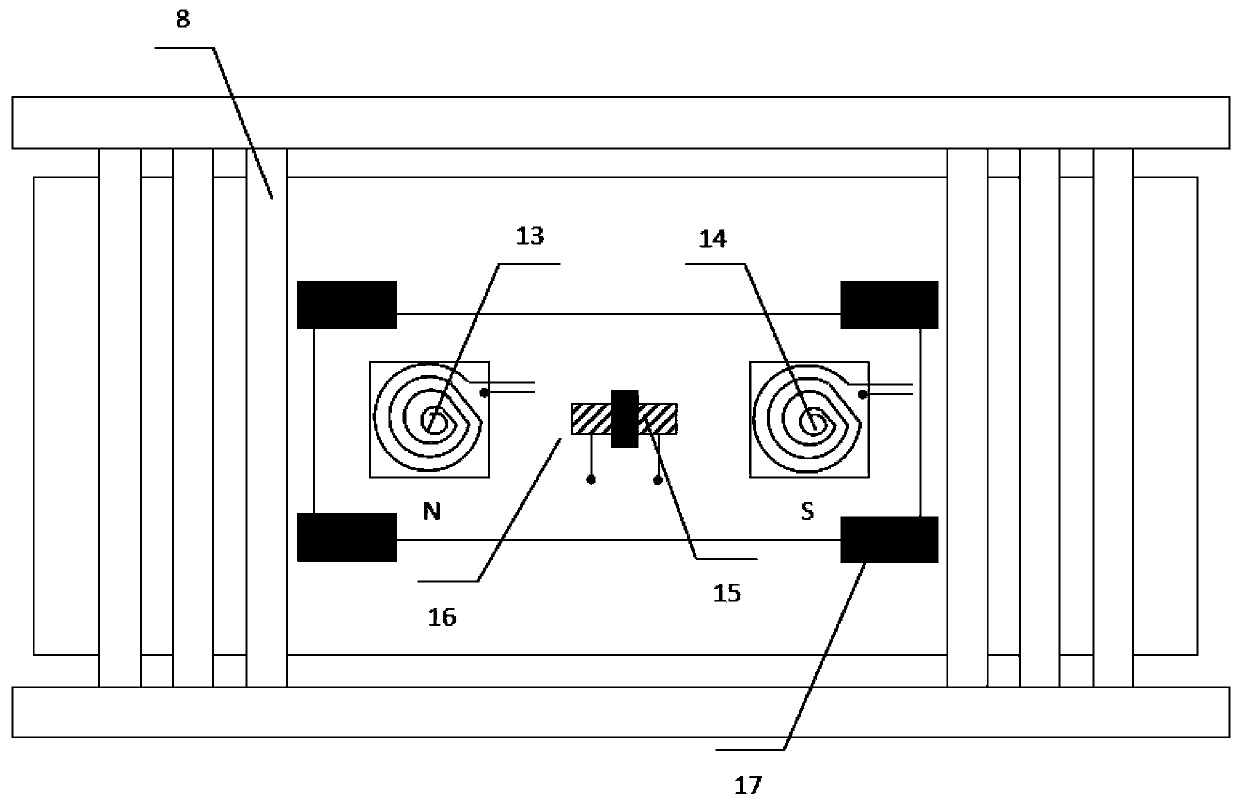
The invention discloses a ferromagnetic material defect detection system based on ultrasonic and magnetic flux leakage. The system is composed of a sensor, a host computer, a computer, a data uploading line, a motor, wheels, a support plate, a frame, a through hole, coils, a U-shaped magnetic core, driving wheels, an N-pole electromagnetic ultrasonic coil, an S-pole electromagnetic ultrasonic coil, a Hall element, an electronic potting sealant, sensor holders, a power amplifier, a sinusoidal signal generator, a 220v / 5v power source, a heat blowing fan, a signal acquisition card, a power adjustment knob, and a 220v / 15v transformer coil. According to the detection system, magnetic flux leakage is adopted to perform detection; a part where an alarm is generated is marked; after the initial condition of a ferromagnetic pressure-bearing device is understood, an ultrasonic detection technology, that is, the electromagnetic ultrasonic coils, are used to accurately judge an alarm part; the safety status of the ferromagnetic pressure-bearing device can be judged; and the blindness of ultrasonic thickness measurement-based defect detection can be avoided. The system has a high practical value and bright application prospect.
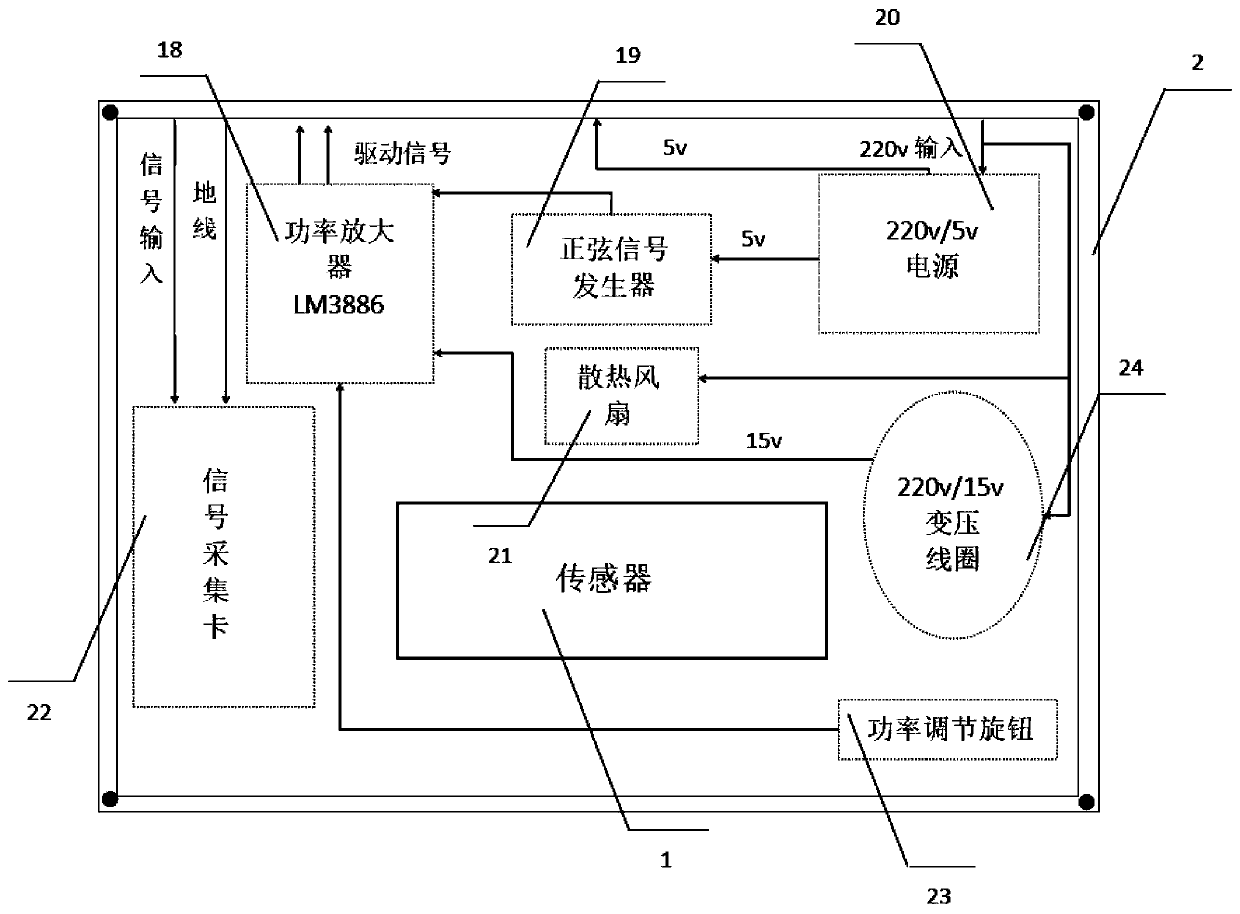
Need to check novelty before this filing date? Find Prior Art

Description

technical field

[0001] The invention belongs to the technical field of non-destructive detection of defects of ferromagnetic pressure-bearing equipment, and in particular relates to a detection system for magnetic material defects combined with ultrasound and leakage magnets. Background technique

[0002] As the core equipment of boilers and pressure pipes, pressure-bearing equipment has the characteristics of high temperature, high pressure, and cryogenic medium. These devices are very likely to cause accidents due to equipment overload, overdue service, and insufficient regular maintenance. Once a leakage or explosion accident occurs, the consequences will be extremely serious. Therefore, it is of great significance to develop effective non-destructive testing technology for ferromagnetic pressure equipment for rapid detection and early diagnosis of pressure equipment. At present, the commonly used non-destructive testing techniques include ultrasonic testing and magnetic...

Examples

Embodiment Construction

[0021] Ultrasonic combined with leakage magnet magnetic material defect detection system consists of sensor (1), host computer (2), computer (3), data upload line (4), motor (5), wheel (6), support plate (7), vehicle frame (8), through hole (9), coil (10), U-shaped magnetic core (11), driving wheel (12), N pole electromagnetic ultrasonic coil (13), S pole electromagnetic ultrasonic coil (14), Hall Er element (15), electronic potting glue (16), sensor holder (17) is formed. The host is composed of a power amplifier (18), a sine signal generator (19), a 220v / 5v power supply (20), a fan (21), a signal acquisition card (22), a sensor (1), a power adjustment knob (23), 220v / 15v transformer coil (24) is formed.

[0022] The sine signal generator (19) utilizes the DA of STM32 to output a sine wave modulated by PWM, and uses this signal as an excitation source to be amplified by a power amplifier (18). The main chip of the power amplification module is LM3886, and the output signal i...