A Lattice-Based Encryption Method

An encryption method and secret technology, which is applied in the field of information security, can solve problems such as lattice password threats, and achieve the effects of clear structure, fast encryption and decryption speed, and reduced bandwidth requirements

CN110474772BActive Publication Date: 2020-08-14ACAD OF MATHEMATICS & SYSTEMS SCIENCE - CHINESE ACAD OF SCI
6 Cites 0 Cited by

Patent Information

Authority / Receiving Office
CN · China
Patent Type
Patents(China)
Current Assignee / Owner
Publication Date
2020-08-14

Smart Images

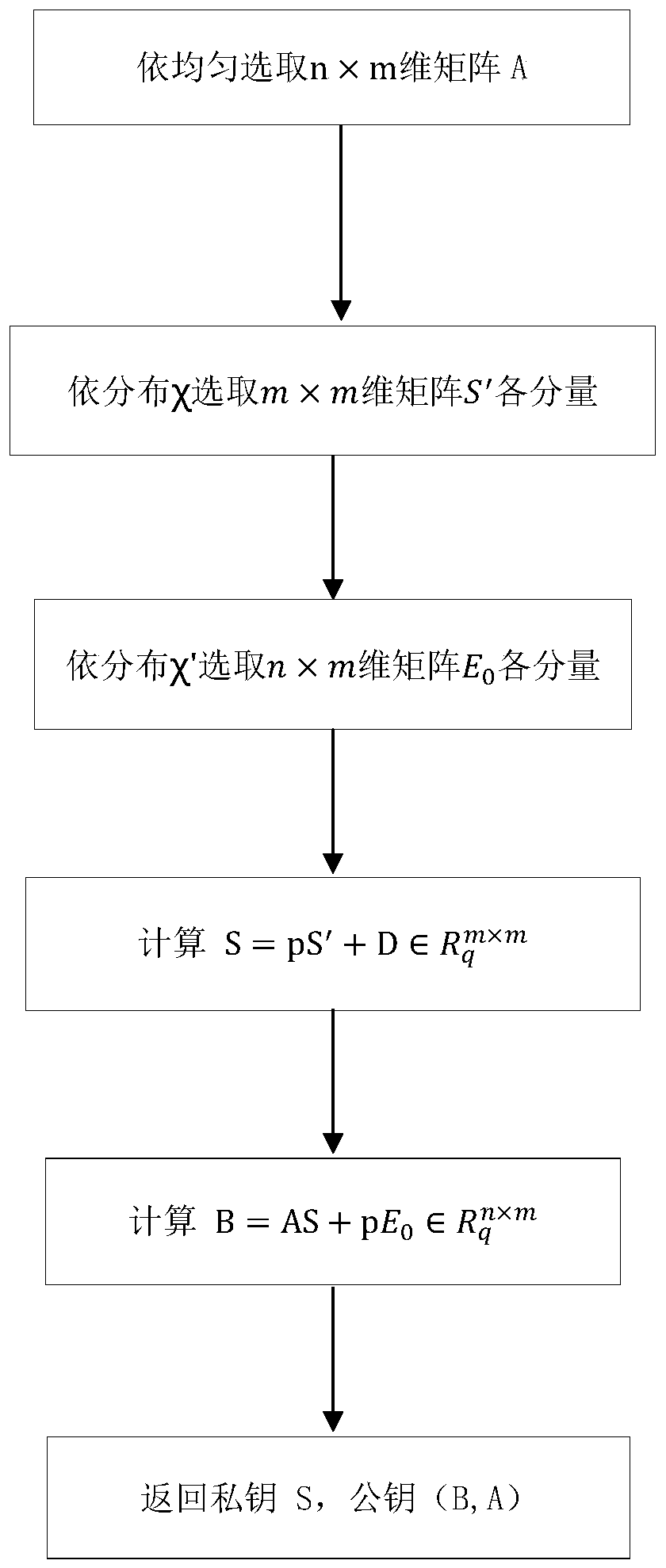
  • Figure 1
    Figure 1
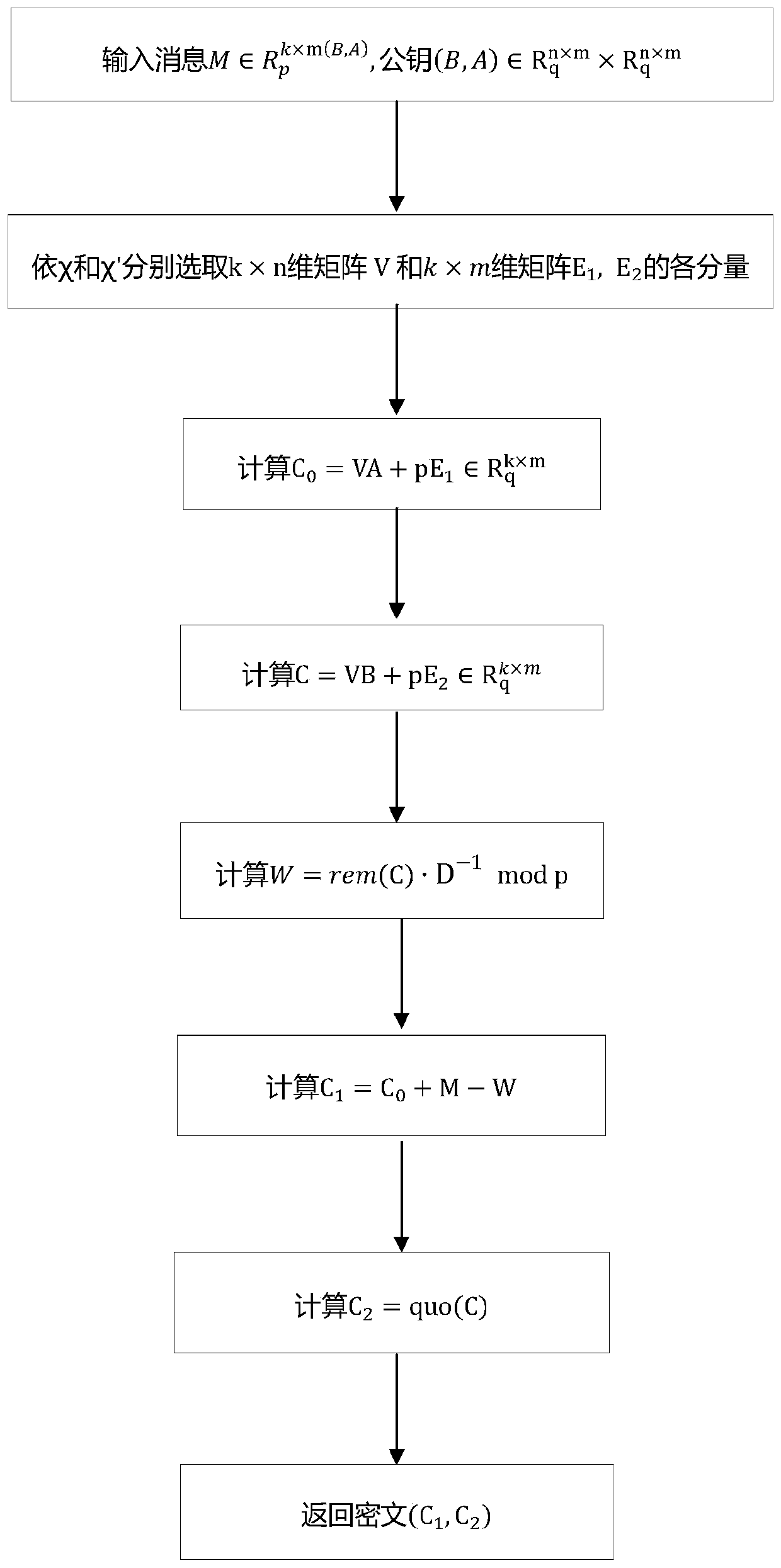
  • Figure 2
    Figure 2
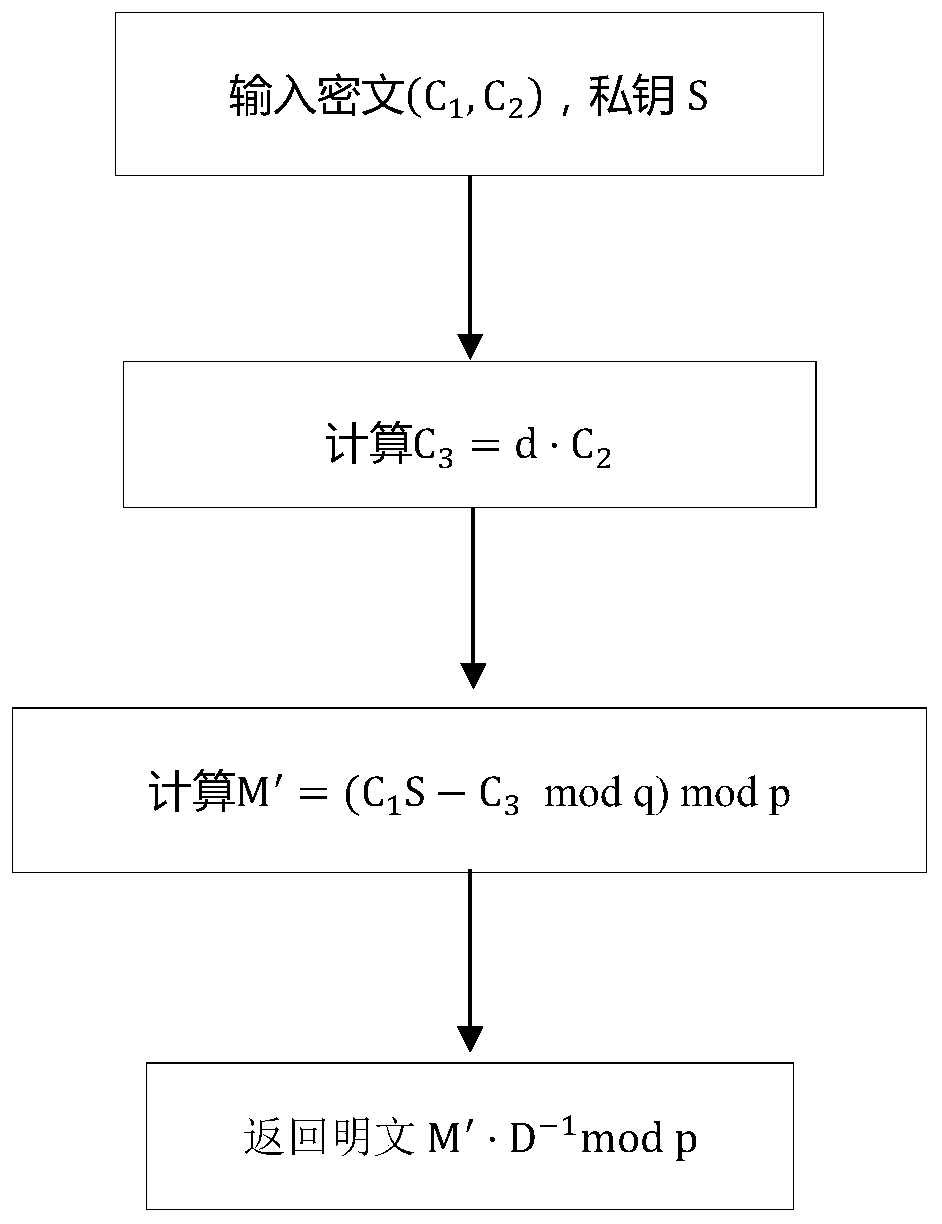
  • Figure 3
    Figure 3
Patent Text Reader

Abstract

The invention discloses a lattice-based encryption method, which comprises the following steps of: 1) a private key S and a public key (B, A) are generated; 2) the sender calculates C0 = VA + pE1 andC = VB + pE2 by using the receiver public key; (3) the sender calculates a remainder of each coefficient of each component polynomial of the matrix C for d, the obtained remainder polynomial matrix isrecorded as rem (C), and W is made to be equal to rem (C) * D-1 mod p; then, C1 = C0 + M-W is obtained through calculation; 4) the sender calculates the quotient of each coefficient of each componentpolynomial of the matrix C to d, and the obtained quotient polynomial matrix is recorded as C2 = quo (C); and then ciphertext (C1, C2) is output. According to the method, the ciphertext is hidden ata low position and can be combined with other technologies for use, and then the purpose of simultaneously hiding the high position and the low position is achieved; meanwhile, due to the introductionof a ciphertext compression technology, the bandwidth requirement of communication is also reduced.
Need to check novelty before this filing date? Find Prior Art

Description

Technical field

[0001] The invention belongs to the technical field of information security, and specifically relates to a lattice-based encryption method. Background technique

[0002] With the introduction of Shor's algorithm, large number decomposition and discrete logarithm problems can be solved by quantum computers in polynomial time. Therefore, the public key encryption system based on the classic number theory has no security in front of quantum computers. Many countries and regions have begun to invest huge manpower and material resources to develop anti-quantum cryptographic algorithms to replace existing public key algorithms. The most influential one is the post-quantum algorithm solicitation project initiated by the US Bureau of Standards and Technology. The project has received extensive international attention.

[0003] As an alternative to public key cryptography based on number theory problems, lattice-based cryptography is widely regarded as one of the most pote...

Examples

Embodiment Construction

[0046] The present invention will be further described in detail below in conjunction with the drawings.

[0047] First generate public parameters: select positive integers p, q, m, n, k, and d, where 1 q =Z q [x] / F(x), R p =Z p [x] / F(x); select ring R q Discrete Gaussian distribution on χ, χ′; choose Any invertible matrix D in, such as the identity matrix, and record it in The inverse in is D -1 :

[0048] Such as figure 1 The steps of the key generation method include:

[0049] Step 1: Generate an n×m dimensional matrix A, where the components of A are in the polynomial ring R q Select evenly on top.

[0050] Step 2: Generate m×m dimension R q S′ on the square matrix, the components of the square matrix follow the ring R q The distribution on χ is extracted.

[0051] Step 3: Generate n×m dimension R q Phalanx E 0 , The components of the square matrix follow the ring R q The distribution on χ′ is extracted.

[0052] Step 4: Calculation

[0053] Step 5: Calculation

[0054] Step 6: Re...