
System for predicting number of oocytes obtained during ovarian stimulation of object
An oocyte, subject-based technology with applications in patient-specific data, biostatistics, computer-aided medical procedures, and more
- Summary
- Abstract
- Description
- Claims
- Application Information
AI Technical Summary
Problems solved by technology
Method used
Image

Examples
Embodiment 1
[0132] Example 1 selects the subjects initially used to construct the model
[0133] Based on the data obtained from patients who were treated at Peking University Third Hospital between January 2017 and December 2017, the model was initially constructed. For patients used for initial model building, basic and clinical characteristics of the patient were collected, including last name, medical record number, serial number, age, BMI index, duration of infertility, previous IVF / ICSI - Number of embryo transfer (IVF / ICSI-ET) attempts, serum basal E 2 levels, FSH levels and LH levels, serum AMH levels, left and right ovarian AFCs, first, second, third, fourth and fifth causes of infertility, conventional or mild ovarian stimulation cycle, type of ovarian stimulation / COS regimen , starting and total dose of recombinant rFSH, duration of rFSH treatment (days), name of rFSH, endometrial thickness on human chorionic gonadotropin (hCG) trigger day, date of oocyte retrieval, and NROs. ...
Embodiment 2
[0151] Embodiment 2 model construction factor selection
[0152] Regression Model Selection
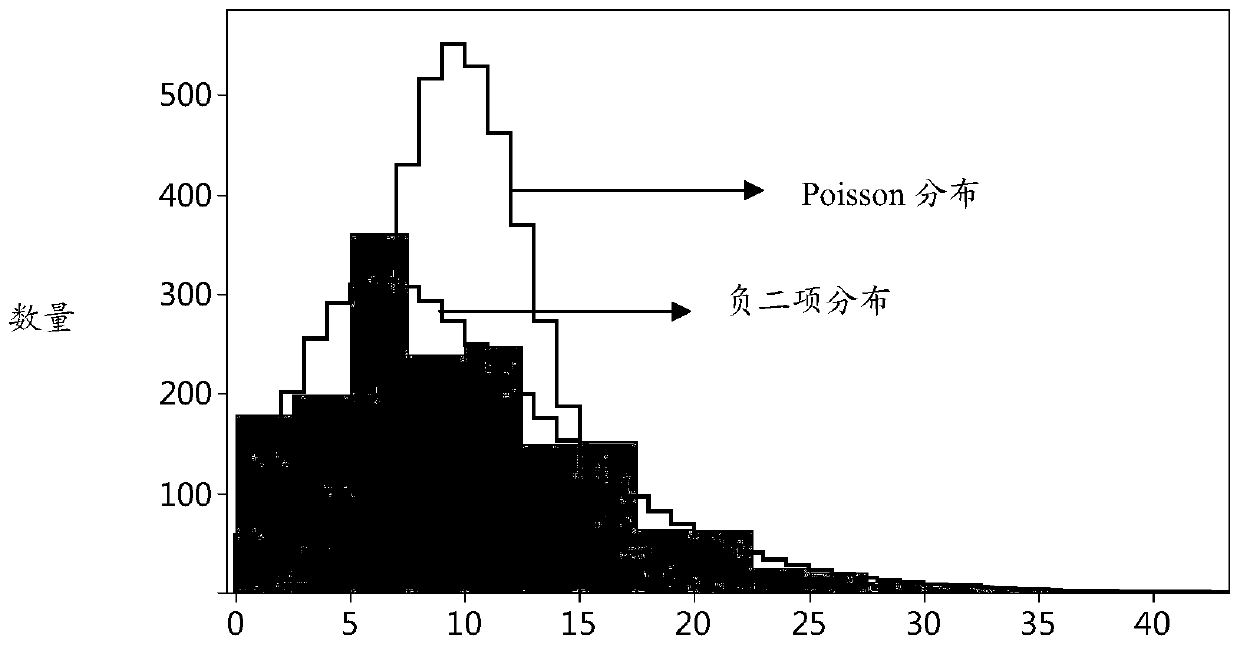
[0153] For the data of the above 1523 patients, the distribution of the number of oocytes obtained was first determined. Since the number of oocytes obtained is count data, Poisson distribution or negative binomial distribution can usually be considered. Utilize JMP Pro v.14 software to carry out the goodness of fit test of Poisson distribution and negative binomial distribution to data in the present embodiment, the result shows as follows figure 1 As shown, the data deviate from the Poisson distribution (χ 2 =7026.46, P2 = 1660.35, P = 0.77). figure 1 Show the fitting situation when using Poisson distribution and negative binomial distribution respectively, from figure 1 The results show that the number of retrieved oocytes (NROs) can be better fitted using the negative binomial distribution. Since the obtained data on the number of oocytes obeys the negative binomial distribut...
Embodiment 3
[0163] Example 3 Build a prediction model
[0164] As mentioned above, negative binomial regression was selected to build a statistical model, and the selection of predictors was carried out using pruned forward method and holdback verification. Using the software JMP Pro v. It is divided into two parts, one part is used as a training set (1066 data, 70%), and the other part is used as a verification set (457 data, 30%).
[0165] First, build the model on the training set and verify the model performance on the validation set. The selection of the prediction model is mainly based on the negative log-likelihood value in the validation set. The lower the negative log-likelihood value in the validation set, the better the model is.
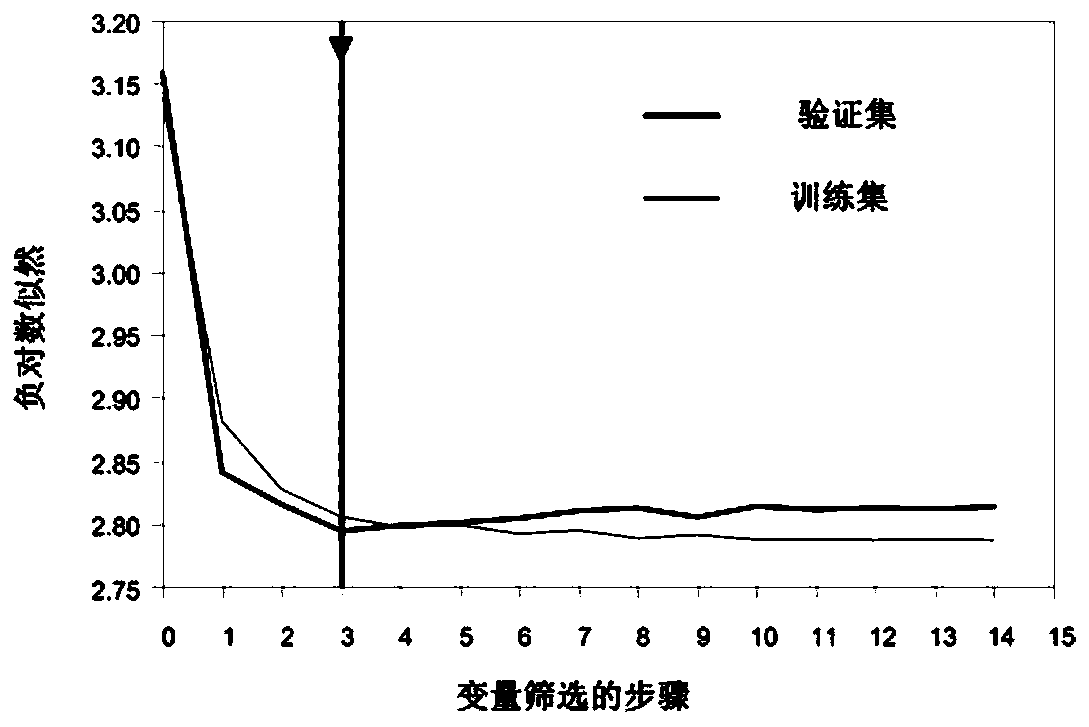
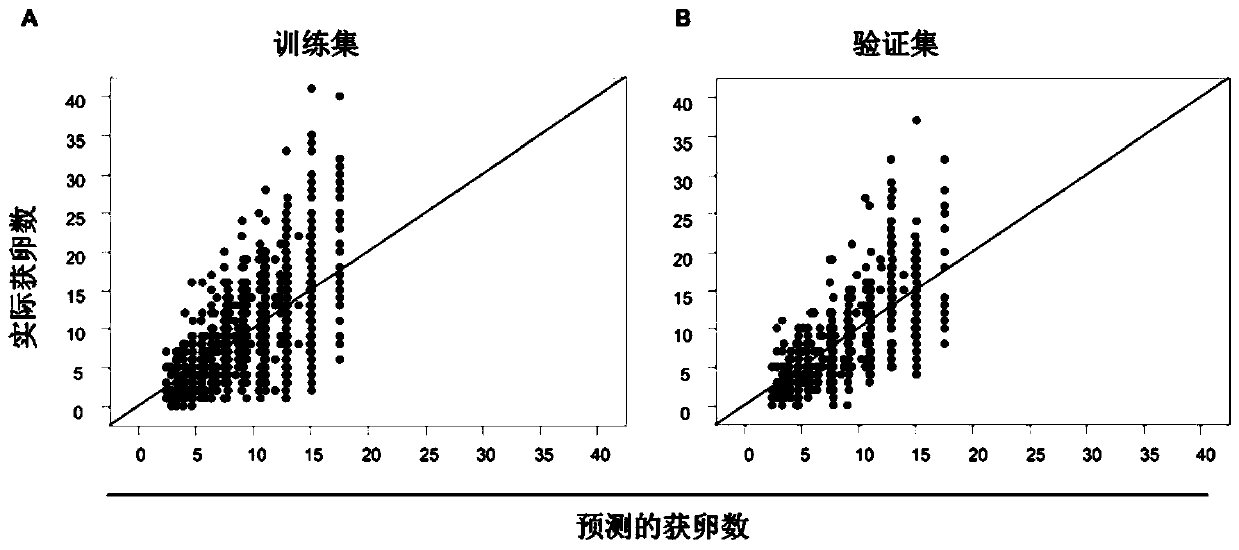
[0166] figure 2 shows the variable screening process of the pruned forward method, specifically, except for the eliminated E 2 In addition, the rest of the above-mentioned single factors were included in the multi-factor negative binomial regress...
PUM
 Login to View More
 Abstract
Description
Claims
Application Information
 Login to View More