
Lactobacillus johnsonii and application thereof
A technology of Lactobacillus johnsonii and Lactobacillus johnsonii, applied in the field of microorganisms, can solve the problems of high choline level, increased betaine level, increased platelet aggregation, etc., so as to improve metabolic syndrome, relieve cardiovascular disease, improve Effect of Betaine Concentration
- Summary
- Abstract
- Description
- Claims
- Application Information
AI Technical Summary
Problems solved by technology
Method used
Image

Examples
Embodiment 1
[0044] Example 1: Isolation and Identification of Lactobacillus in C57B6 / J Mouse Gut
[0045] Fresh intestinal contents of C57B6 / J mice were diluted with sterile water at room temperature. Under sterile conditions, 100 mg of mouse intestinal content was taken in a test tube. Add 1 mL of sterile water, and centrifuge the sample at 4000 rpm for 1 minute. Every 50 μL supernatant was spread on the MRS plate and incubated at 37°C for 24 hours. By observing the characteristics of the colonies on the plate, colonies were screened from the plate for molecular biological identification.
[0046] Genomic DNA of strain EU03 was extracted by ctab / sds method and used as a template for PCR amplification. The 16s ribosomal DNA sequence of the strain was amplified and sequenced with universal primers 27f: 5'-agagttttgatggctcag-3' (SEQ ID NO: 1) and 1492r: 5'-acggttatccttgttaccgatt-3' (SEQ ID NO: 2). Amplification was performed using polymerase chain reaction in a PCR thermocycler (MyCycl...
Embodiment 2
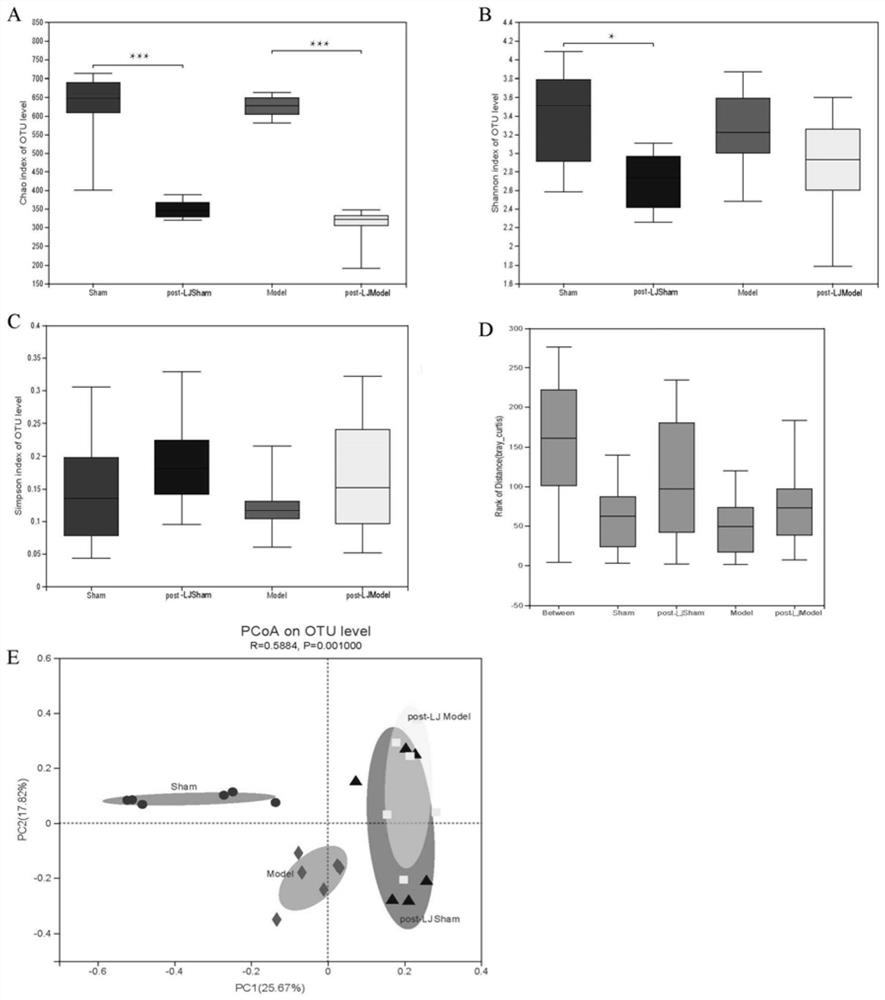
[0048] Example 2: Regulatory effect of Lactobacillus johnsonii EU03 on the diversity of intestinal flora in healthy and MI rats
[0049] The experimental animals were 6-week-old male healthy SD rats with a body weight of 240±10 g, provided by Beijing Weitong Lihua Animal Experiment Center. The rats were raised in the Experimental Animal Center of Tianjin University of Traditional Chinese Medicine (Tianjin), at room temperature (22±2°C), relative humidity of 58-65%, and photoperiods of 12 hours alternately. In this study, 3-5 identically treated rats were tested per group.
[0050] Preparation of Lactobacillus agent: Inoculate Lactobacillus johnsonii EU03 into MRS liquid medium according to the inoculum size of 2%, culture at 37°C for 24h, take out the centrifugation (10000r / min, 10min, 4°C) and discard the supernatant, After washing twice with sterilized water, adjust the concentration of the bacterial solution to 10 with sterilized water. 8 CFU / mL (Colony Count: Transfer ...
Embodiment 3
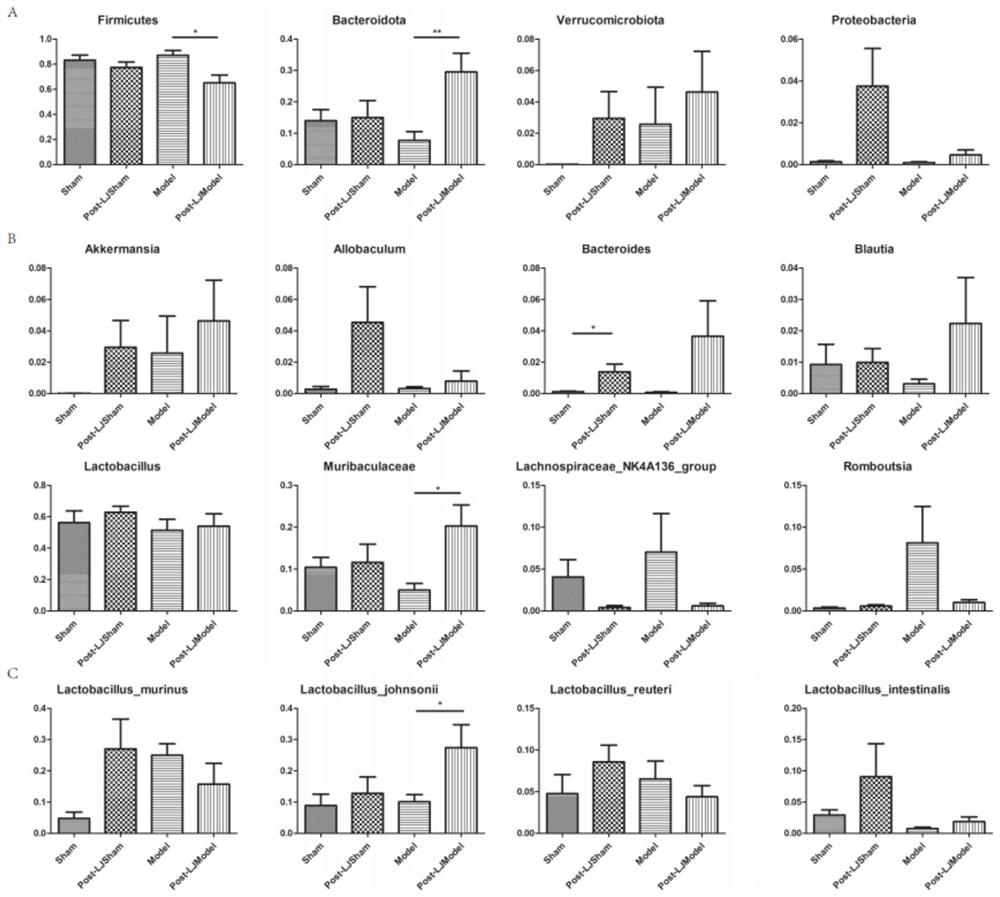
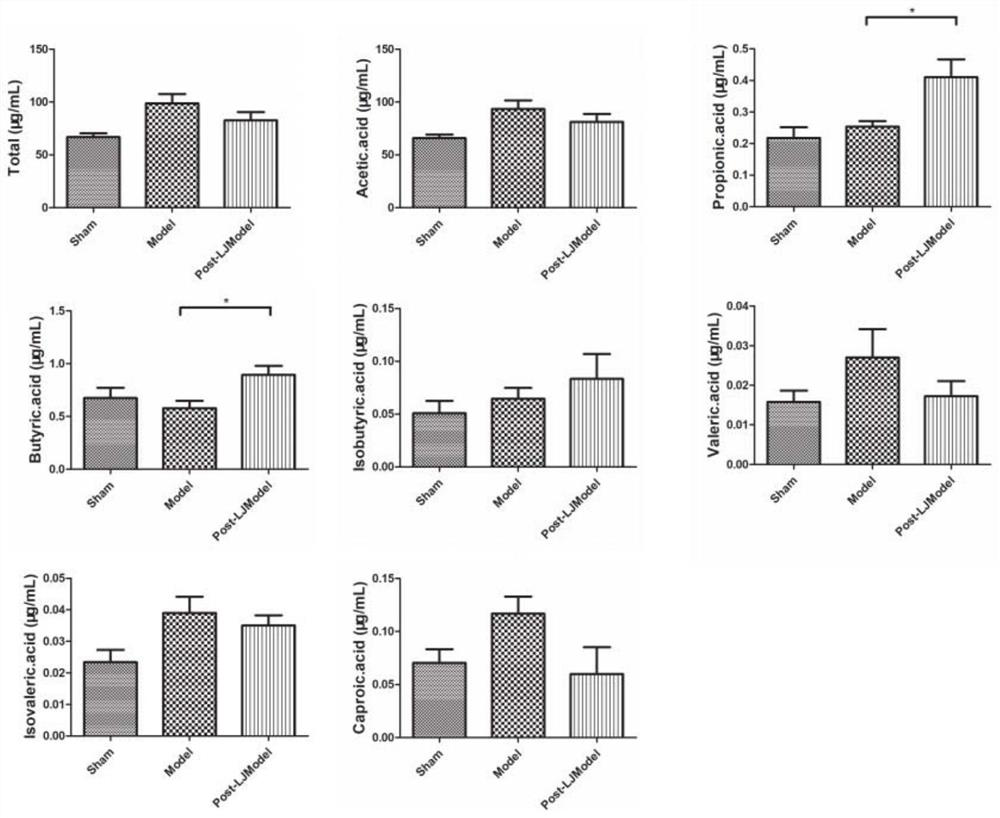
[0061] Example 3: Regulatory effect of Lactobacillus johnsonii EU03 on the intestinal flora structure of healthy and MI rats
[0062] Use the Uparse software (Uparse v7.0.1001) to cluster all the Effective Tags of all samples. By default, the sequences are clustered into OTUs with 97% identity (Identity), and the representative sequences of OTUs will be selected, according to its algorithm principles , and select the sequence with the highest frequency in OTUs as the representative sequence of OTUs. Using the Mothur method and the SSUrRNA database of SILVA (http: / / www.arb-silva.de / ) to perform species annotation analysis on the representative sequences of OTUs (set the threshold value as 0.8-1), obtain taxonomic information and analyze them at each taxonomic level. : phylum (phylum) genus (genus) counts the community composition of each sample. The Kruskal-Wallis H test, referred to as Krusk's rank sum test, was used to analyze the significant differences among the species ...
PUM
 Login to View More
 Abstract
Description
Claims
Application Information
 Login to View More