
Temperature sensor
A technology for temperature sensor and temperature detection, which is applied in thermometers, instruments, and thermometers based on the expansion/contraction of materials, etc., which can solve the problem of insufficient accuracy of temperature sensors
- Summary
- Abstract
- Description
- Claims
- Application Information
AI Technical Summary
Problems solved by technology
Method used
Image

Examples
Embodiment 1
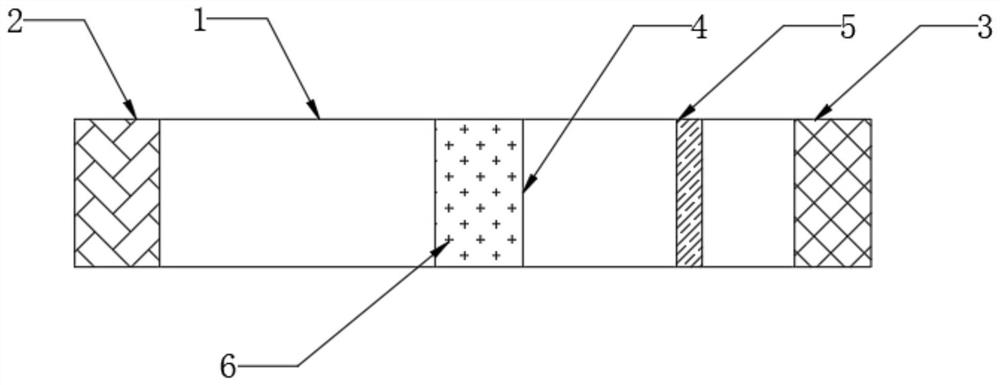
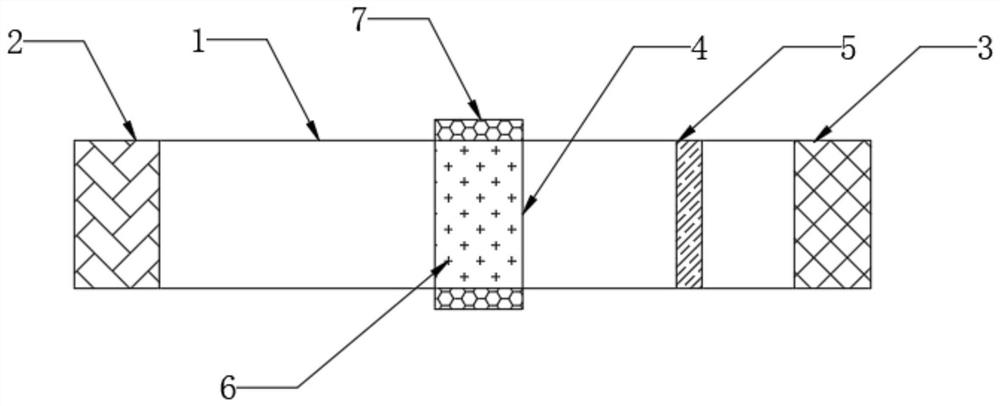
[0025] see figure 1 , figure 2 , Figure 4 , a temperature sensor, comprising an optical fiber 1, a laser 2 is arranged at one end of the optical fiber 1, a detector 3 is arranged at an end of the optical fiber 1 away from the laser 2, a thermal expansion part 4 is arranged at a middle position of the optical fiber 1, and a thermal expansion part 4 and the detector 3 are arranged A filter 5 is provided, a nanoparticle 6 is arranged in the thermal expansion part 4, a thermal contraction part 7 is provided on the outer wall of the thermal expansion part 4, a fixed part 8 is provided at both ends of the thermal expansion part 4, the thermal expansion part 4 is a transparent thermal expansion material, and the nanoparticle 6 It is NaYF4 doped with rare earth.
[0026] Specifically, when working, the laser 2 emits laser light, transmits and irradiates the thermal expansion part 4 through the optical fiber 1, and the nanocomposite material in the middle of the thermal expansion p...
Embodiment 2
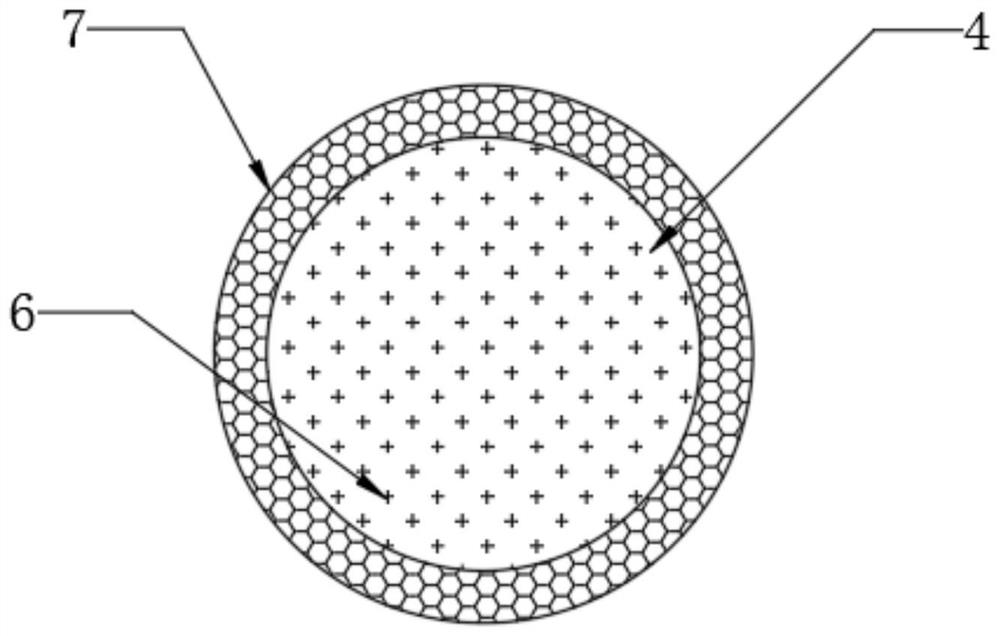
[0031] On the basis of specific embodiment 1, please refer to figure 2 , image 3 Specifically, the heat shrinkable part 7 is connected to the outer wall of the heat expandable part 4 by sticking, and the material of the heat shrinkable part 7 is cross-linked polyethylene material. A circle of thermal contraction part 7 is arranged outside the thermal expansion part 4. When detecting the temperature, the thermal expansion part 4 is thermally expanded, and the thermal contraction part 7 is thermally contracted. The thermal contraction part 7 produces an inward pressure on the thermal expansion part 4, so that the thermal expansion part 4 Expanding to both sides, therefore, the thermal expansion part 4 will become longer, the concentration of nanoparticles 6 inside it will change more obviously, and the resulting light intensity will also change more obviously, which can effectively improve the detection accuracy and sensitivity.
Embodiment 3
[0033] On the basis of specific embodiment 1, special, please refer to Figure 4 , the shape of the fixing part 8 is wedge-shaped, and there are two fixing parts 8, which are distributed symmetrically at the top and bottom of the thermal expansion part 4 respectively. Wedge-shaped fixing parts 8 are provided at both ends of the thermal expansion part 4. When the thermal expansion part 4 expands in volume due to the influence of temperature, the upper and lower fixing parts 8 will generate forces in different directions on the thermal expansion part 4, so that the thermal expansion part 4 is twisted and the inside The change of the concentration of nanoparticles 6 is more obvious, so the change of the light intensity produced is more obvious, which can effectively improve the detection accuracy and sensitivity.
[0034] The relevant content of the temperature sensor is as described above, and will not be repeated here.
PUM
 Login to View More
 Abstract
Description
Claims
Application Information
 Login to View More