
Nitrate-free environment-friendly steel plate enamel high-temperature transparent glaze and preparation method thereof
An environmentally friendly, nitrate technology, applied in the field of enamel, achieves the effect of increasing the oxidizing atmosphere, reducing the usage, and solving the pollution of the environment
- Summary
- Abstract
- Description
- Claims
- Application Information
AI Technical Summary
Problems solved by technology
Method used
Image

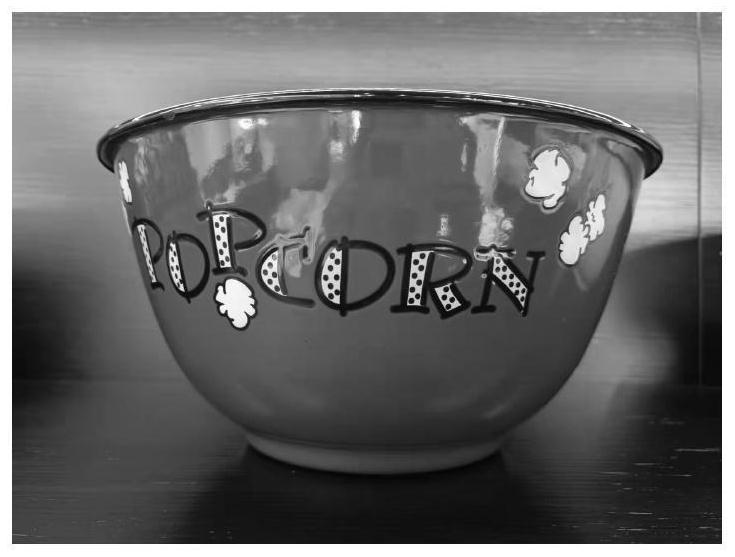
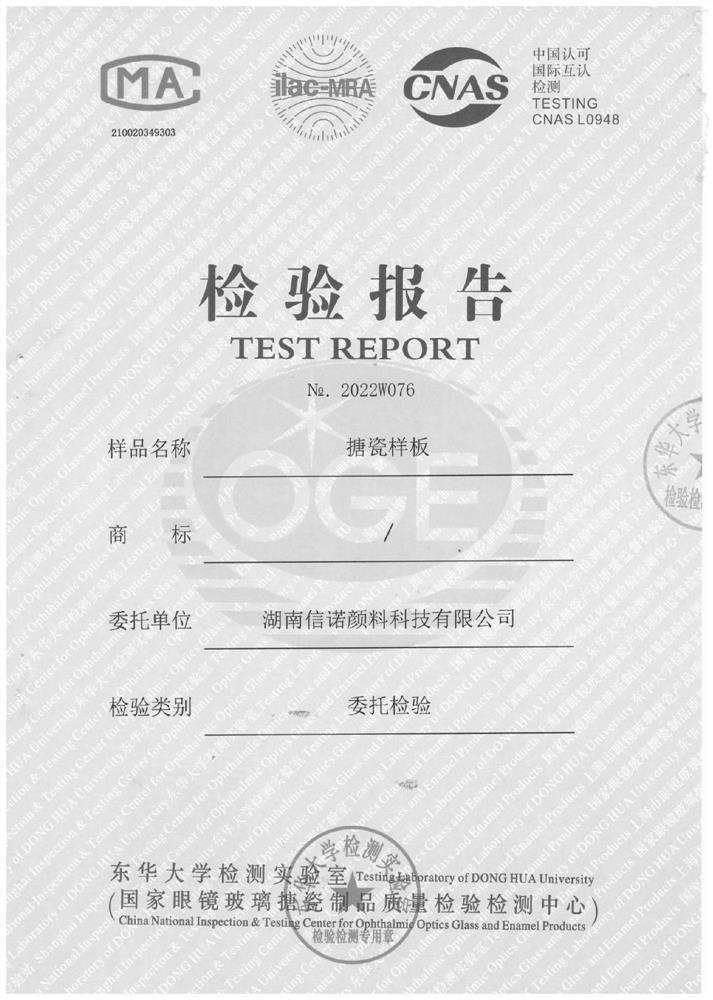
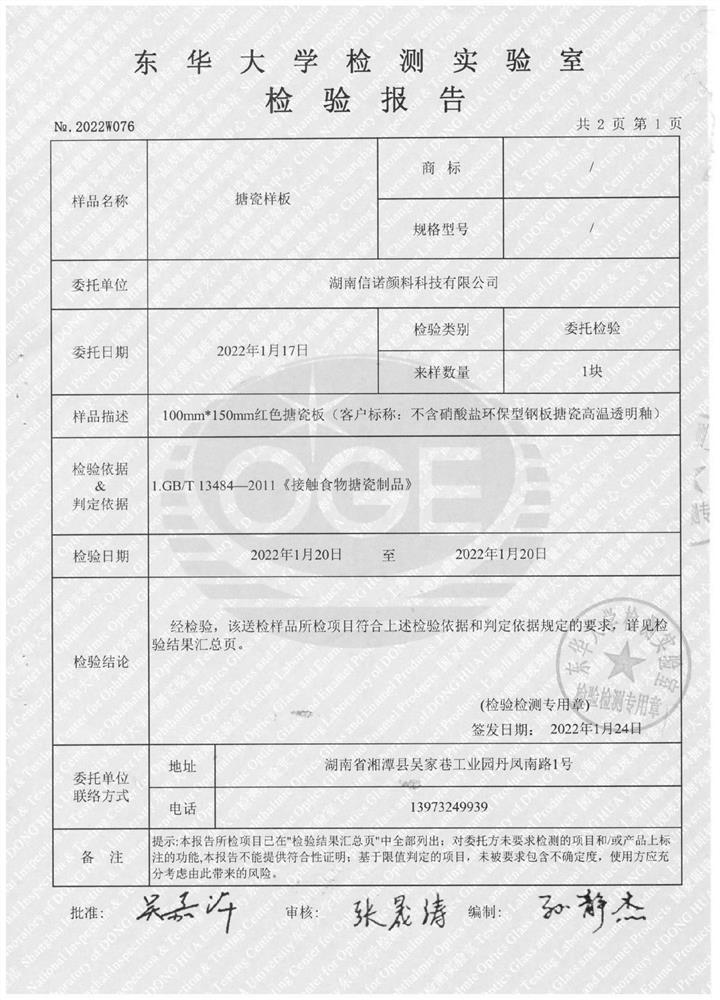
Examples
Embodiment 1
[0042] (1) Take the raw materials by the mass parts of the following components:
[0043] Zero water borax 21KG, potassium feldspar 37.5KG, quartz 20KG, sodium fluorosilicate 7.6KG, fluorite 5.5KG, titanium dioxide 5KG, alumina 7KG, barium carbonate 3KG;
[0044] (2) Stir and mix the above-mentioned raw materials;
[0045] (3) Put the uniformly mixed material into a melting furnace, and melt it under the condition of pure oxygen, and control the melting temperature at 1290±10°C.
[0046] (4) After the above materials are completely melted, the borosilicate glass body is obtained, and the molten borosilicate glass body is brazed, and quickly drawn into a glass filament of 1.2 to 1.5 meters for detection. The detection requirement is: within 1 meter of the glass filament. The knot is the completion of melting.
[0047] (5) Quenching (pressing) the melted borosilicate glass body to obtain the product.
Embodiment 2
[0049] The preparation process of this embodiment and embodiment 1 is basically the same, the difference is:
[0050] The mass parts of each component in the step (1) are: zero-water borax 22KG, potassium feldspar 37KG, quartz 20KG, sodium fluorosilicate 7KG, fluorite 6.2KG, titanium dioxide 5KG, aluminum oxide 7KG, barium carbonate 3KG.
[0051] In step (5), quenching the melted borosilicate glass body is a process of water quenching.
Embodiment 3
[0053] The preparation process of this embodiment and embodiment 1 is basically the same, the difference is:
[0054] The mass parts of each component in the step (1) are: zero-water borax 23KG, potassium feldspar 36.7KG, quartz 20KG, sodium fluorosilicate 6.3KG, fluorite 6.8KG, titanium dioxide 5KG, aluminum oxide 7KG, barium carbonate 3KG .
PUM
 Login to View More
 Abstract
Description
Claims
Application Information
 Login to View More