Bielement beacon of wavelength conversion
A wavelength conversion, molecular beacon technology, applied in the direction of chemical reaction of materials for analysis, chemiluminescence/bioluminescence, luminescent materials, etc., can solve the problem that the fluorescence intensity of fluorescent molecules cannot reach the maximum, and cannot be convenient and fast problem, to achieve high specificity and high sensitivity
- Summary
- Abstract
- Description
- Claims
- Application Information
AI Technical Summary
Problems solved by technology
Method used
Image

Examples
Embodiment 1
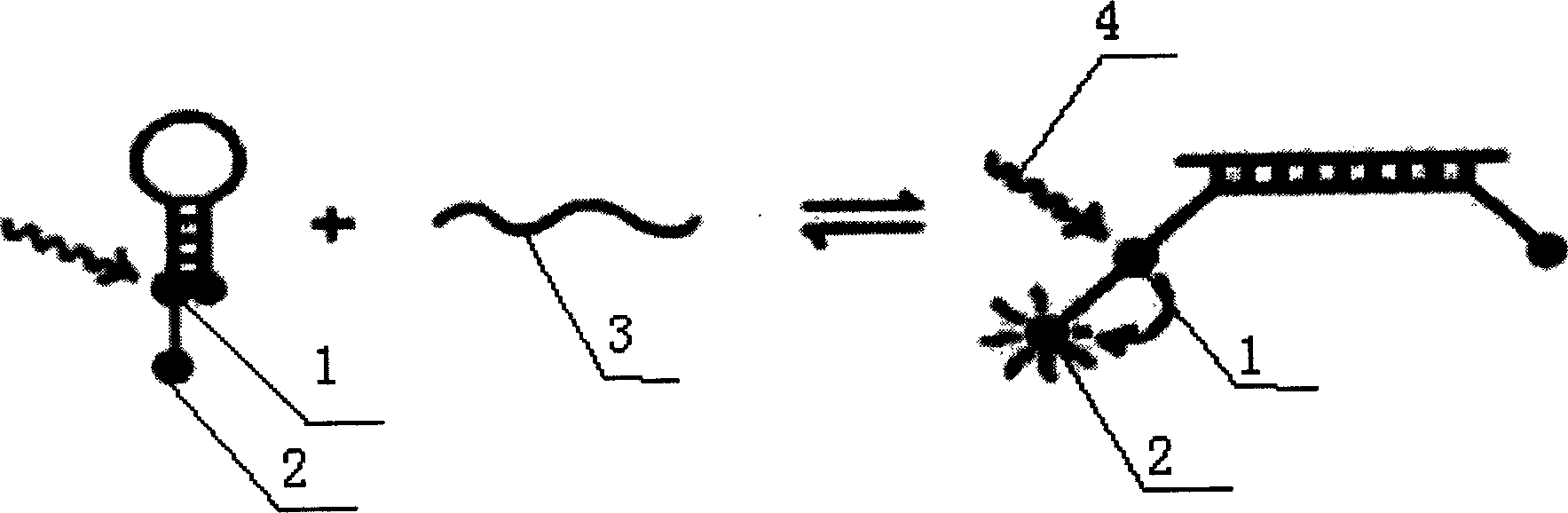
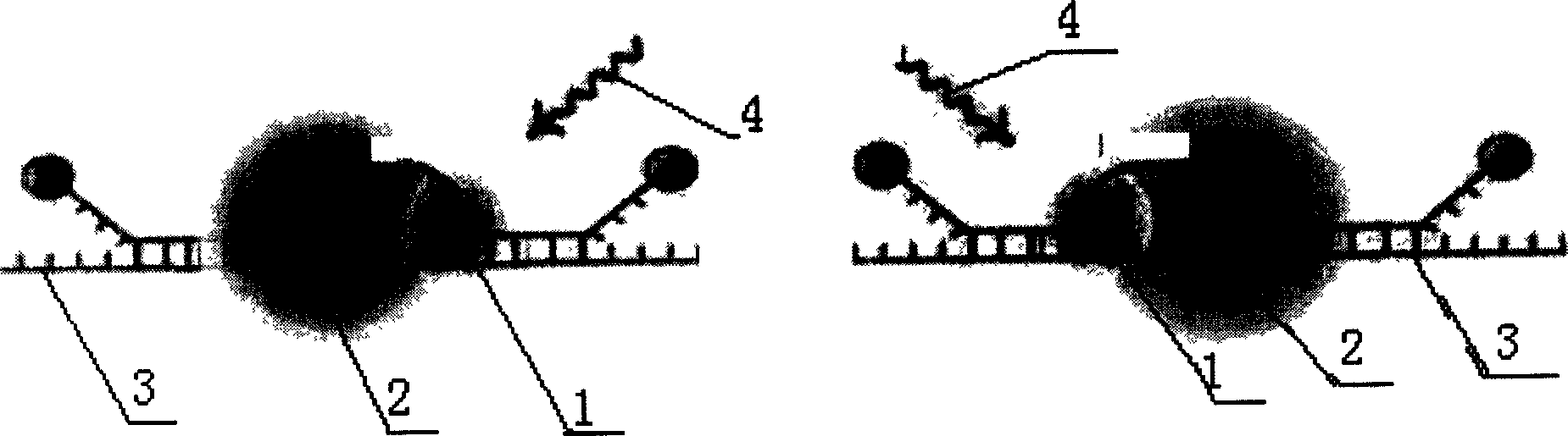
[0014] Example 1: wavelength conversion bimolecular beacons, when detecting two target molecules 3 of a cell, the beacon donor 1 in the two pairs of molecular beacons uses fluorescein, and the beacon receptors in the two pairs of molecular beacons Body 2 uses Texas Red and FITC.
Embodiment 2
[0015] Example 2: wavelength conversion bimolecular beacons, when detecting two target molecules 3 of a cell, the beacon donor 1 in the two pairs of molecular beacons uses coumarin, and the beacons in the two pairs of molecular beacons Receptor 2 uses Fluorescent Yellow and EADNS.
Embodiment 3
[0016] Example 3: wavelength conversion bimolecular beacons, when detecting two target molecules 3 of a cell, the beacon donor 1 in the two pairs of molecular beacons uses Texas Red, and the beacons in the two pairs of molecular beacons receive Body 2 uses fluorescent yellow and EADNS.
PUM
 Login to View More
 Abstract
Description
Claims
Application Information
 Login to View More
 - R&D
- Intellectual Property
- Life Sciences
- Materials
- Tech Scout
- Unparalleled Data Quality
- Higher Quality Content
- 60% Fewer Hallucinations
Browse by: Latest US Patents, China's latest patents, Technical Efficacy Thesaurus, Application Domain, Technology Topic, Popular Technical Reports.
© 2025 PatSnap. All rights reserved.Legal|Privacy policy|Modern Slavery Act Transparency Statement|Sitemap|About US| Contact US: help@patsnap.com