
Method for stripping resist film from metal plate and method for manufacturing etched metal plate
a technology of resist film and metal plate, which is applied in the direction of photosensitive material processing, photomechanical equipment, instruments, etc., can solve the problems of resist film to partially separate, disadvantageous corrosion of metal in the region where resist film is formed, etc., and achieves the effect of suppressing the reduction in the removability of resist removing liquid, not increasing the phosphorus concentration, and high removability
- Summary
- Abstract
- Description
- Claims
- Application Information
AI Technical Summary
Benefits of technology
Problems solved by technology
Method used
Image

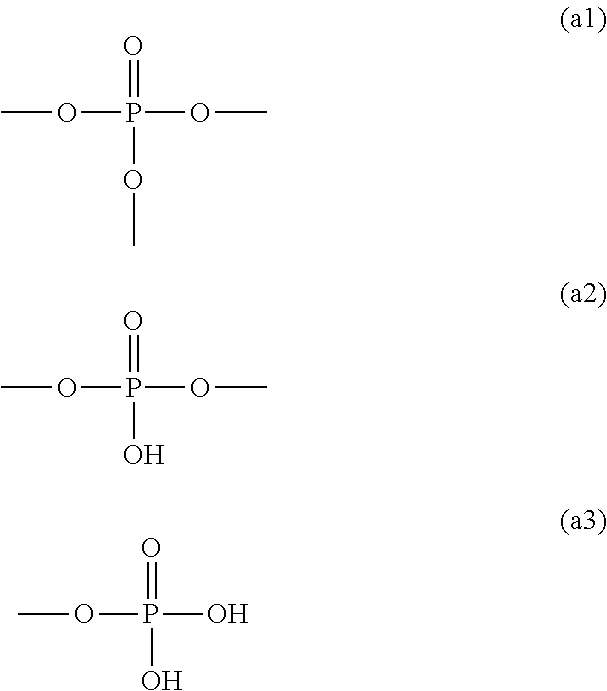
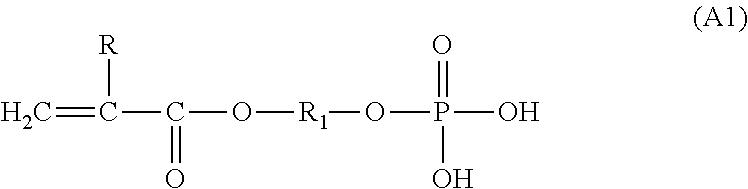
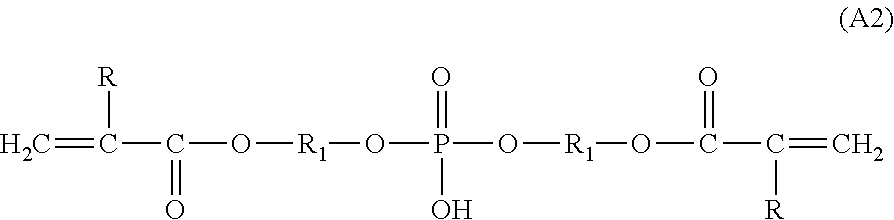
Examples
example 1
[0138]Using an inkjet printer equipped with a piezoelectric inkjet head, curable composition 1 is discharged onto the surface of a 0.5 mm-thick stainless steel plate (SUS304, BA finishing) to print an uncured resist in the size of 1 cm×5 cm.
[0139]About 0.4 seconds after the printing, the metal plate was irradiated with UV light using UV irradiator (metal halide lamp M0151-L212, available from Eye Graphics Co., Ltd., 1 lamp: 120 W), to cure the curable composition, thereby obtaining a resist film. During the procedure, metal plate feed rate was set to 10 m / min, and UV irradiation was performed 4 times. The metal plate irradiated with UV light was then subjected to heat treatment at 120° C. for 15 minutes in an oven. The thus formed resist film had a uniform thickness of 8 μm.
[0140](Removal of Resist Film)
[0141]The metal plate having the resist film formed thereon was immersed in resist removing liquid 1 which was heated to 60° C., and the time it took until the separation of the prin...
example 14
[0153]The phosphorus concentration of the resist removing liquid used in Example 12, after 100 ml thereof was used for removing a resist film 10 times, was measured by a combination of potassium peroxodisulfate decomposition method (testing method for industrial wastewater JIS K 0102 46.3.1) and molybdenum blue absorptiometry (testing method for industrial wastewater JIS K 0102 46.1.1). No phosphorus was detected.
PUM
| Property | Measurement | Unit |
|---|---|---|
| mass ratio | aaaaa | aaaaa |
| mass ratio | aaaaa | aaaaa |
| liquid temperature | aaaaa | aaaaa |
Abstract
Description
Claims
Application Information
 Login to View More