
Estimation of object lifetime using static analysis
a static analysis and object technology, applied in the field of computation methods, can solve the problem of insufficient reduction of garbage collection overhead, and achieve the effect of improving the performance of generational garbage collection of heap memory
- Summary
- Abstract
- Description
- Claims
- Application Information
AI Technical Summary
Benefits of technology
Problems solved by technology
Method used
Image

Examples
Embodiment Construction
[0052] In the following description, numerous specific details are set forth in order to provide a thorough understanding of the present invention. It will be apparent however, to one skilled in the art that the present invention may be practiced without these specific details. In other instances well known, control logic, and the details of computer program instructions for conventional algorithms and processes have not been shown in detail in order not to unnecessarily obscure the present invention.
[0053] As used herein, object lifetimes are measured by the number of bytes allocated on the heap, as is customary in the art of garbage collection. This is a practical metric because the number of allocated bytes correlates with the amount of work that must be invested by the allocator and by the garbage collector.
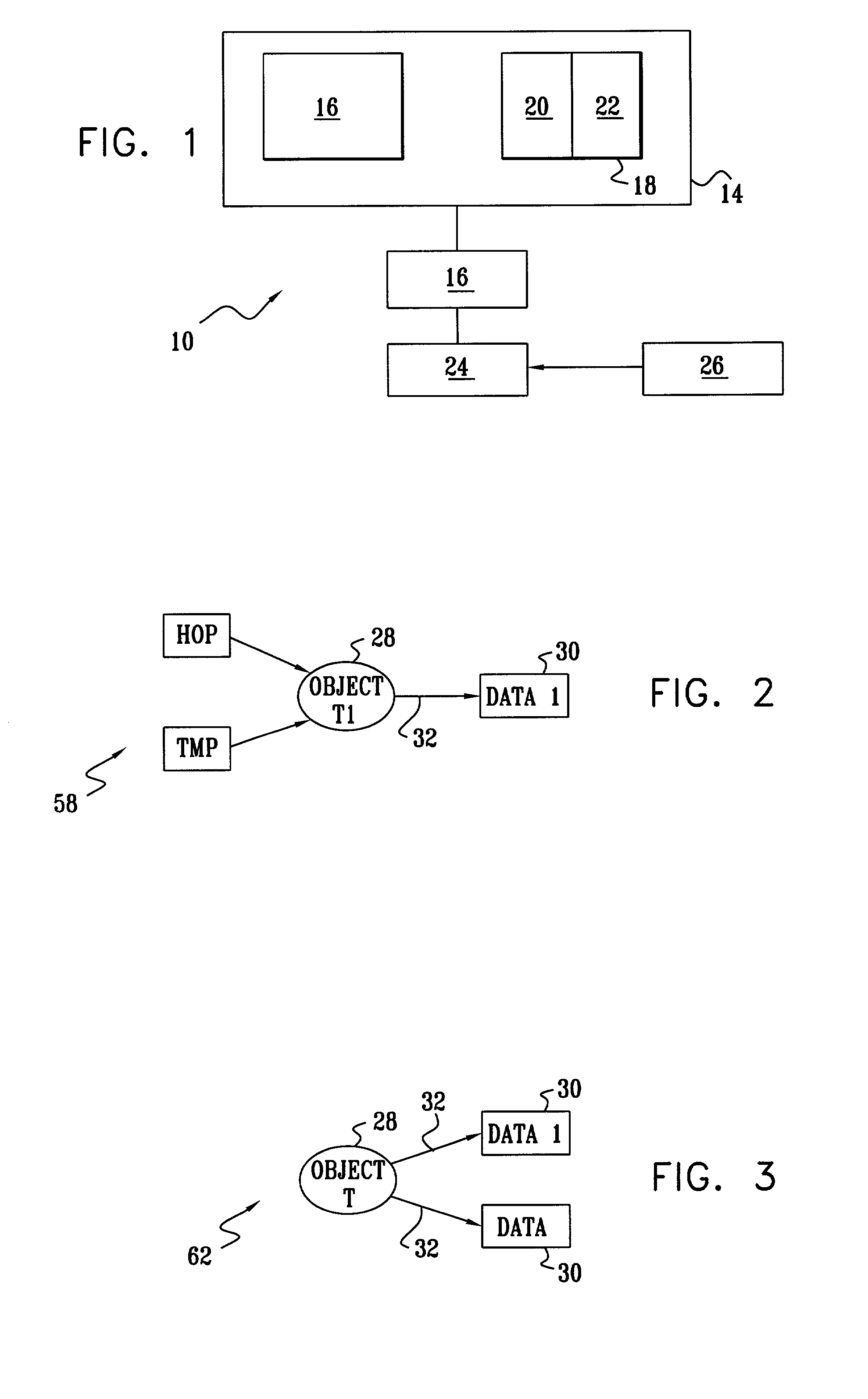
[0054] Turning now to the drawings and in particular to FIG. 1 there is shown a block diagram of a computer system 10. The system includes a conventional computer 12, in whic...
PUM
 Login to View More
 Abstract
Description
Claims
Application Information
 Login to View More