
High density inductor and method for producing same
a high-density inductor and high-density technology, applied in the field of high-density inductor, can solve the problems of limiting the downsizing and thickness reduction of the above-described inductor, the inability to reduce the space between the wires of the coil, and the inability to form a deep vertical pattern
- Summary
- Abstract
- Description
- Claims
- Application Information
AI Technical Summary
Benefits of technology
Problems solved by technology
Method used
Image

Examples
Embodiment Construction
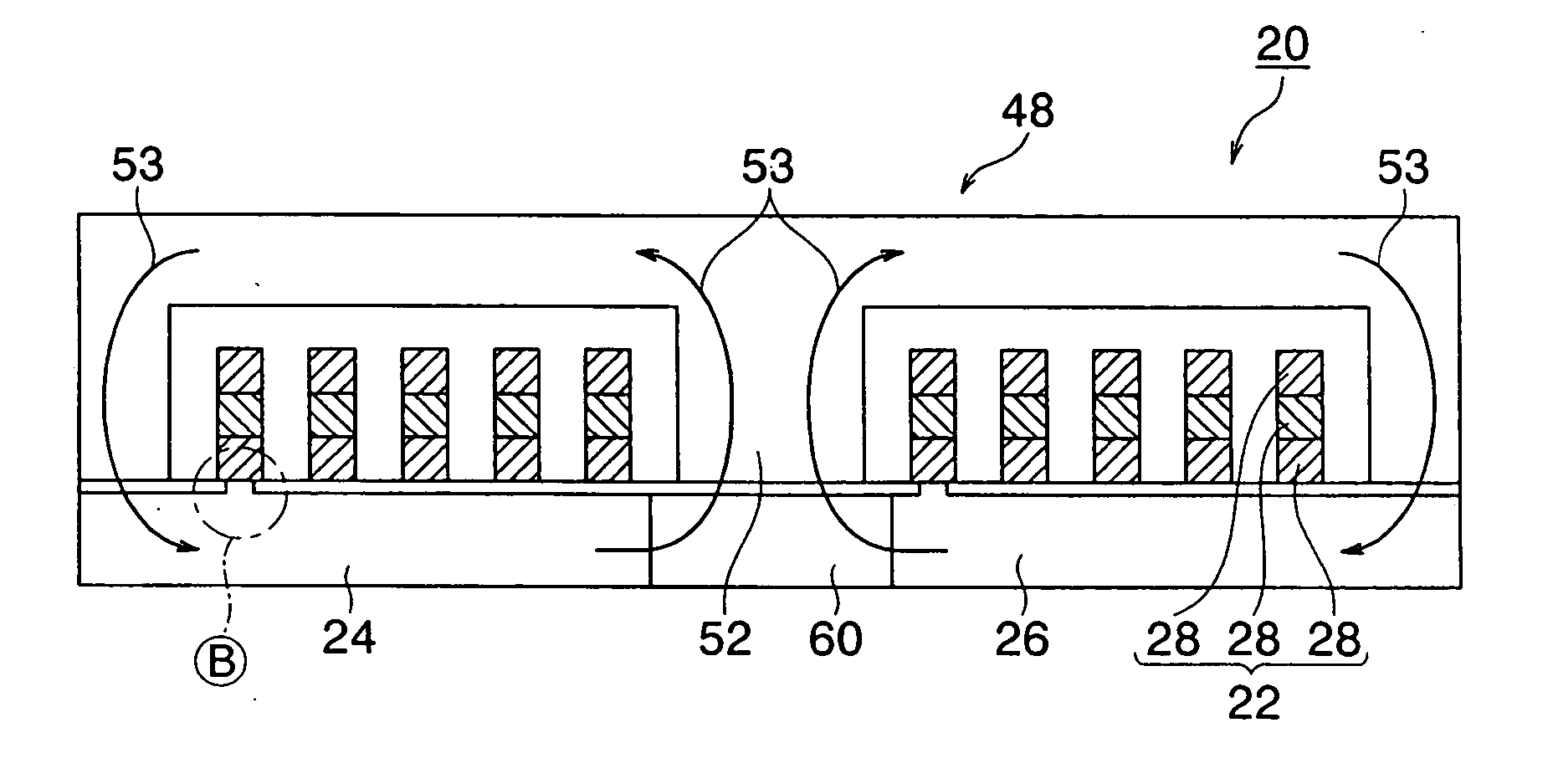
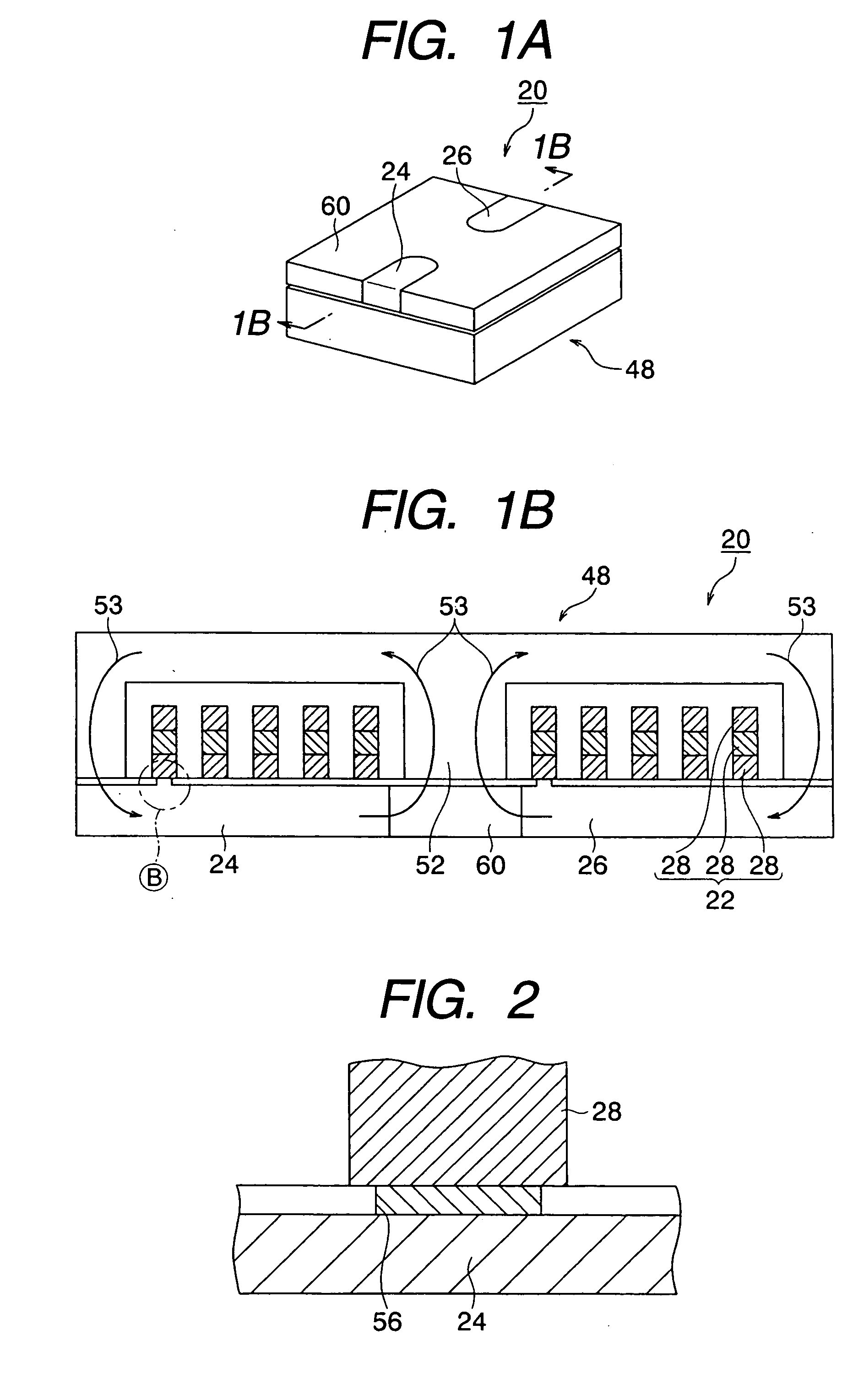
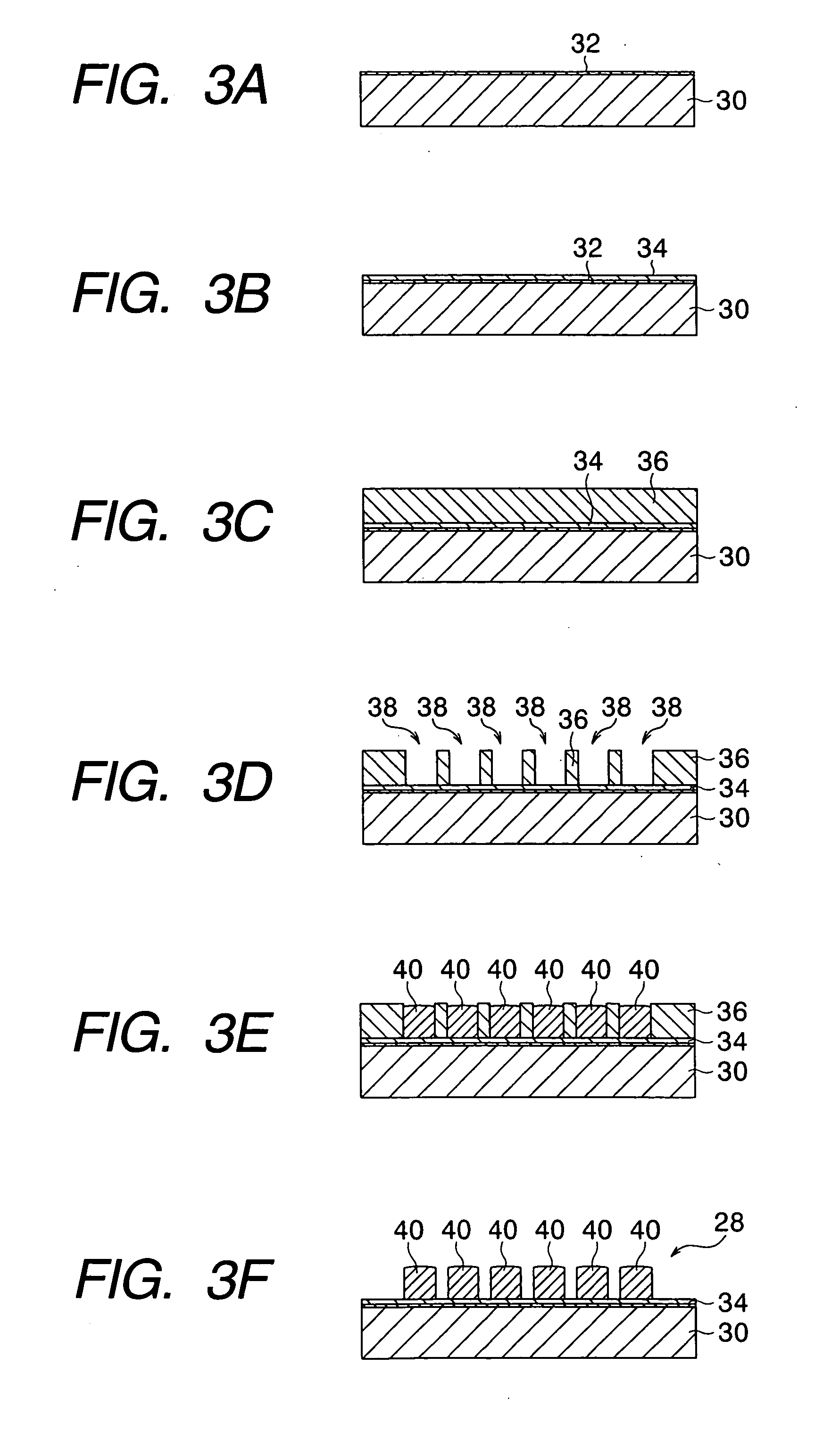
[0121] A coil pattern was formed on a substrate having a base conductive layer. For example in the case that a coil pattern with a thickness of the electroconductive portion of 40 .mu.m and a width of the coil interval space of 10 .mu.m is to be formed, the width of the resist pattern should be 10 .mu.m. The allowable height for the resist of the aforementioned width with which the width of the resist will remain constant and the resist will not be bent is about 40 .mu.m or less. In order to ensure the resolution realizing a resist width of 10.+-.2 .mu.m in both the upper and lower portions of the pattern, exposure light having a wavelength of 360 nm was used.
[0122] With the above conditions, the first layer of the coils with the coil width of 40 .mu.m and a spacing of 10 .mu.m was formed.
[0123] At that time, all of the coils of the first layer were normally formed on the substrate without being bent, in other words the process yield was 100%.
[0124] Next, a pattern of the second lay...
PUM
| Property | Measurement | Unit |
|---|---|---|
| height | aaaaa | aaaaa |
| height | aaaaa | aaaaa |
| thickness | aaaaa | aaaaa |
Abstract
Description
Claims
Application Information
 Login to View More