However, sometimes, the CTG is restricted from operating at low loads for extended periods of time because of mechanical restrictions or the desire to reduce air emissions, which are usually much higher at low loads.
Steam can actually condense in the
superheater section (the part of the HRSG that increases
steam temperature), causing stress in the superheaters.
Because a significant amount of energy is used to drive the compressor, a significant amount of heat is generated even at idle conditions.
Thus, when starting up, CTGs generally produce much more heat than is needed.
If a SJAE is used, sometimes the operator will take additional time to raise sufficient
steam pressure to operate the SJAE.
However, once the condensation stops, the pipes heat up much more slowly.
If the temperature of the inside surface of the
metal is significantly higher than that of the outside surface of the
metal, the inside
metal surface thermally expands more than the outside surface of the metal thereby placing the outside metal surface in tension, which can damage the metal.
Unfortunately, the CTG load level that will produce the desired
steam temperature or flow will sometimes also result in extremely high levels of emissions.
Additionally, thermal stresses during startups can cause significant damage to combined cycle plants.
This sets up thermal stresses that, over time, can cause the drum to fail in fatigue.
The
steam turbine cannot be heavily loaded until this change occurs, and this in turn requires that the
steam turbine be carefully loaded and / or heat soaked.
Because of all of these constraints, starting up a modern combined cycle plant can require a significant amount of time and expense.
With deregulation, sales prices for
electricity can vary significantly from hour to hour while fuel costs are generally constant over such a relatively short time period.
Starting during off-peak periods is expensive because the revenue earned when the
electricity is sold at a low price may not recoup the fuel cost.
On the other hand, starting during on-peak periods takes time, which reduces the revenue earned during on-peak operation.
This is often difficult and expensive to do as these offsets can be in short supply.
In addition, regulators are beginning to impose restrictions on startup emissions.
None of the prior art combined cycle systems is effective in controlling emissions, in part because of the failure to operate at optimum conditions during startup.
This technique is not commonly used in recently designed combined cycle plants, however, because recent environmental regulations generally prohibit discharging CTG exhaust to the
atmosphere without passing it through SCR and oxidation catalyst treatment steps.
If a bypass stack is used, it would also have to be equipped with SCR and CO catalysts, which would further increase costs.
In addition, the SCR treatment step takes enough time to operate that the
bypass operation would likely be finished before the SCR was operational.
Because the HP
evaporator tubes are such efficient radiators of heat, it is difficult to maintain drum pressure much above 15 psig, even if the outlet stack is provided with a
damper to retain heat.
This patent does not rout
exhaust gas from the start-up gas
turbine to the HRSGs of the other plants, so it has the disadvantages of a plant with an auxiliary boiler.
This design, however, has the disadvantages that the cross-over duct cannot be isolated, that a small CTG is not available for startups, and that the cross-over duct (being large enough to pass the entire flow of a large CTG) imposes a large pressure drop penalty compared to a small duct required for heat-up only.
Both of the above-described fresh-air firing configurations are designed to supply steam from the HRSG in the event that the CTG trips, the CTG is unavailable, or it is uneconomic to operate the CTG.
It appears from available literature and commercial knowledge that no fresh-air firing systems have ever been designed or used to help start-up a combined cycle
system.
At a minimum, it would have a smaller fan and burner because full flow and heat release is not desired during startup.



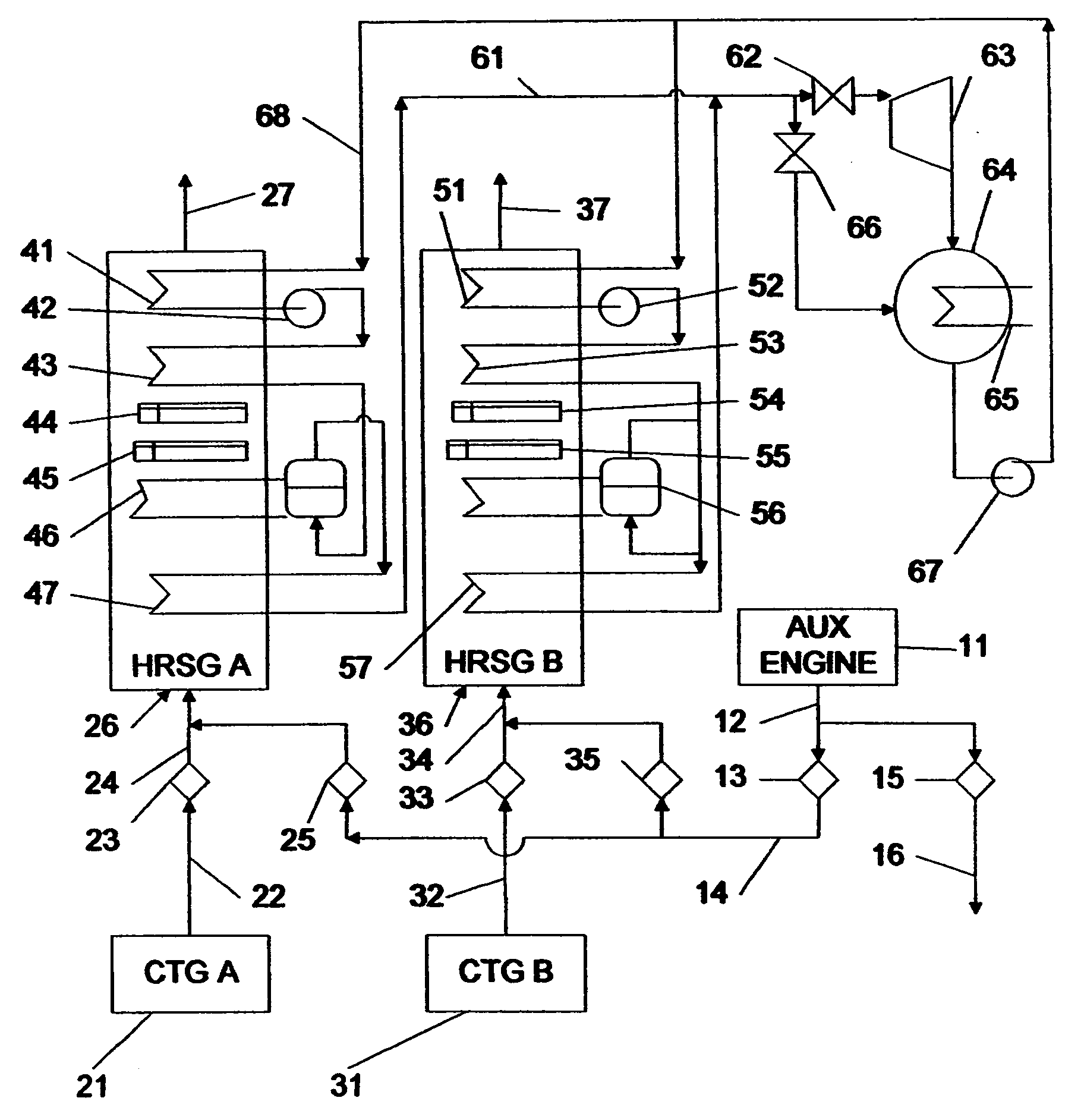
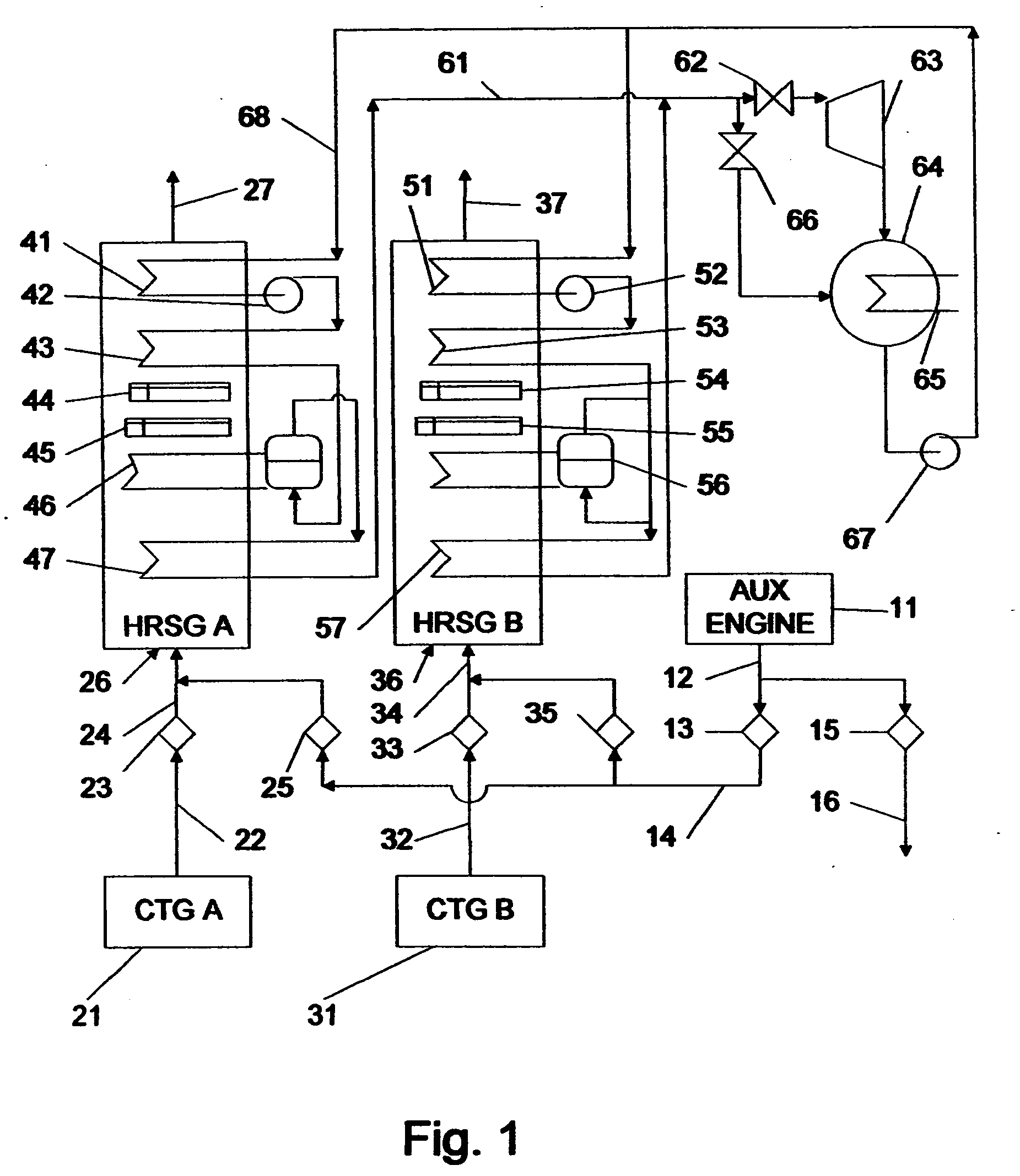
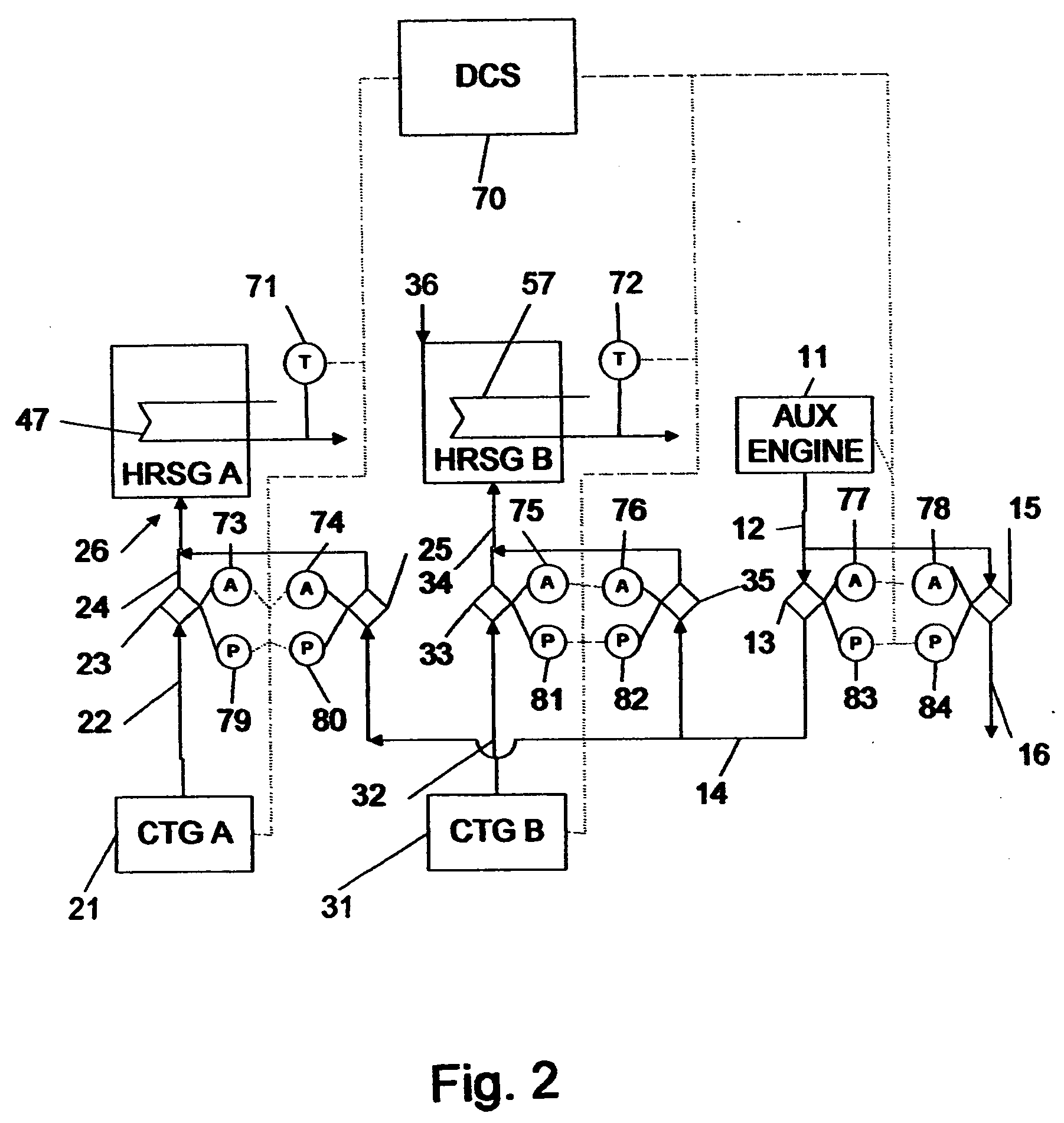
 Login to View More
  Login to View More