Media Integration Layer

a technology of media integration and layer, applied in the field of computer systems, can solve the problems of visual and noticeable undesirable, and the limit of the traditional immediate mode model of accessing graphics on computer systems, and achieve the effect of not adversely affecting normal application performan

US20050140694A1Inactive Publication Date: 2005-06-30MICROSOFT TECH LICENSING LLC
70 Cites 244 Cited by

Patent Information

Authority / Receiving Office
US · United States
Patent Type
Applications(United States)
Current Assignee / Owner
Publication Date
2005-06-30
Estimated Expiration
Not applicable · inactive patent

Smart Images

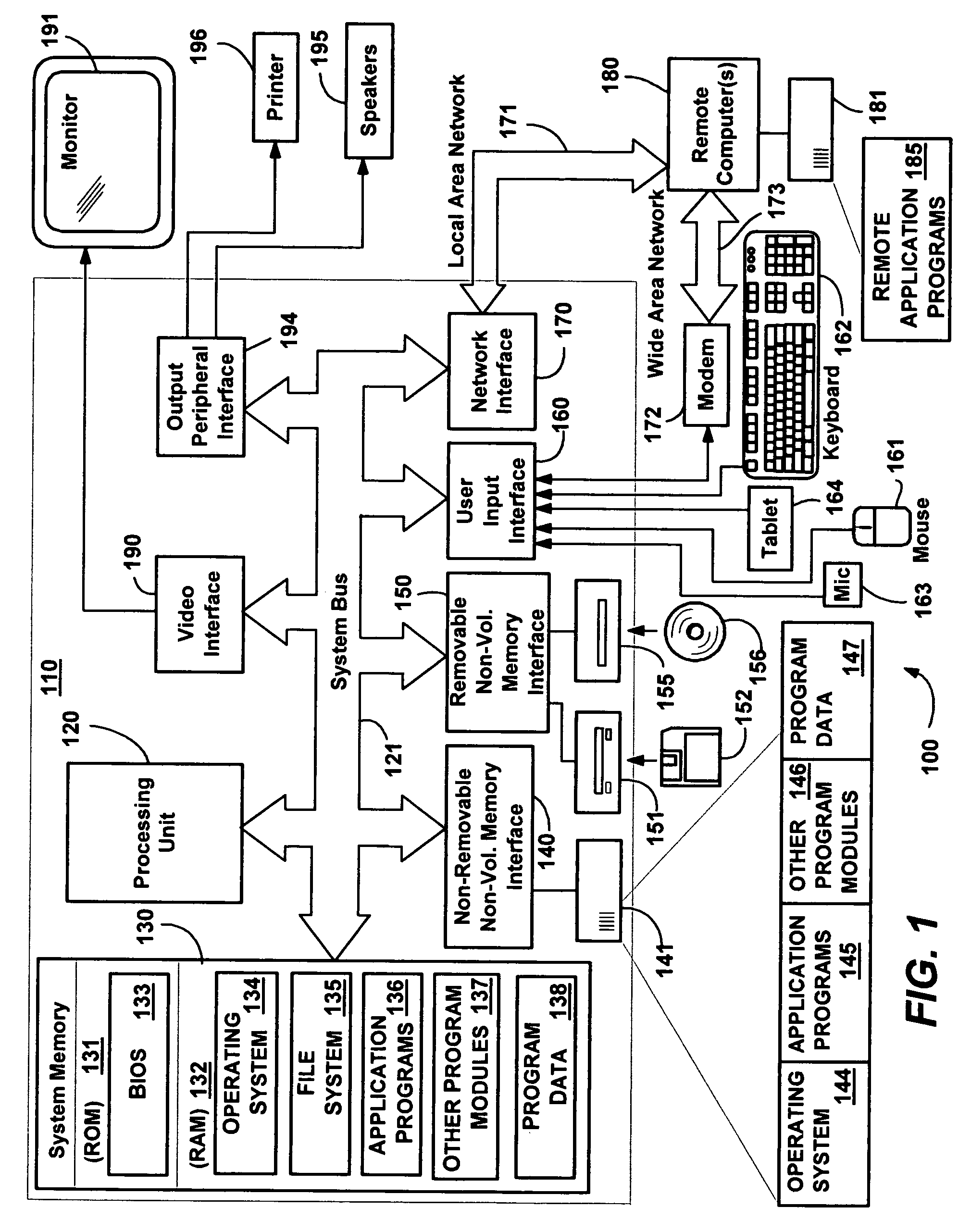
  • Figure 1
    Figure 1
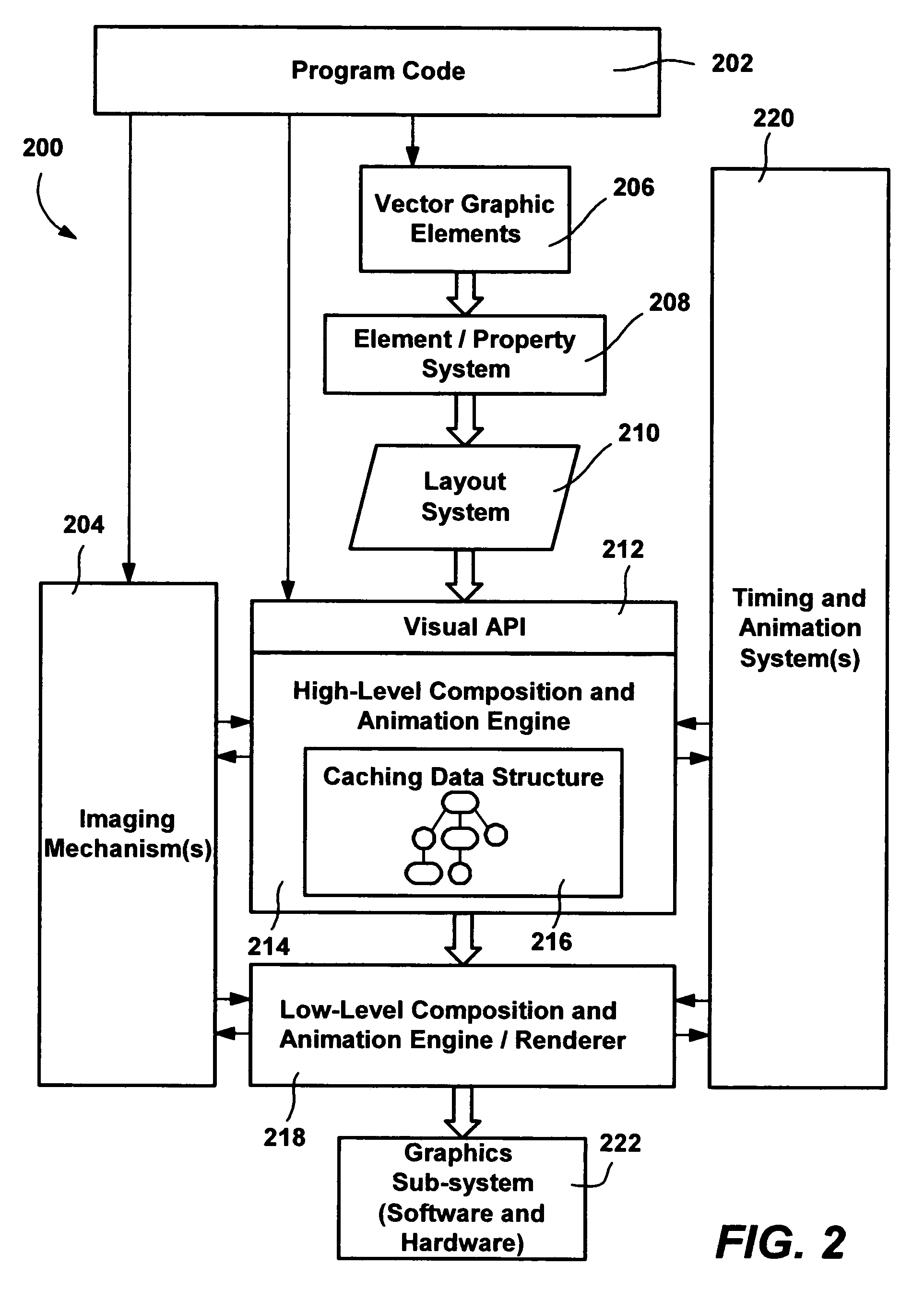
  • Figure 2
    Figure 2
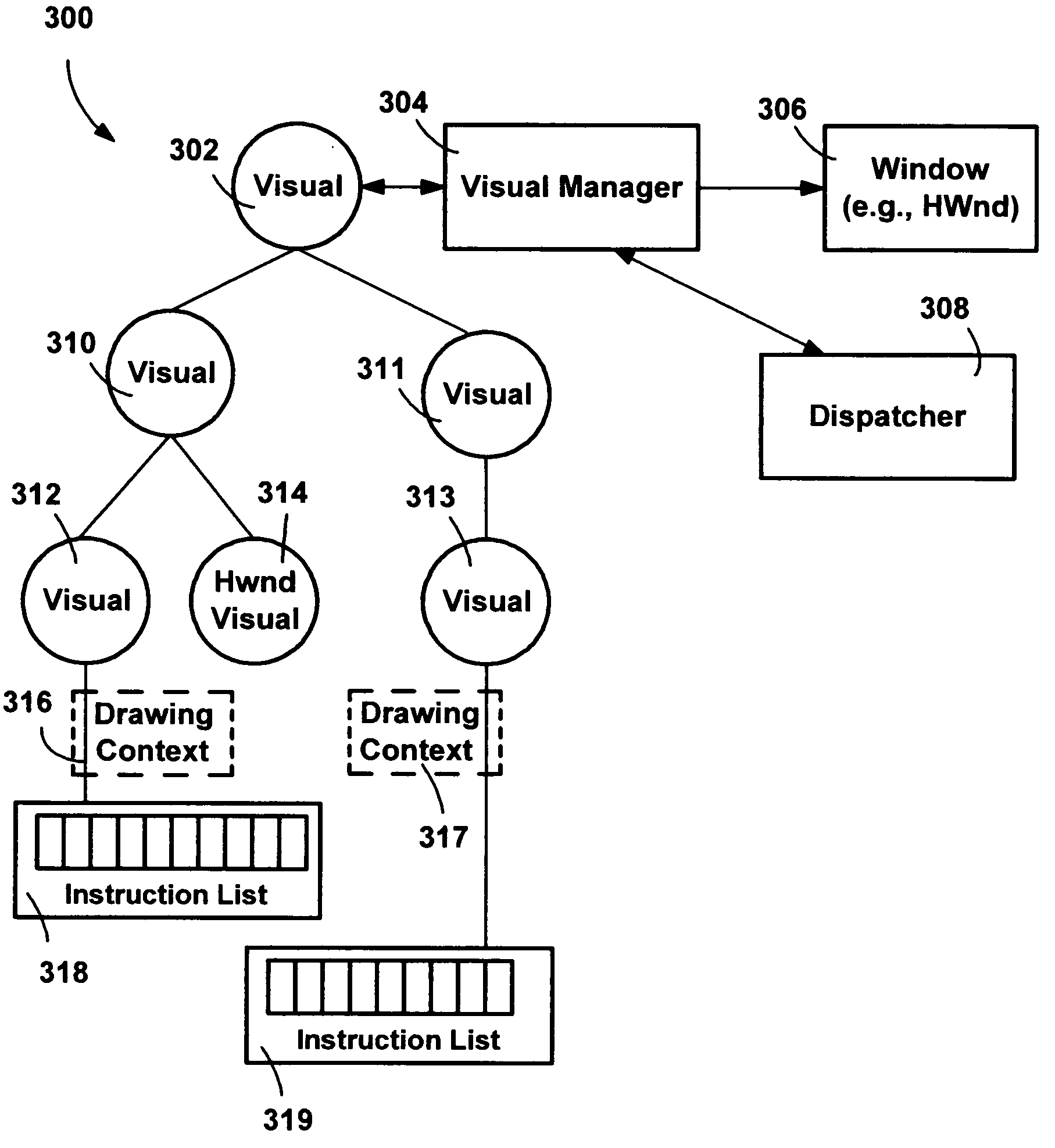
  • Figure 3
    Figure 3
Patent Text Reader

Abstract

A media integration layer including an application programming interface (API) and an object model allows program code developers to interface in a consistent manner with a scene graph data structure in order to output graphics. Via the interfaces, program code adds child visuals to other visuals to build up a hierarchical scene graph, writes Instruction Lists such as geometry data, image data, animation data and other data for output, and may specify transform, clipping and opacity properties on visuals. The media integration layer and API enable programmers to accomplish composition effects within their applications in a straightforward manner, while leveraging the graphics processing unit in a manner that does not adversely impact normal application performance. A multiple-level system includes the ability to combine different media types (such as 2D, 3D, Video, Audio, text and imaging) and animate them smoothly and seamlessly.
Need to check novelty before this filing date? Find Prior Art

Description

FIELD OF THE INVENTION

[0001] The invention relates generally to computer systems, and more particularly to the processing of graphical and other video information for display on computer systems. BACKGROUND OF THE INVENTION

[0002] The limits of the traditional immediate mode model of accessing graphics on computer systems are being reached, in part because memory and bus speeds have not kept up with the advancements in main processors and / or graphics processors. In general, the current (e.g., WM_PAINT) model for preparing a frame requires too much data processing to keep up with the hardware refresh rate when complex graphics effects are desired. As a result, when complex graphics effects are attempted with conventional graphics models, instead of completing the changes that result in the perceived visual effects in time for the next frame, the changes may be added over different frames, causing results that are visually and noticeably undesirable.

[0003] A new model for controllin...

Examples

Embodiment Construction

Exemplary Operating Environment

[0047]FIG. 1 illustrates an example of a suitable computing system environment 100 on which the invention may be implemented. The computing system environment 100 is only one example of a suitable computing environment and is not intended to suggest any limitation as to the scope of use or functionality of the invention. Neither should the computing environment 100 be interpreted as having any dependency or requirement relating to any one or combination of components illustrated in the exemplary operating environment 100.

[0048] The invention is operational with numerous other general purpose or special purpose computing system environments or configurations. Examples of well known computing systems, environments, and / or configurations that may be suitable for use with the invention include, but are not limited to, personal computers, server computers, hand-held or laptop devices, tablet devices, multiprocessor systems, microprocessor-based systems, ...