Polyvinylbutyral interlayers having superior acoustical properties and method of preparing same
- Summary
- Abstract
- Description
- Claims
- Application Information
AI Technical Summary
Benefits of technology
Problems solved by technology
Method used
Image

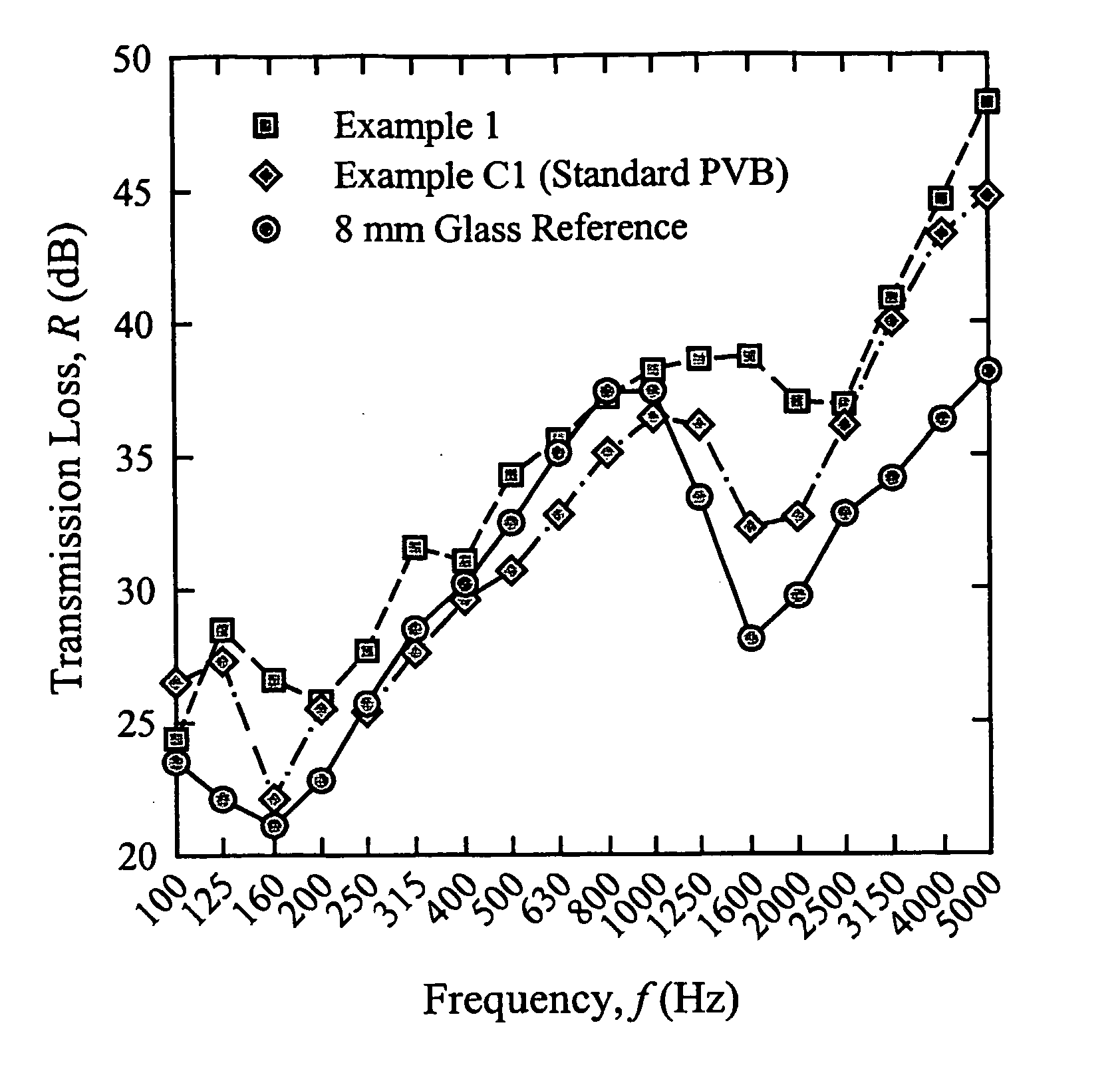
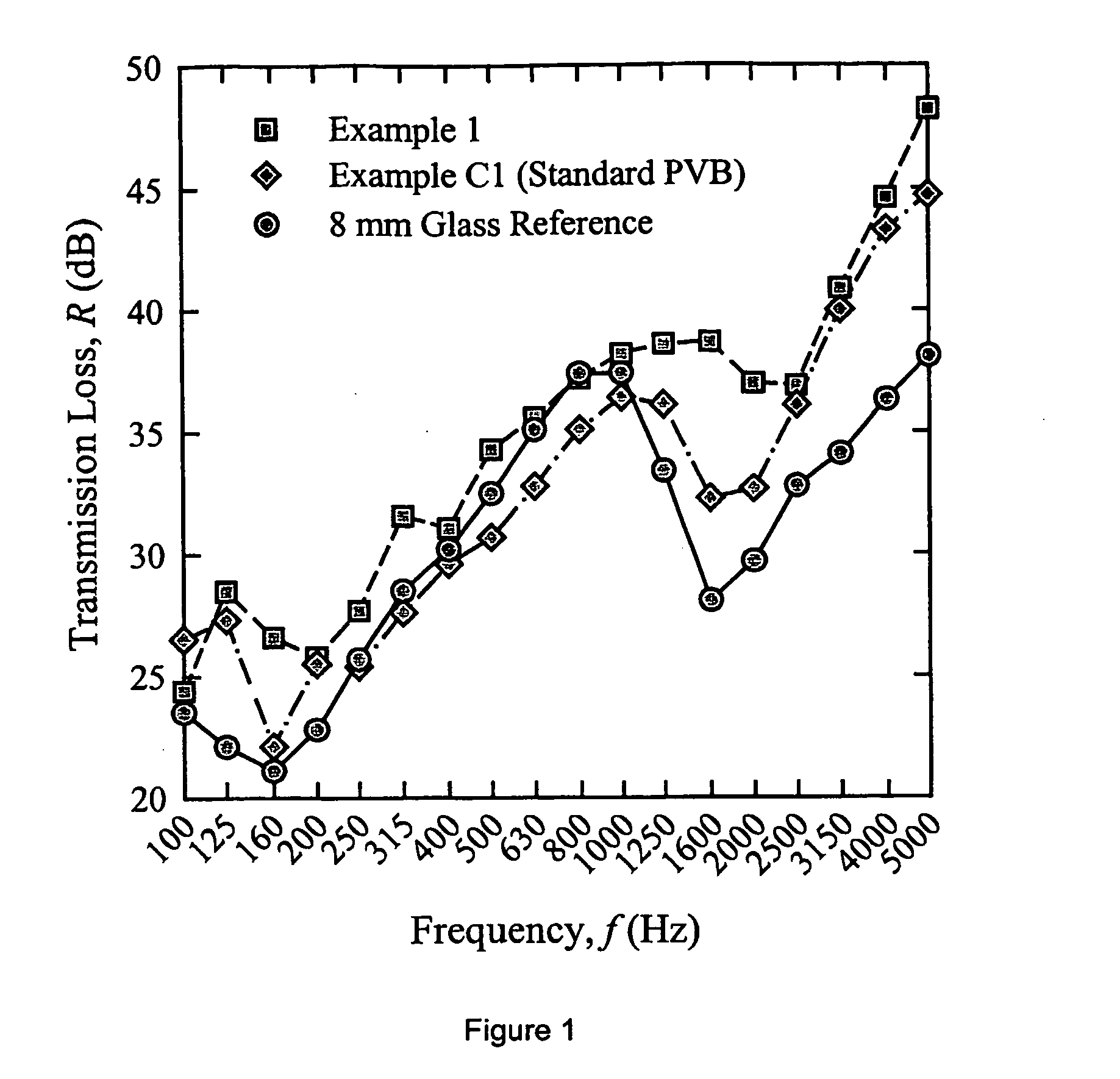
Examples
example 1
[0021] Poly(vinyl butyral) sheet was prepared as follows: at 90° C., a mixture comprising 32 parts weight of poly(vinyl alcohol) (PVA) of average degree of polymerization 618 and 68 parts by weight of PVA of average degree of polymerization 1005 from commercially available PVA was dissolved in 615 parts by weight of demineralized water. To this solution was added 1.3 parts by weight of 88% para-toluene sulfonic acid and enough sulfuric acid to bring the dissolved PVA solution to a pH of 2. Using the procedure described in U.S. Pat. No. 3,153,009, enough n-butyraldehyde was added to achieve a hydroxyl number of 18.5 and 0.33% DOSS (sodium di-octylsulfosuccinate) based on dry PVA weight and the PVA were charged into the reaction vessel maintained at 90° C. After a one hour hold time, a slurry was obtained; a surface tension modifier was added to attenuate foam and the slurry was stabilized with sodium hydroxide solution to raise the pH of the mixture to pH 11. The slurry was then wash...
example 2
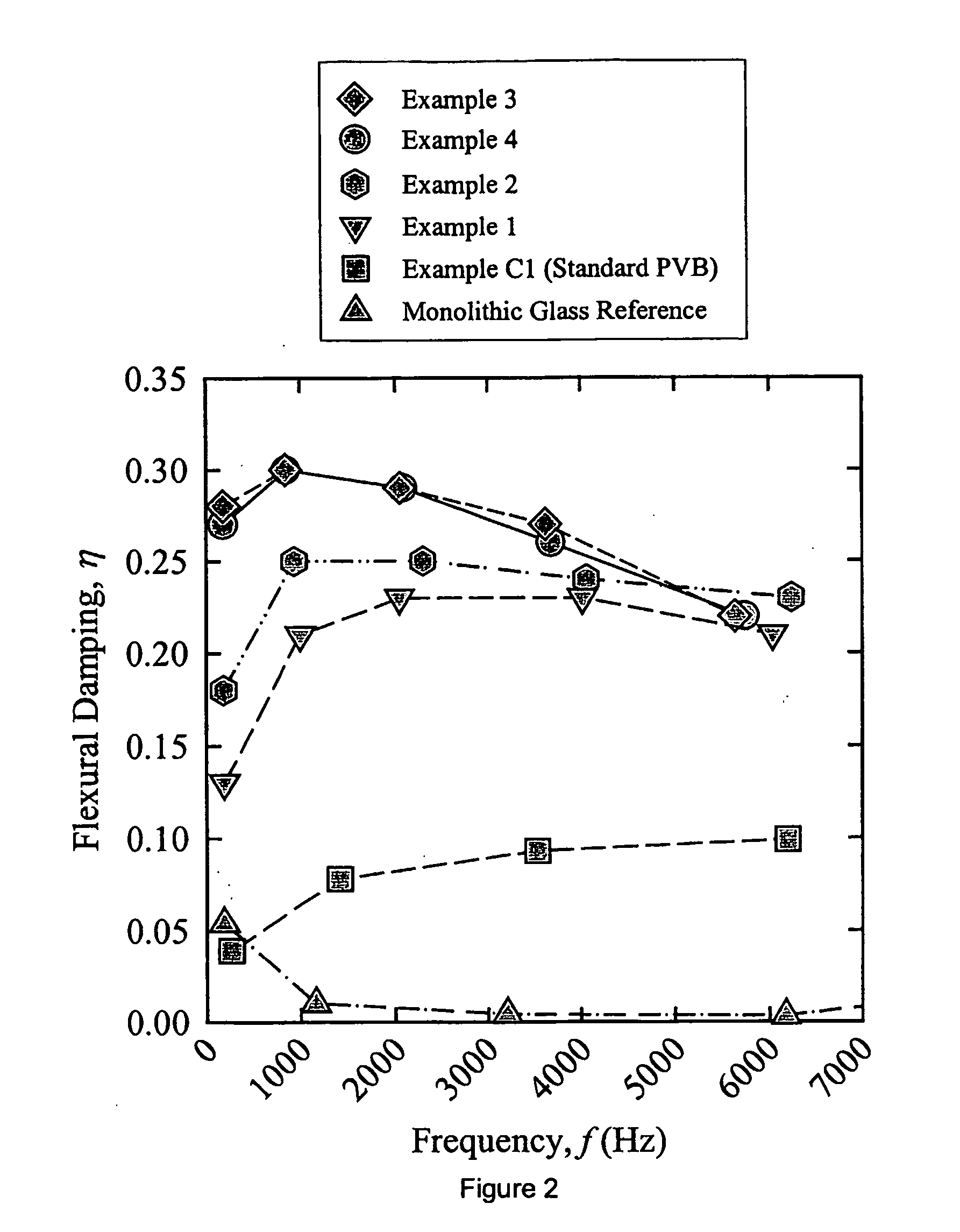
[0022] PVB flake was prepared as in Example 1 except that 0.2 parts by weight of sodium lauryl sulfate was used in the place of DOSS as the surfactant and no other surface modifiers were added. A granular, white PVB resin with a residual hydroxyl of 22.1 was obtained. Using this flake, sheeting was prepared as in Example 1. FIG. 2 shows the resulting flexural damping of laminate beams made with the modified PVB described in this example.
example 3
[0023] PVB flake was prepared as in Example 1. This flake was mixed with 4G7 Plasticizer containing 4 gms / liter Tinuvin® 326, 4 gms liter Tinuvin® 123, and 8 gms / liter octylphenol and was extruded so that the residence time in the extruder was between 10-25 minutes. The feed ratio of the plasticizer to dry flake was 47:100 (wt:wt). A solution of 3:1 potassium acetate:magnesium acetate was injected during the extrusion to deliver a potassium concentration of 35-100 ppm. Melt temperature measured in the slot die was between 190° C. and 215° C.
PUM
 Login to View More
 Abstract
Description
Claims
Application Information
 Login to View More
 - R&D
- Intellectual Property
- Life Sciences
- Materials
- Tech Scout
- Unparalleled Data Quality
- Higher Quality Content
- 60% Fewer Hallucinations
Browse by: Latest US Patents, China's latest patents, Technical Efficacy Thesaurus, Application Domain, Technology Topic, Popular Technical Reports.
© 2025 PatSnap. All rights reserved.Legal|Privacy policy|Modern Slavery Act Transparency Statement|Sitemap|About US| Contact US: help@patsnap.com