
Personal computer-based vital signs monitor
a monitor and computer technology, applied in the field of medical devices, can solve the problems of motion-related artifacts, reduce the accuracy of measurement, white coat syndrome, etc., and achieve the effects of low cost, quick and accurate measurement of vital signs, and minimal discomfor
- Summary
- Abstract
- Description
- Claims
- Application Information
AI Technical Summary
Benefits of technology
Problems solved by technology
Method used
Image


Examples
Embodiment Construction
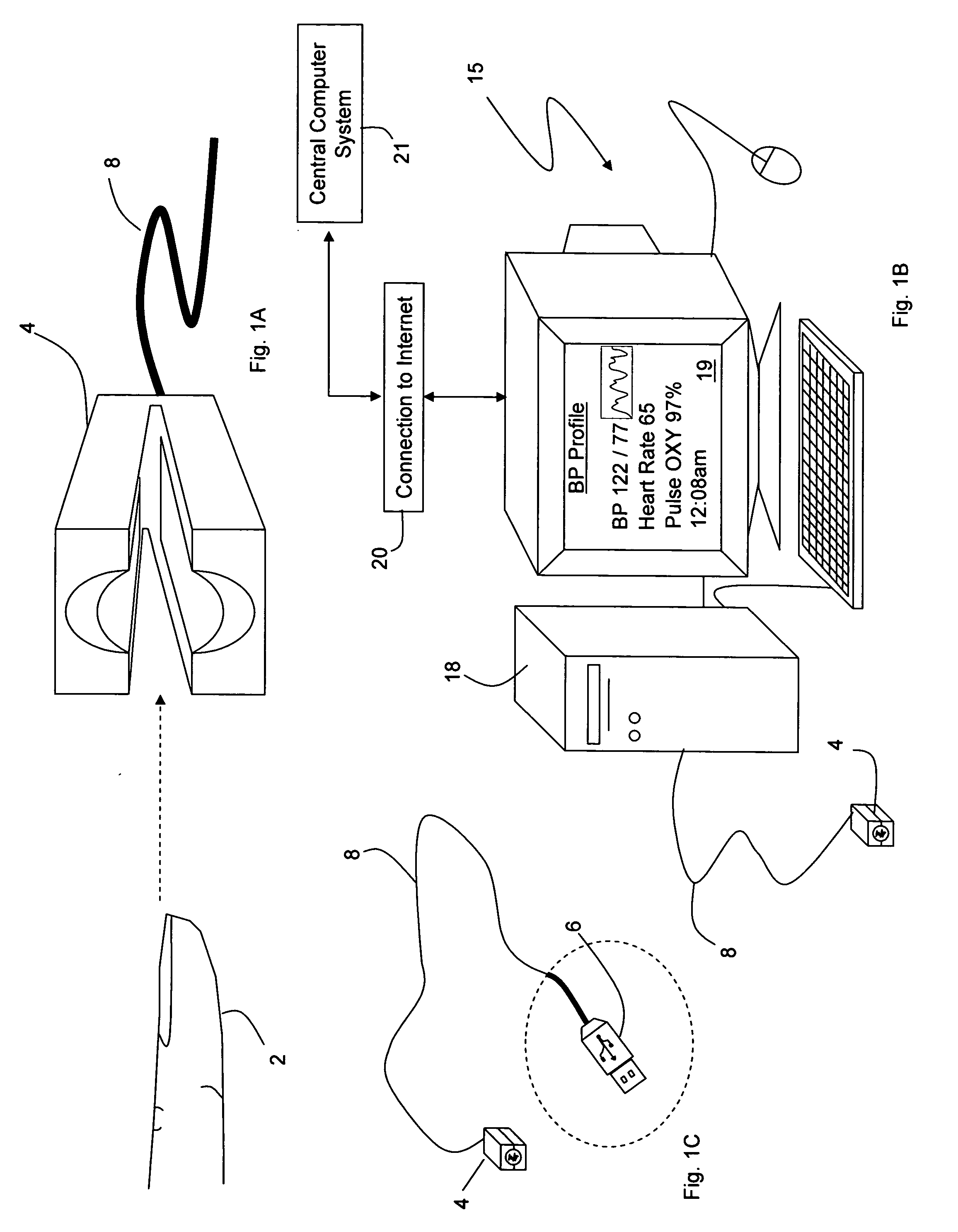
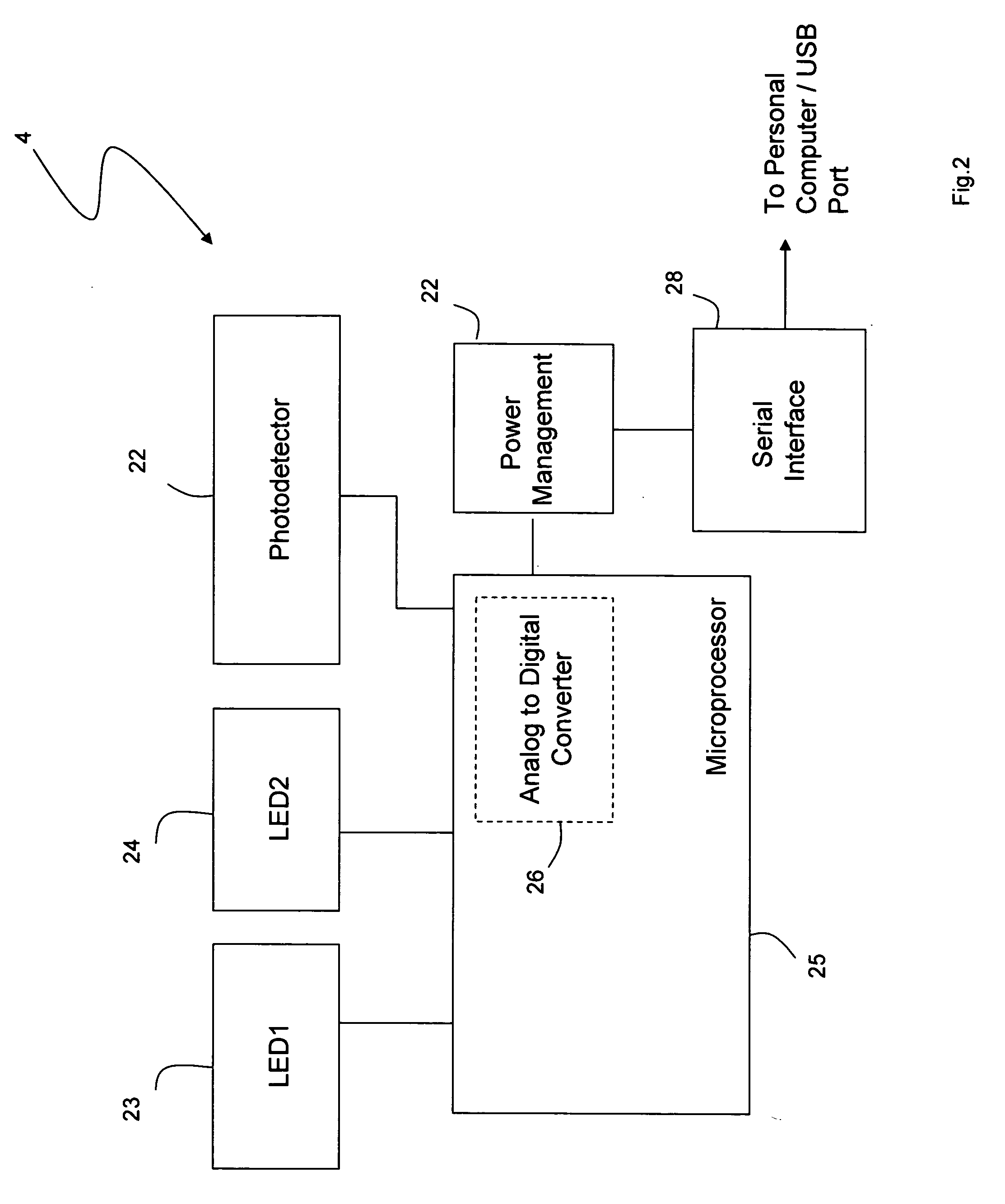
[0031]FIGS. 1A-1C show a system 15 for measuring a patient's vital signs that features an inexpensive optical module 4 that clamps to the patient's finger 2 and connects through a cable 8 and USB connector 6 to a personal computer 18. During operation, the optical module 4 measures information describing the patient's vital signs using a small-scale optical system, described below. The module 4 sends this information through the cable 8 and USB connector 6 to the personal computer 18, which processes it and displays properties such as blood pressure, heart rate, and pulse oximetry on the computer's monitor 19. The personal computer 18 also connects to the Internet 20 through which it can download calibration properties and send information to a central computer system 21 for further processing.
[0032] The system 15 can be manufactured very inexpensively because it leverages the processing, display, and power capabilities of the personal computer 18. For example, the system uses the ...
PUM
 Login to View More
 Abstract
Description
Claims
Application Information
 Login to View More