
Substrate transportation device (wire)
a transportation device and substrate technology, applied in transportation and packaging, conveyors, packaging goods types, etc., can solve problems such as unsuitability for use, and achieve the effect of eliminating sagging or drooping of substrates and sufficient strength
- Summary
- Abstract
- Description
- Claims
- Application Information
AI Technical Summary
Benefits of technology
Problems solved by technology
Method used
Image

Examples
Embodiment Construction
[0025] The present invention is directed to a substrate transportation device for transporting and supporting such as, for example a glass tray, during manufacture. A glass tray can include a thin film transistor liquid crystal display panel.
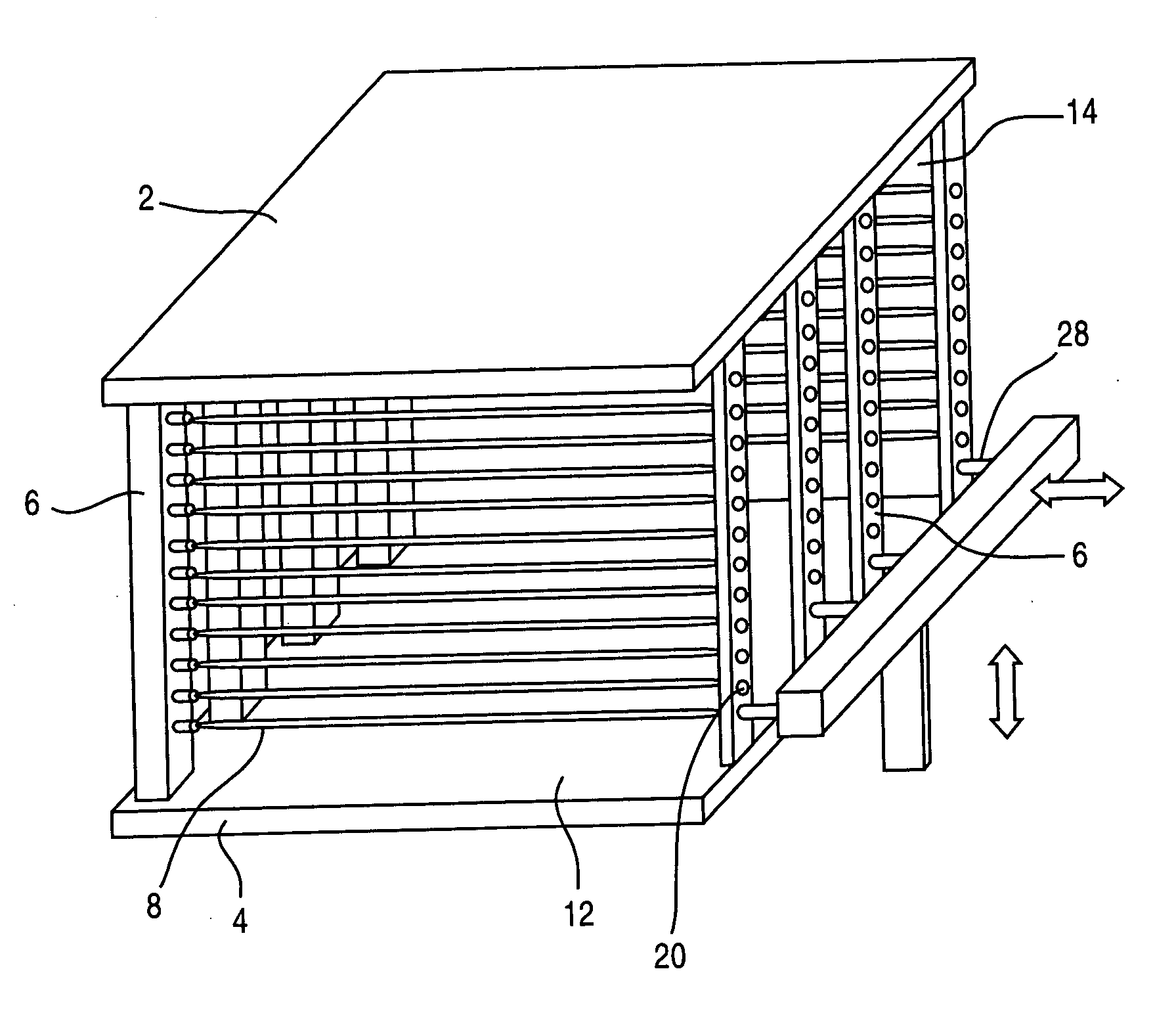
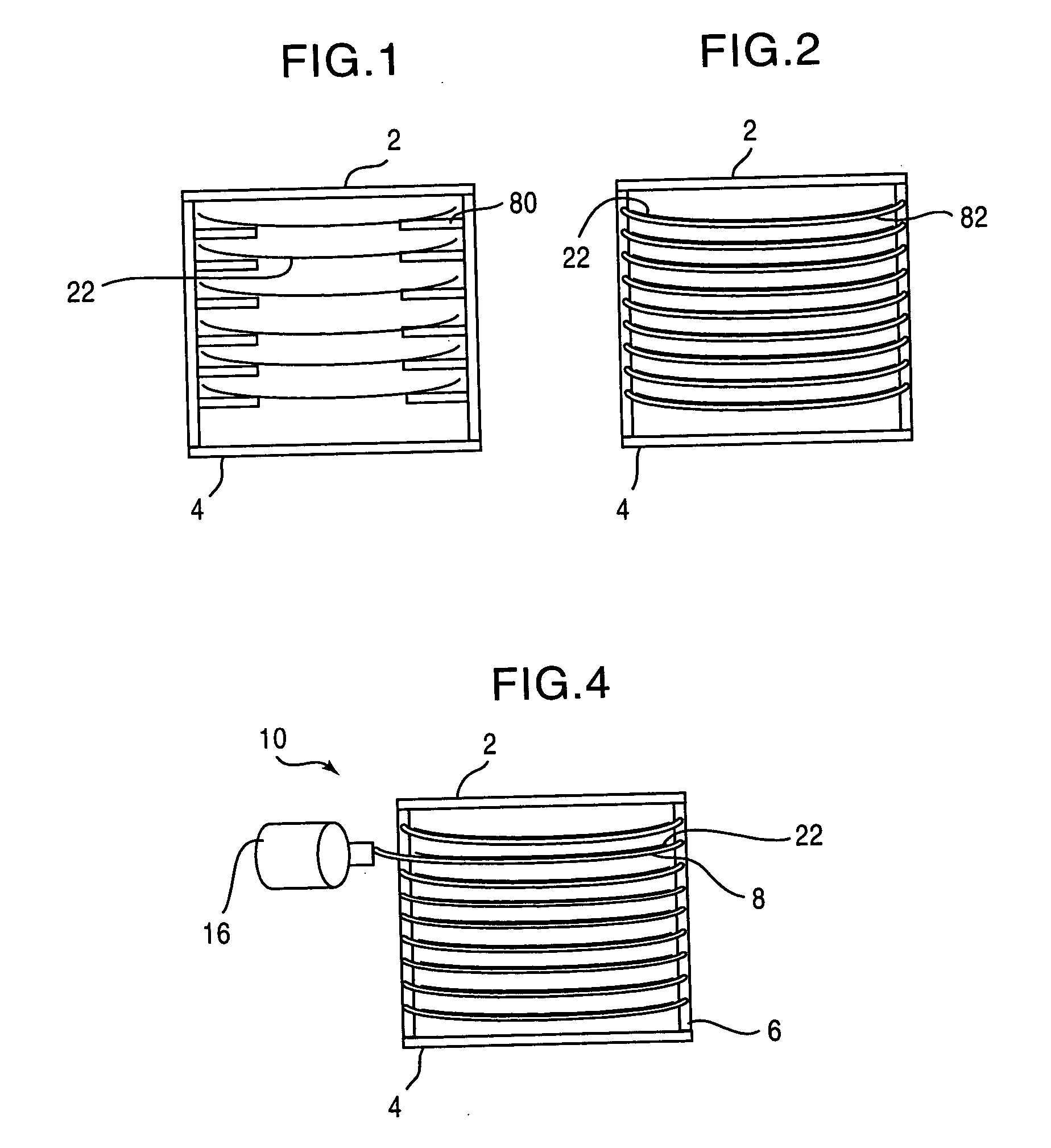
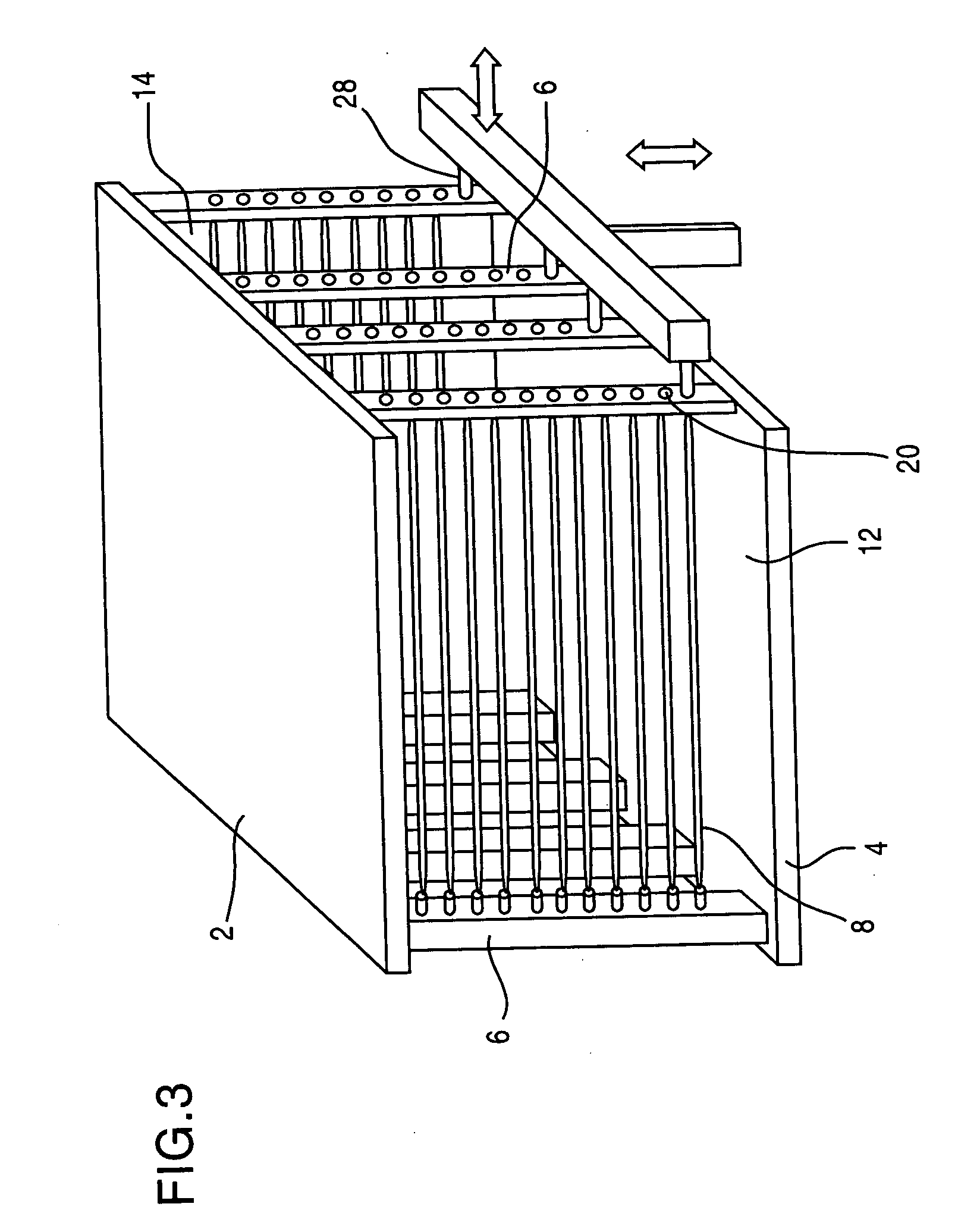
[0026] As shown in FIG. 4, the substrate transportation device includes a housing 10 for transporting a substrate 22. The cassette or housing 10 includes an upper surface 2, a lower surface 4, and opposing sidewalls 6 which can be formed as a plurality of columns. As shown in FIG. 3, there is a rear opening 14 through which the substrate 22 enters the housing 10 and a front opening 12 through which the substrate 22 exits the housing 10. The housing 10 is illustrated in FIGS. 3 and 4 as having a rectangular shape, however, the housing can be any other appropriate shape. The housing 10 and sidewalls 6 can be made of any material including, but not limited to a metal tube, engineering plastic, or a fiber reinforced plastic tube.
[0027] Supporting ...
PUM
 Login to View More
 Abstract
Description
Claims
Application Information
 Login to View More