
Mobile network dynamic workflow exception handling system
a mobile network and exception handling technology, applied in the field of distributed software systems, can solve problems such as inability to adapt not preemptive or capable of adapting to exception situations in terms of workflows, and provide a formal approach to describe exception flows in terms of workflow in mobile environments, so as to improve the survivability and recovery from system attacks
- Summary
- Abstract
- Description
- Claims
- Application Information
AI Technical Summary
Benefits of technology
Problems solved by technology
Method used
Image

Examples
Embodiment Construction
[0026] The following description of the preferred embodiments is merely exemplary in nature and is in no way intended to limit the invention, its application, or uses.
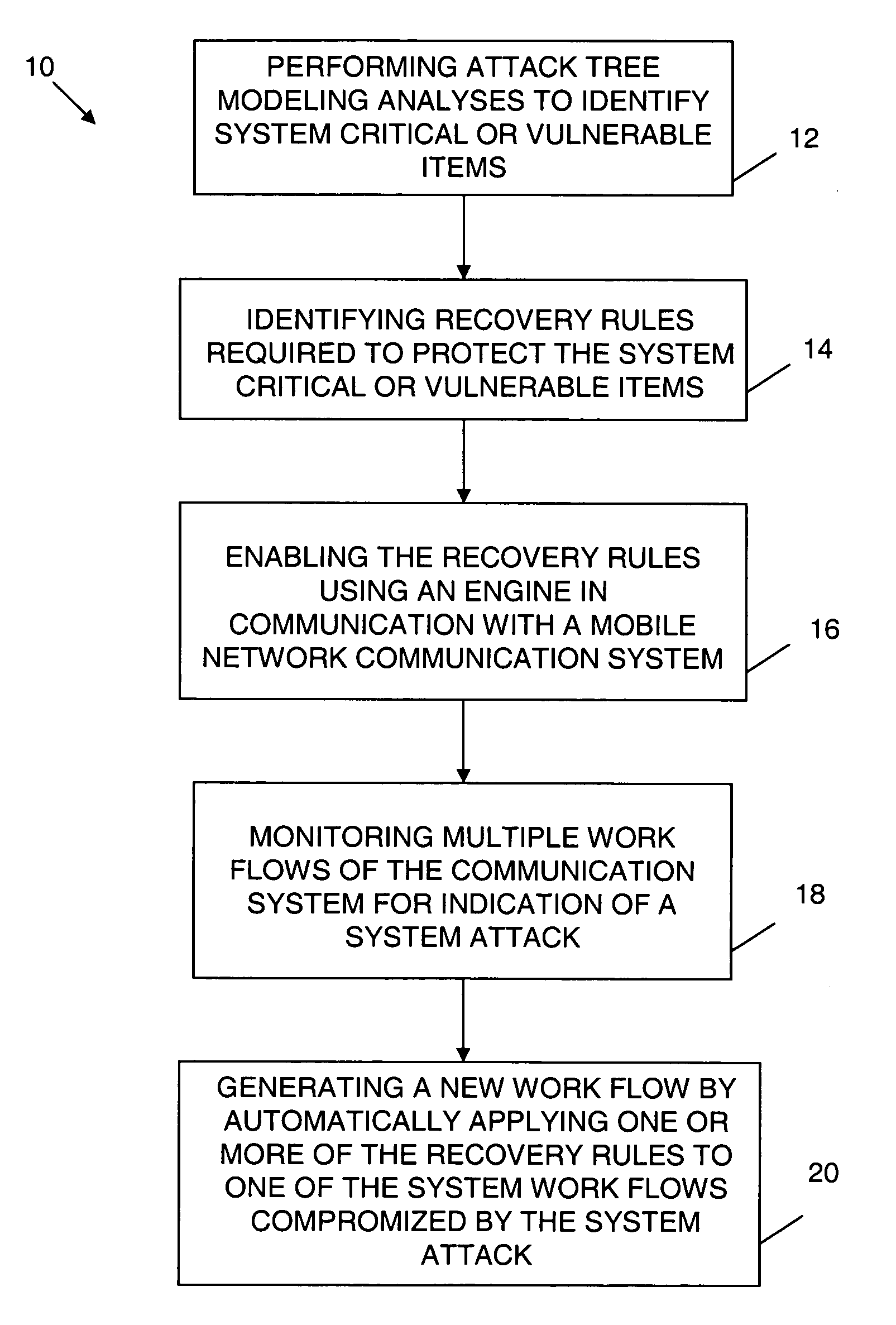
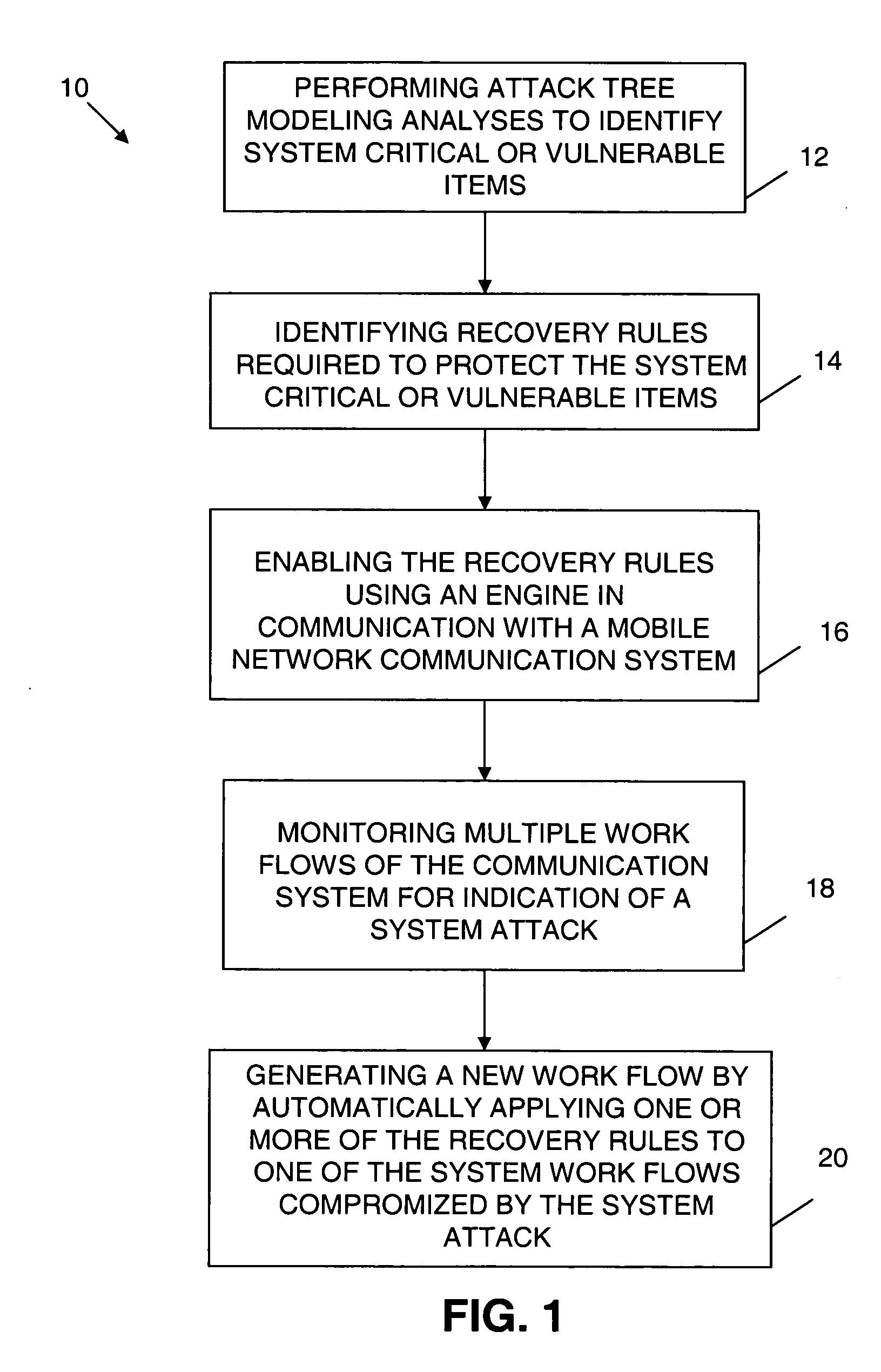
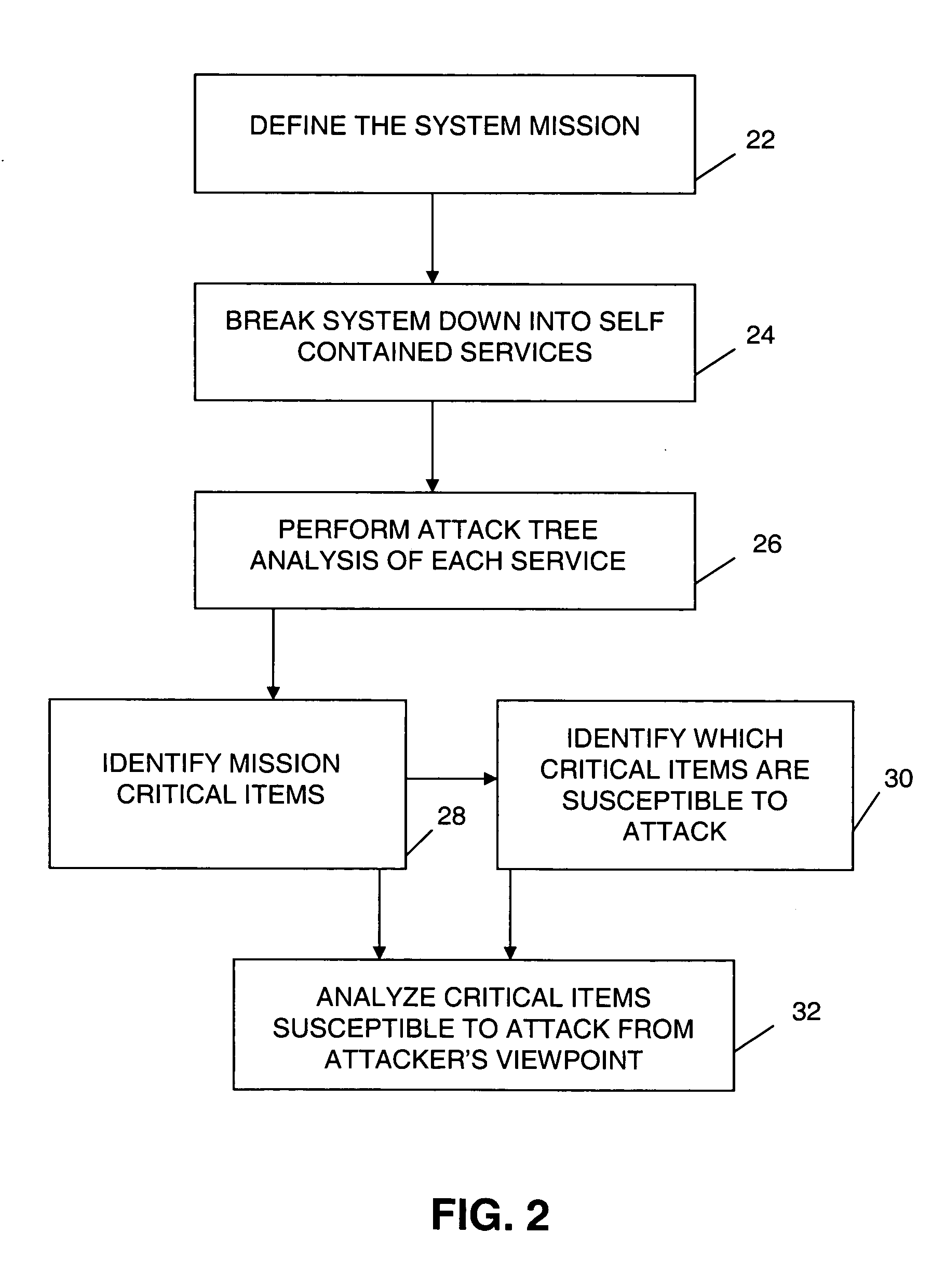
[0027] According to one preferred embodiment of a mobile network dynamic workflow exception handling system 10 of the present invention, and referring generally to FIG. 1, in a first operation 12, attack tree modeling analyses are conducted to identify mobile network system critical or vulnerable items which may be susceptible to an “attack”. Attack scenarios are prepared and evaluated during this operation. As previously noted, the term “attack” as used herein broadly refers to system attacks such as by a person, computer virus, worm, or the like, accidents, and / or failures of the system or individual services identified with the system. In an operation 14, recovery rules are defined based on the possible attack scenarios identified in operation 12. The recovery rules are provided to protect the system critical or vu...
PUM
 Login to View More
 Abstract
Description
Claims
Application Information
 Login to View More