
Multicomponent assemblies having enhanced binding properties for diagnosis and therapy
a multi-component, diagnostic and therapy technology, applied in the direction of peptides, cardiovascular disorders, drug compositions, etc., can solve the problems of weak binding of ligands, weak binding of compounds, and general non-utility of targeted imaging and therapeutic applications,
- Summary
- Abstract
- Description
- Claims
- Application Information
AI Technical Summary
Benefits of technology
Problems solved by technology
Method used
Image

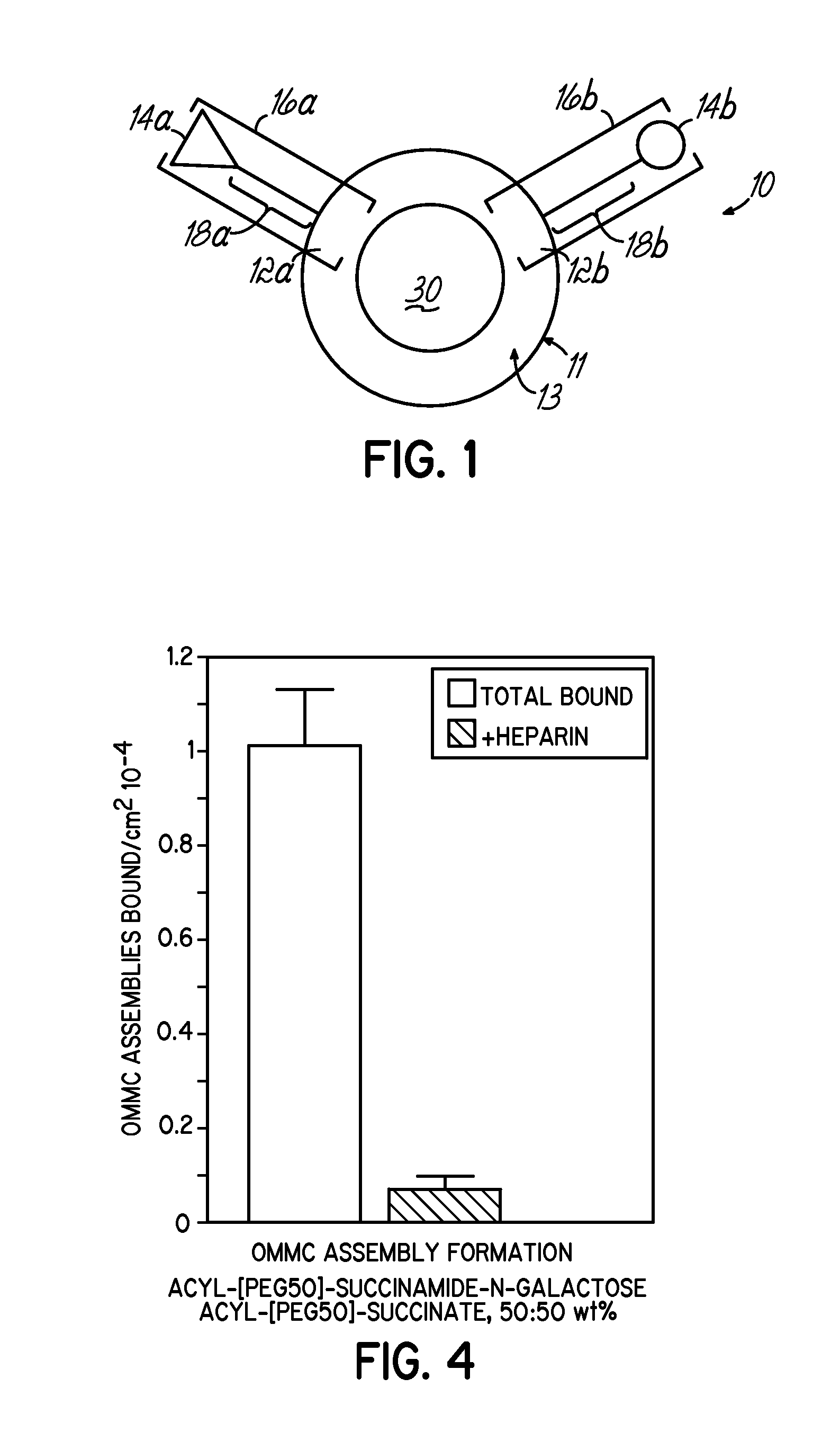
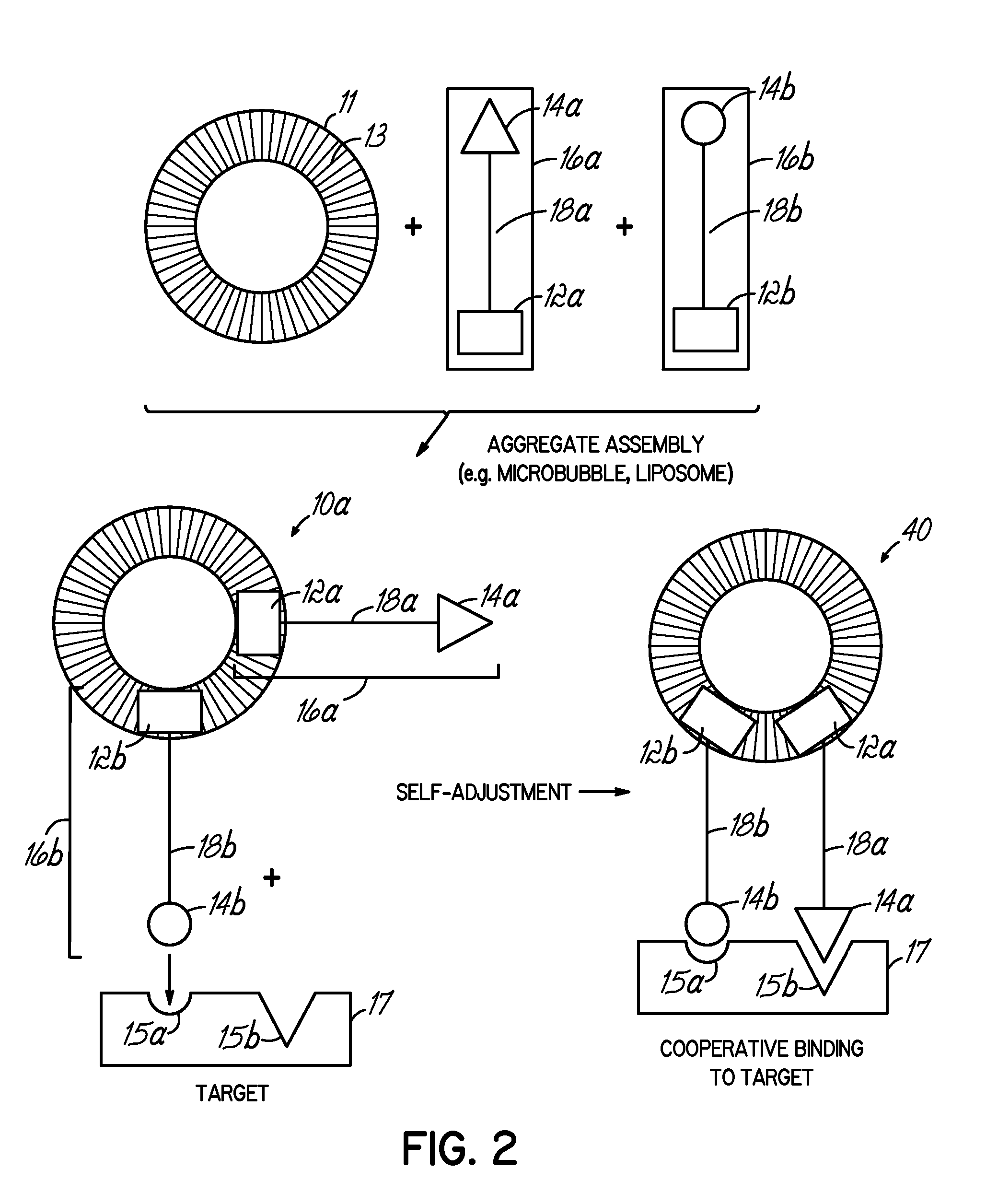
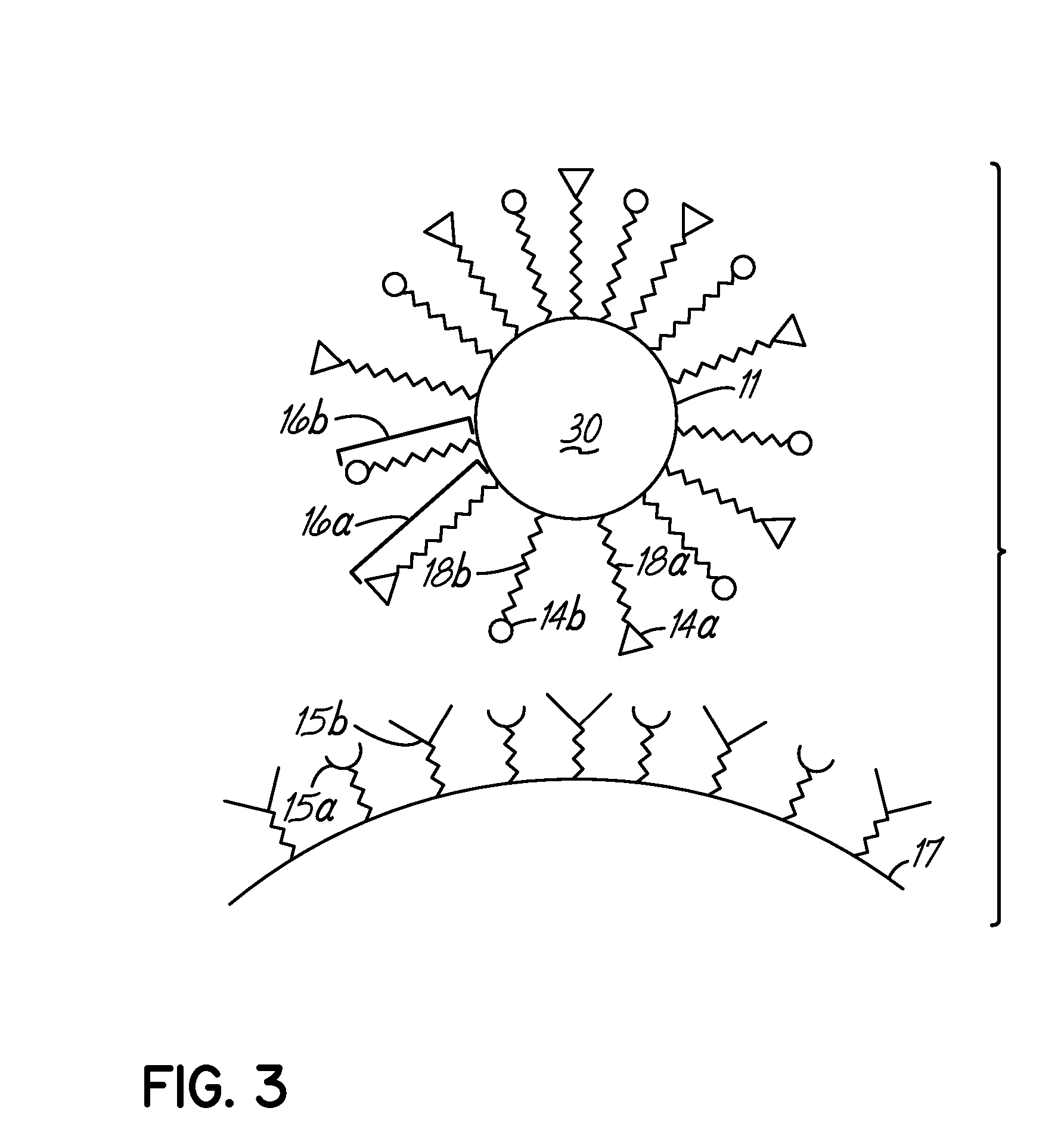
Examples
example 1
Preparation of OMMC Assembly Having One Binding Domain and a Terminal Carboxylate Binding Region, and Containing Gas (Docosanoate (C21CO2—); Octacosanoate (C27CO2—); and Succinylated PEG[100]stearate Formulated with n-Perfluorobutane).
[0048] To an 8 dram (29.6 mL) vial was added docosanoic acid (10.0 mg, Sigma, ˜99%); octacosanoic acid (10 mg, Aldrich, ˜98%) and 22 mg of succinylated PEG[100]stearate weighed on a Mettler® analytical balance. The mixture was dissolved into about 1 mL of dichloromethane (distilled Mallinckrodt Ultimar®) using mild heating. Dichloromethane was completely removed by the application of heat under a flow of nitrogen (Air Products, High Purity Grade). Excess sodium hydrogen carbonate (about 100 mg, Aldrich, ˜99.7%) was placed in the flask along with 10 mL of 0.9% sodium chloride solution used for irrigation (Baxter, USP).
[0049] The tip of the insonation probe, Heat Systems Sonicator® Ultrasonic Processor XL (Heat Systems, Inc., Farmingdale, N.Y.) Model ...
example 2
[0051] Preparation of OMMC Assembly with One Binding Domain and a Terminal Galactosamide Binding Region, and Containing Gas (Docosanoate (C21CO2—); Octacosanoate (C27CO2—); and Octahexadecanoyl[poly(ethylene glycol) 5,000]Succinamic-Galactosyl amide Formulated with n-Perfluorobutane).
[0052] To an 8 dram (29.6 mL) vial was added docosanoic acid (10.0 mg, Sigma, ˜99%); octacosanoic acid (10 mg, Aldrich, ˜98%) and 22 mg of octahexadecanoyl[poly(ethylene glycol)5,000]succinamicgalactosyl amide (prepared by the reaction of succinylated PEG[100]stearate, DCC and D-galactosamine (Aldrich)) weighed on a Mettler® analytical balance. The mixture was dissolved into about 1 mL dichloromethane (distilled Mallinckrodt Ultimar®) using mild heating. The dichloromethane was completely removed by the application of heat under a flow of nitrogen (Air Products, High Purity Grade). Excess sodium hydrogen carbonate (˜100 mg, Aldrich®, ˜99.7%) was placed in the flask along with 10 mL of 0.9% sodium chlor...
example 3
[0055] Preparation of OMMC Assembly with Two Binding Domains (Terminal Carboxylate, Terminal Galactosamide) and Containing Gas (Docosanoate (C21CO2—); Octacosanoate (C27CO2—); Succinylated PEG[100]stearate and Octahexadecanoyl[poly(ethylene glycol)5,000]Succinamic-Galactosyl amide Formulated with n-Perfluorobutane).
[0056] To an 8 dram (29.6 mL) vial was added docosanoic acid (10.0 mg, Sigma, 99%); octacosanoic acid (10 mg, Aldrich, ˜98%), 11 mg of octahexadecanoyl[poly(ethylene glycol)5,000]succinamicgalactosyl amide (prepared by the reaction of succinylated PEG[100]stearate, DCC and D-galactosamine (Aldrich)), and 11 mg of succinylated PEG[100]stearate weighed out on a Mettler® analytical balance. The mixture was dissolved into about 1 mL dichloromethane (distilled Mallinckrodt Ultimar®) using mild heating. The dichloromethane was completely removed by the application of heat under a flow of nitrogen (Air Products, High Purity Grade). Excess sodium hydrogen carbonate (˜100 mg, Ald...
PUM
| Property | Measurement | Unit |
|---|---|---|
| size | aaaaa | aaaaa |
| molecular weight | aaaaa | aaaaa |
| size | aaaaa | aaaaa |
Abstract
Description
Claims
Application Information
 Login to View More