
Specimen analysis method and specimen analysis device
a specimen analysis and specimen technology, applied in the direction of instruments, material electrochemical variables, phase/state change investigation, etc., can solve the problems of reducing the accuracy of blood glucose measurement, affecting the accuracy of sample analysis, etc., to achieve accurate finding and enhance sample analysis accuracy
- Summary
- Abstract
- Description
- Claims
- Application Information
AI Technical Summary
Benefits of technology
Problems solved by technology
Method used
Image

Examples
Embodiment Construction
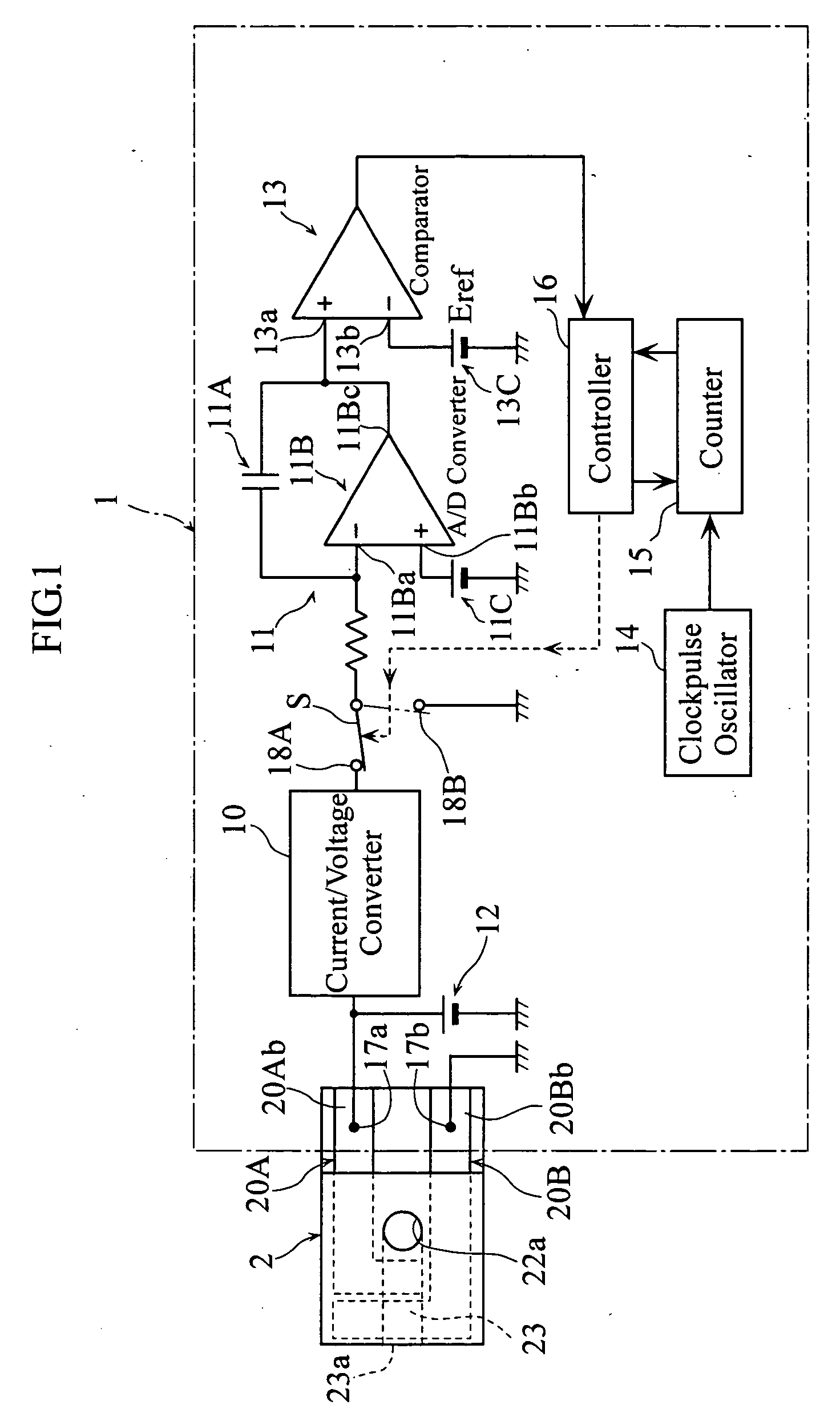
[0029] As shown in FIG. 1, the analytical apparatus 1, which is used with a biosensor 2 mounted thereto, includes a current / voltage converting circuit 10, an A / D converter 11, a circuit power source 12, a comparator 13, a clockpulse oscillator 14, a counter 15 and a control circuit 16.
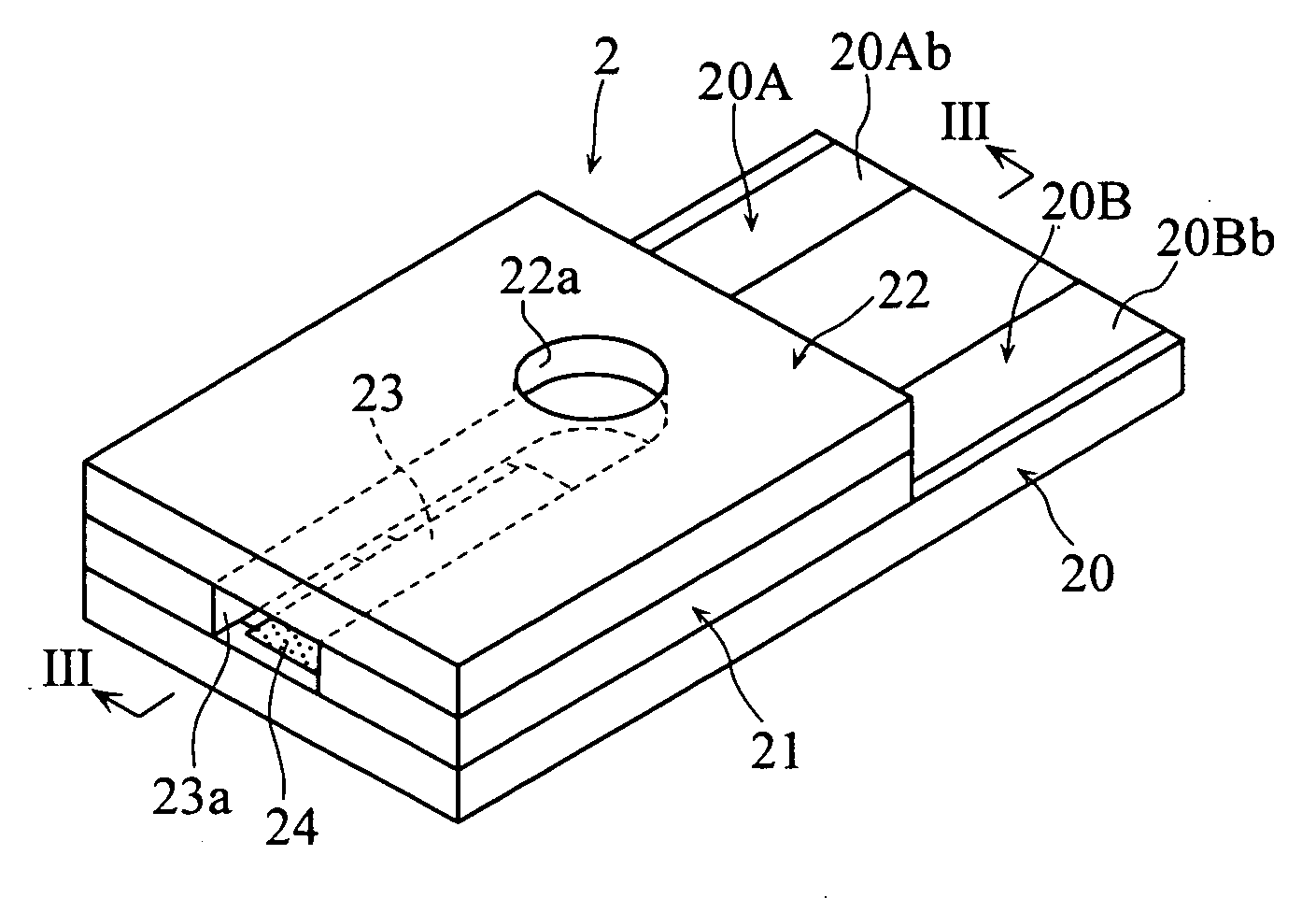
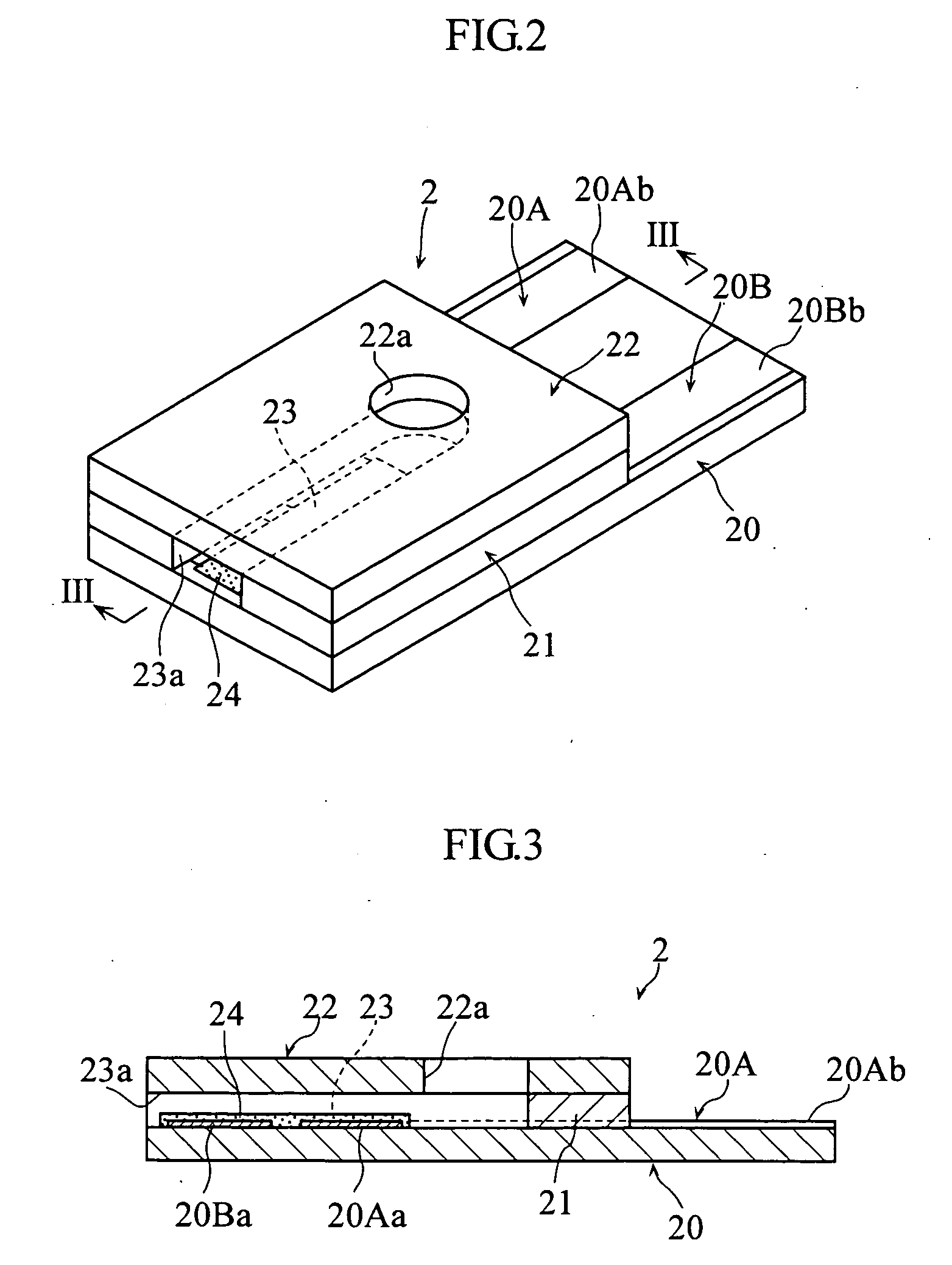
[0030] The biosensor 2 used in the analytical apparatus 1 functions to analyze a particular component contained in a sample (e.g. blood) by an electrochemical method and is designed to be disposable. As shown in FIGS. 2 through 4, the biosensor 2 comprises a substrate 20 and a cover 22 stacked thereon via a spacer 21 formed with a slit 21a. The above-described elements 20-22 define a flow path 23. The flow path 23 is provided for moving the sample introduced through a sample introduction port 23a toward a hole 22a of the cover 22 by utilizing capillary action and for providing a reaction field for the sample and a reagent.
[0031] The substrate 20 is formed with a working electrode 20A and a counter el...
PUM
| Property | Measurement | Unit |
|---|---|---|
| time interval | aaaaa | aaaaa |
| time interval | aaaaa | aaaaa |
| charge time | aaaaa | aaaaa |
Abstract
Description
Claims
Application Information
 Login to View More