
Method for disposing PCB through electrolysis
a technology of electrolysis and apparatus, applied in the direction of electrolysis process, water/sludge/sewage treatment, liquid separation, etc., can solve the problems of difficulty in moving and disposing pcb after storage in the other place, difficulty in controlling the heat of the furnace to high temperature, etc., and achieve the effect of increasing the electrical conductivity of the liquid
- Summary
- Abstract
- Description
- Claims
- Application Information
AI Technical Summary
Benefits of technology
Problems solved by technology
Method used
Image

Examples
Embodiment Construction
[0016] A PCB electrolyzing apparatus and method according to the present invention will be described in more detail with reference to the accompanying drawing.
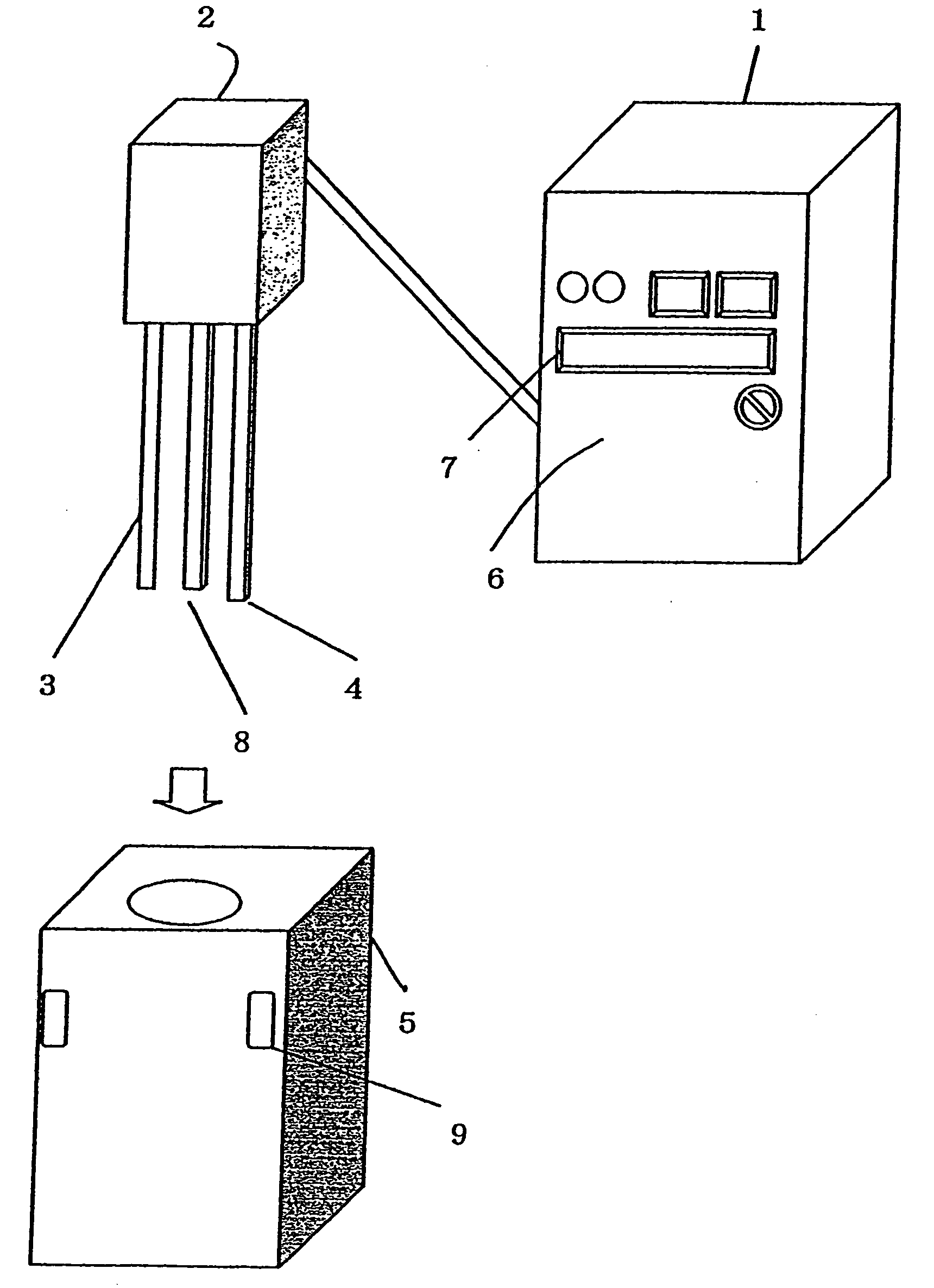
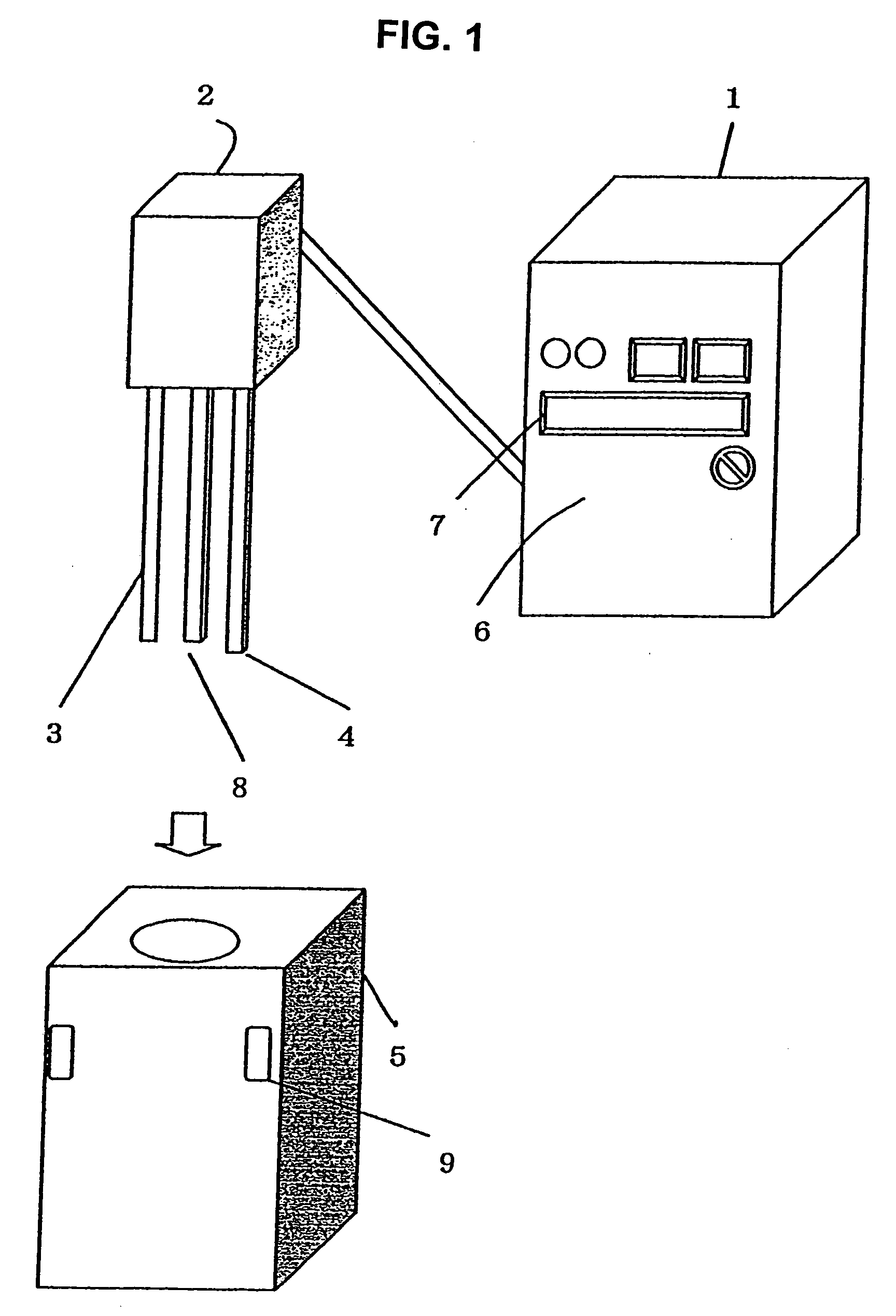
[0017] Referring to FIG. 1, a PCB electrolysis tank 5 holds a PCB containing liquid. Tap water is poured into the tank 5 of agitating device 9 so that it is mixed with the PCB containing liquid. An anode electrolysis rod 3 made of titanium-plated copper and a cathode electrolysis rod 4 made of aluminum, which are connected to a high-voltage current generator 6 and electric-wave generator 7 in a main body portion 1, are then inserted by way of insertion portion 2 into the PCB electrolysis tank 5 together with a supersonic wave generating electric-wave rod 8. A three-phase supersonic wave power source of 200 volts and electrolysis power source in the main body are then powered on. Since the supersonic wave decouples the clusters in the water, the PCB can be better mixed with the water to increase the electrical conductivity of ...
PUM
 Login to View More
 Abstract
Description
Claims
Application Information
 Login to View More