
Total internal reflection micro lens array
a micro-lens array and internal reflection technology, applied in the field of optical devices, can solve the problems of limited angle of divergence of output beam, insufficient angle of divergence, and inability to gain angles
- Summary
- Abstract
- Description
- Claims
- Application Information
AI Technical Summary
Benefits of technology
Problems solved by technology
Method used
Image

Examples
Embodiment Construction
[0025] The essence of the claimed invention is further explained on the basis of the following drawings.
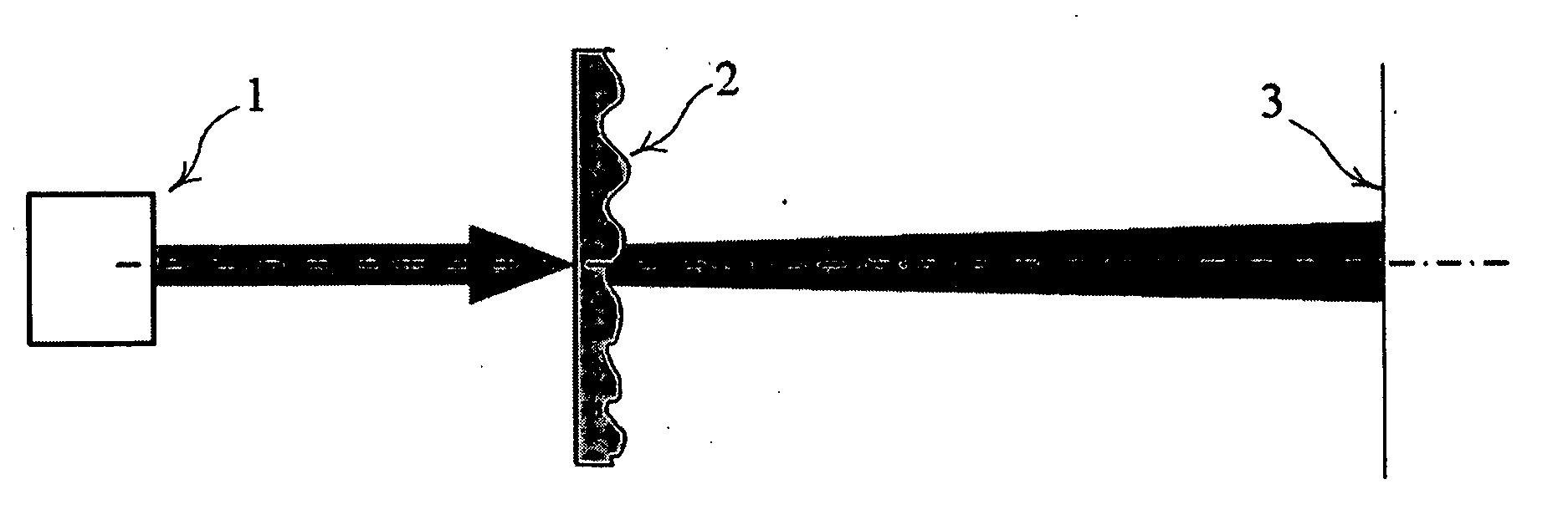
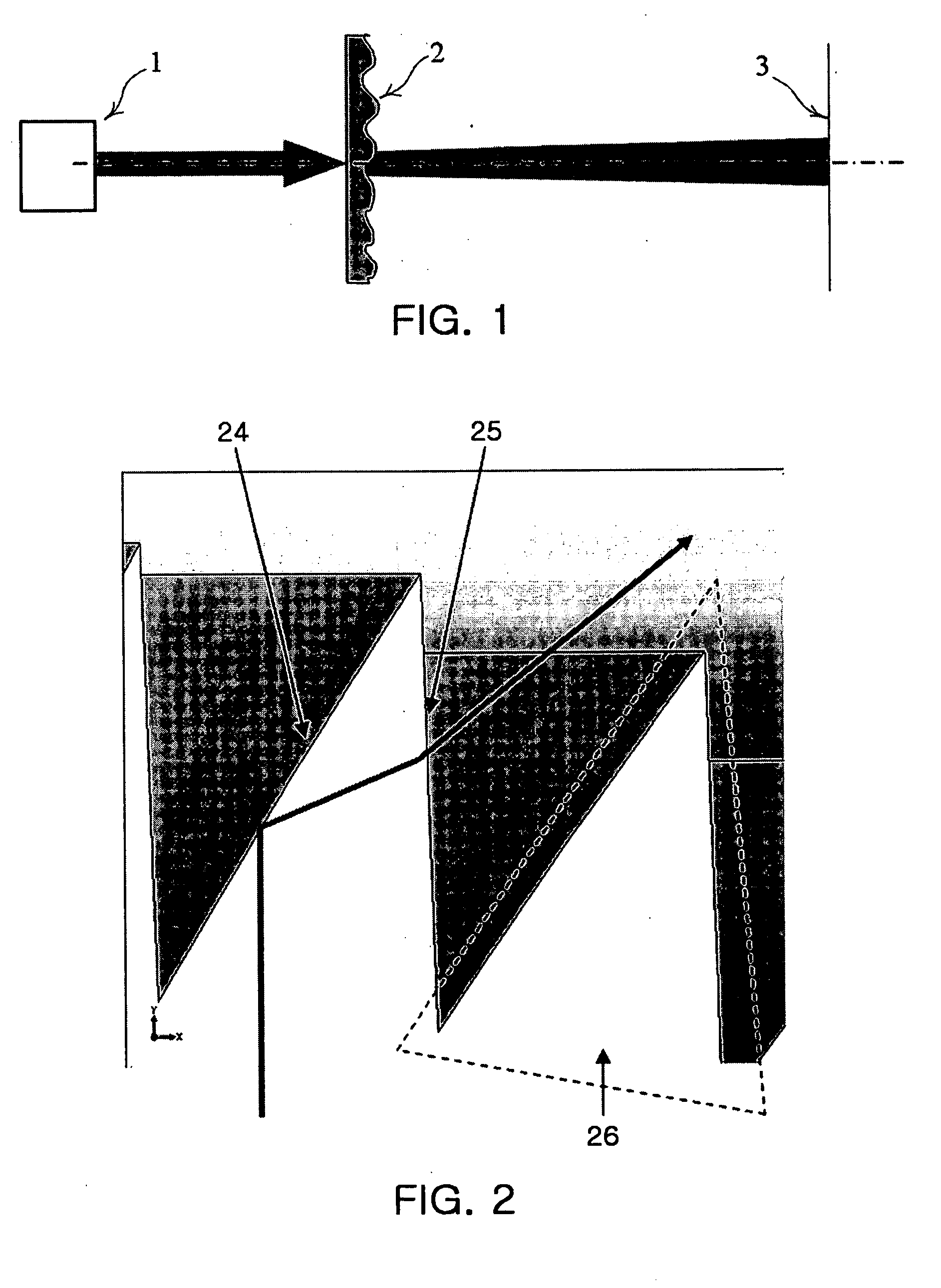
[0026]FIG. 1 shows the optical arrangement of the claimed device, where 1 is the light source, 2 is the micro lens array, and 3 is the plane of analysis.
[0027] The close-up view of individual devices (elements) of the device is shown on FIG. 2, where the reference sign 4 is a reflecting part (reflecting surface), 5 is a refractive part (refractive surface), 6 is the groove (furrow).
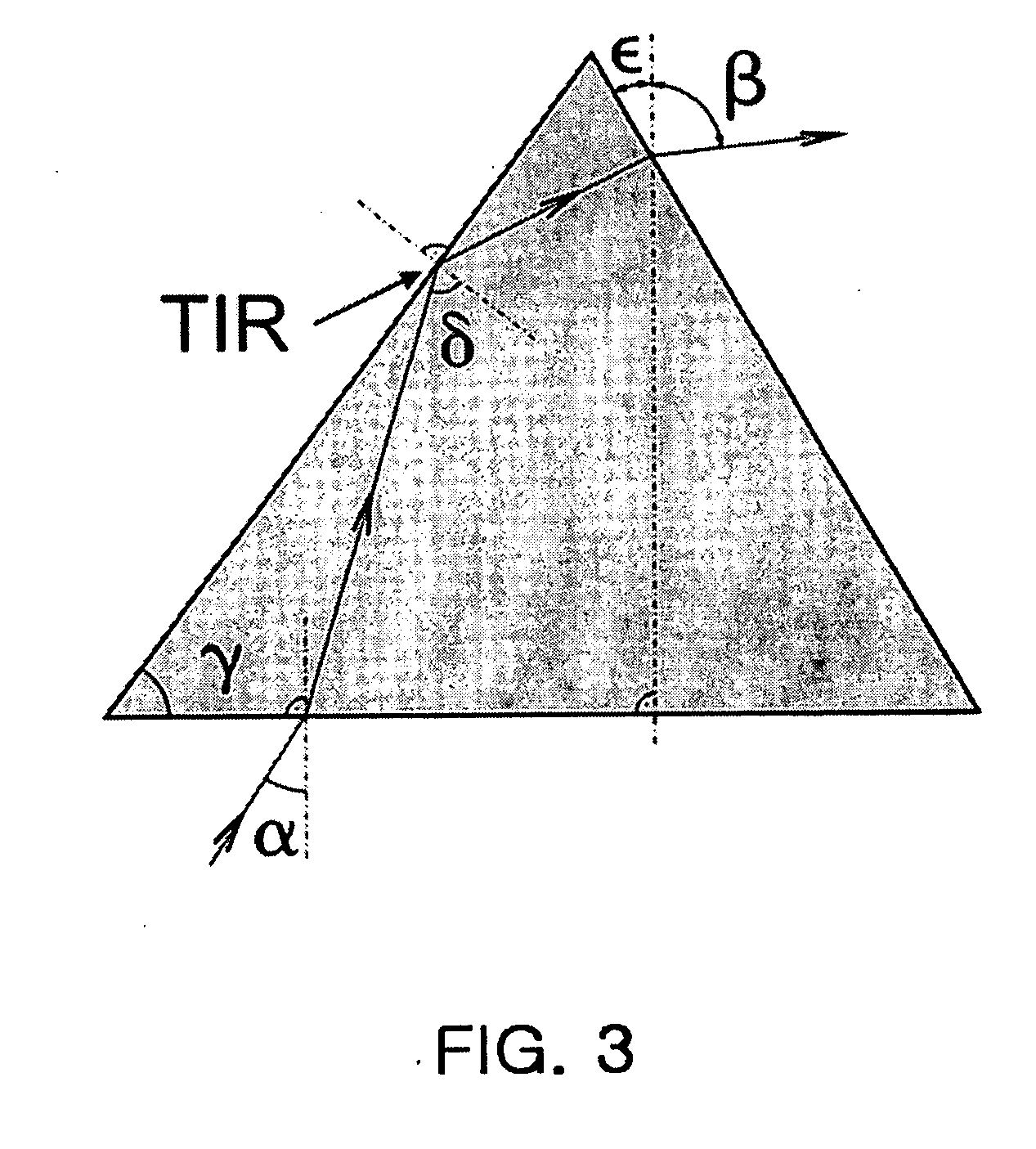
[0028] The claimed device consists of the plurality of Fresnel lens structures which are packed by any known non-periodic or periodic method (for example, the rectangular or hexagonal). The Fresnel lens structures are arranged on the same optical incidence surface, and each has a plurality of grooves 26 formed therein. Each of the plurality of grooves (furrows) 26 has two parts: the reflecting part (reflecting surface) 24 and the refractive part (refractive surface) 25 (see FIG. 2). Each groove (furr...
PUM
 Login to View More
 Abstract
Description
Claims
Application Information
 Login to View More