
Method for fabricating thin layer device
- Summary
- Abstract
- Description
- Claims
- Application Information
AI Technical Summary
Benefits of technology
Problems solved by technology
Method used
Image

Examples
example 1
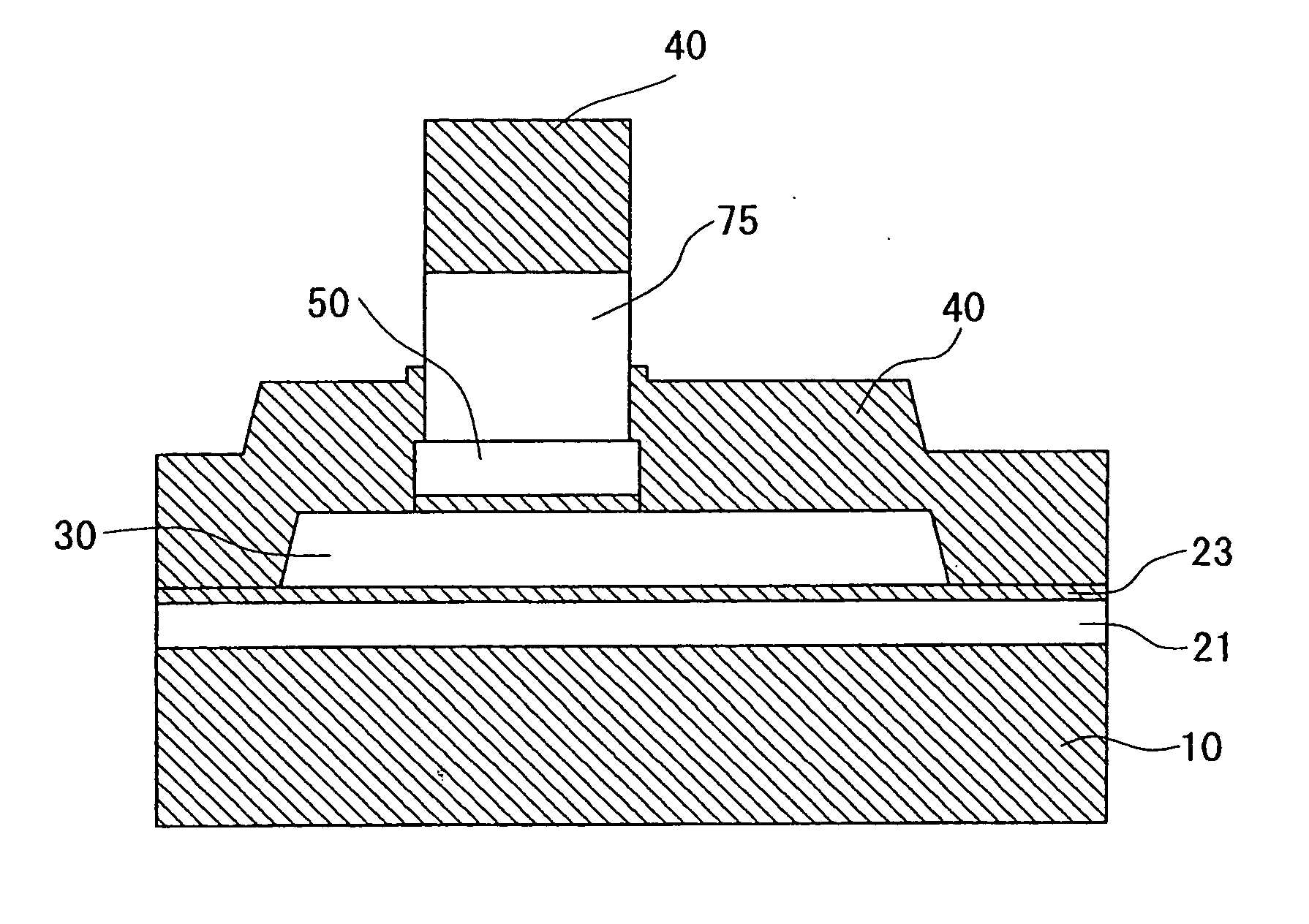
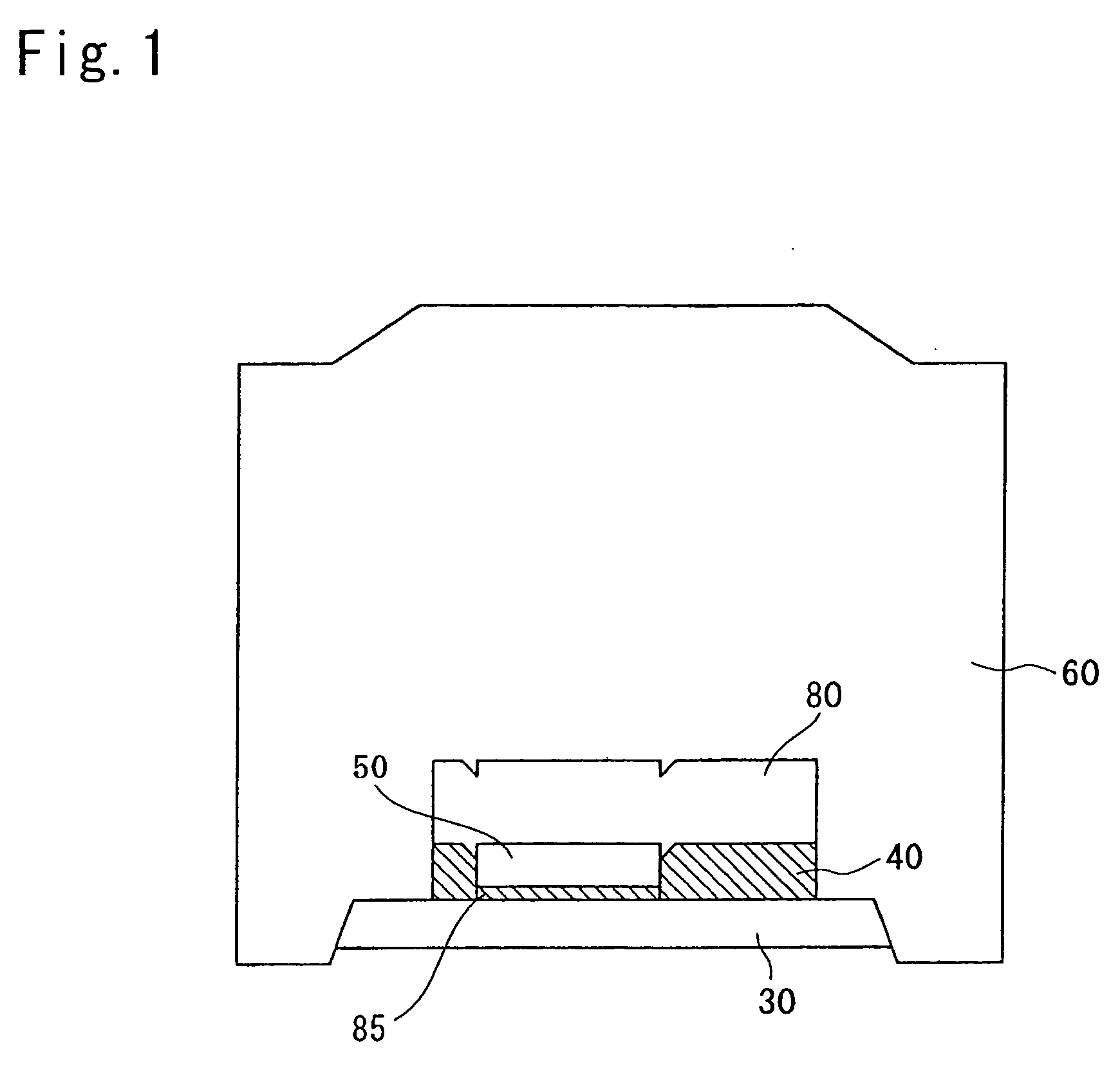
[0049] As a thin layer device of the present invention, a thin layer device having an epitaxial NbN / MgO / NbN-SIS junction as a multilayer structure substance on a SiO2 substrate was produced.
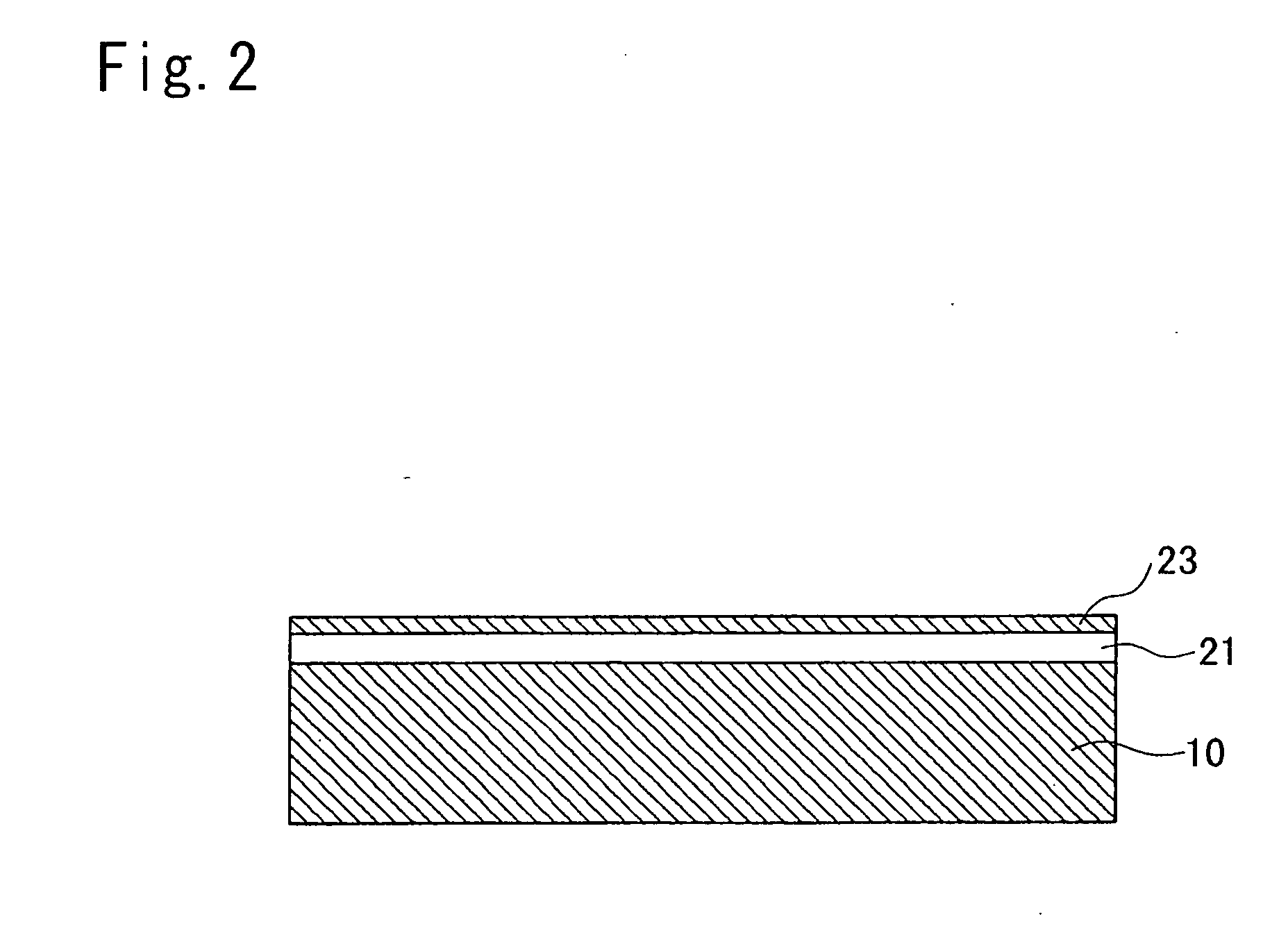
[0050] First of all, an NbN thin film was epitaxially grown up to 100 nm thickness on an MgO temporary substrate having a thickness of 300 μm, then on the NbN thin film, an epitaxial MgO thin film in a thickness of 20 nm, was further formed as an etching protecting layer, by an RF sputtering method and a DC reactive sputtering method.
[0051] Furthermore, on this MgO thin film which is an etching protecting layer, a lower electrode layer in a thickness of 200 nm was formed by epitaxial growth, then an MgO layer in a thickness of about 0.7 nm was formed by an RF sputtering method, and an NbN layer in a thickness of 200 nm was formed by epitaxial growth as an upper electrode layer. Based on this, an epitaxial NbN / MgO / NbN-SIS junction was produced, and then the MgO thin layer at the peripheral of th...
example 2
[0053] As a thin layer device of the present invention, an SIS mixer for an 870 GHz band waveguide was produced. A microscopic photo of the resultant SIS mixer for a waveguide is shown in FIG. 10. FIGS. 10(a) and (b) are cross-sectional views, obtained by using a dicing saw, of an SIS mixer for a waveguide on a SiO2 substrate, and FIG. 10(c) shows a transmitted observation of the SIS mixer part from the side of the SiO2 substrate having a thickness of about 20 μm.
[0054]FIG. 11 shows evaluation results of warpage and substrate cross-section of the SiO2 substrate of the resultant SIS mixer for a waveguide. As shown in FIG. 11(a), a rising central part of about 0.7 μm higher than the peripheral part was confirmed as evaluation result of substrate warpage in about 1 mm length zone. This means presence of small stress inside the substrate and having excellent flatness.
[0055]FIG. 11(b) shows measurement result of SiO2 substrate thickness by a laser microscope. Substrate thickness was ab...
PUM
 Login to View More
 Abstract
Description
Claims
Application Information
 Login to View More