
Variable stiffness catheter assembly
a catheter and variable technology, applied in the field of intravascular catheters, can solve the problem that the physician is typically not able to manipulate the distal portion of the catheter directly, and achieve the effect of increasing the pushability of the catheter, variable stiffness, and increasing the stiffness
- Summary
- Abstract
- Description
- Claims
- Application Information
AI Technical Summary
Benefits of technology
Problems solved by technology
Method used
Image


Examples
Embodiment Construction
[0070] While this invention may be embodied in many different forms, there are described in detail herein specific embodiments of the invention. This description is an exemplification of the principles of the invention and is not intended to limit the invention to the particular embodiments illustrated.
[0071] For the purposes of this disclosure, like reference numerals in the figures shall refer to like features unless otherwise indicated.
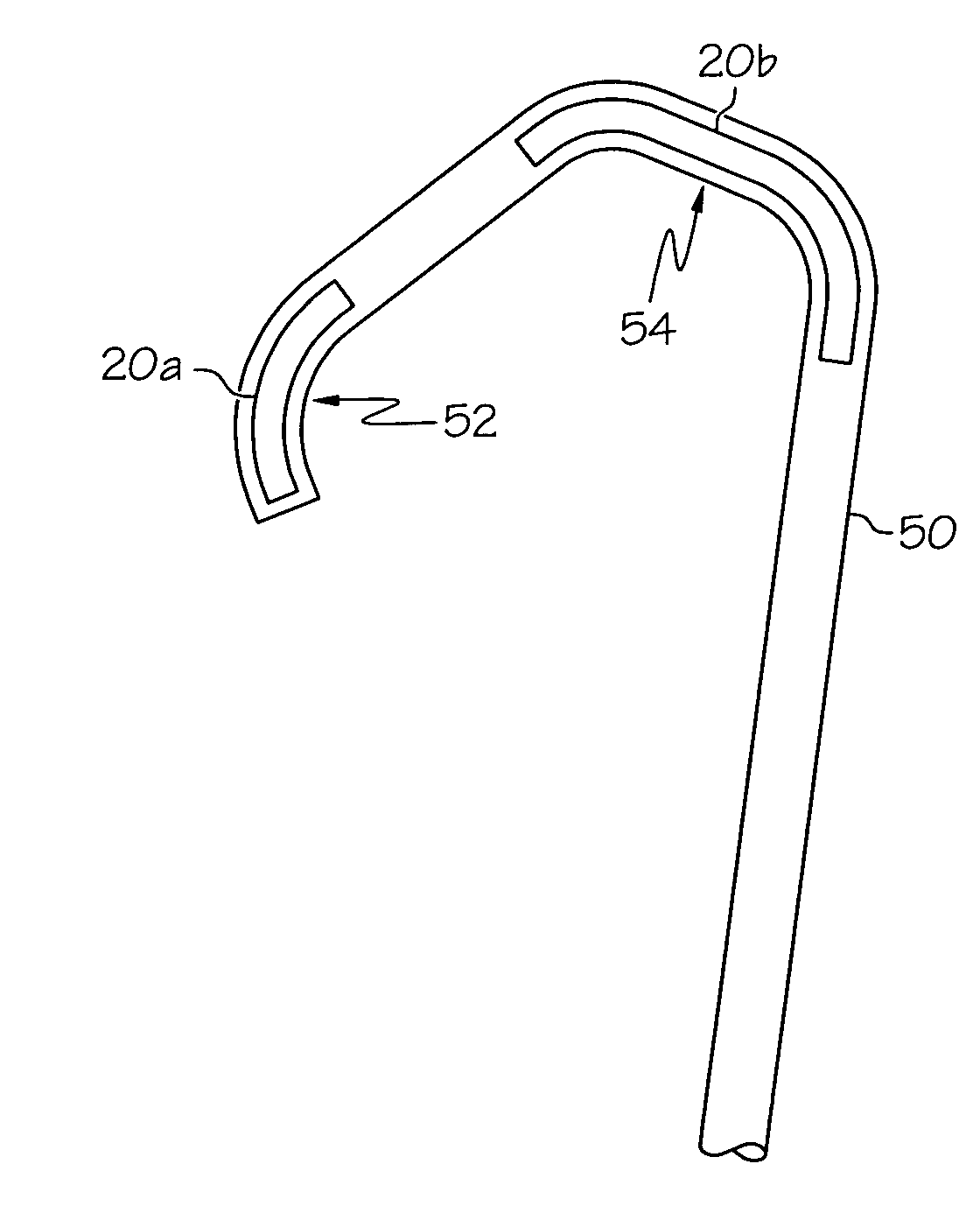
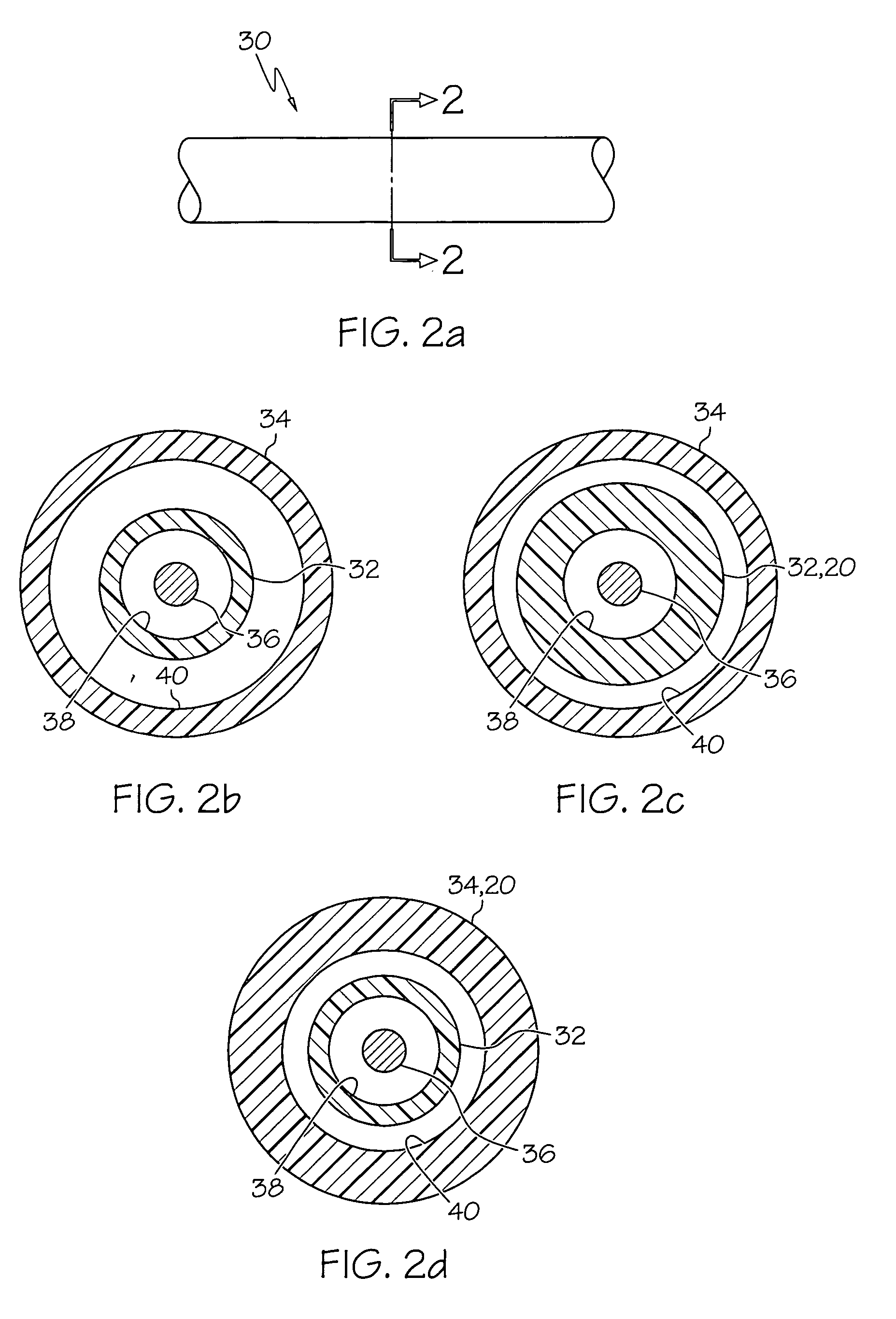
[0072]FIGS. 1a-c depict different ways EAP 20 can behave when actuated. All changes in the geometry of EAP 20, e.g. changing its linear length, are a result of the configuration of the EAP and the substrate it is put on. FIG. 1a depicts how EAP 20 can increase or decrease its linear length. When EAP 20a is actuated, the linear length increases, the additional length denoted by portion 20b. The EAP 20 may also be configured so that it decreases in length upon actuation. FIG. 1b shows how EAP 20 can bend when actuated with 20a denoting the EAP 20 p...
PUM
| Property | Measurement | Unit |
|---|---|---|
| flexibility | aaaaa | aaaaa |
| electric electroactive | aaaaa | aaaaa |
| ionic electroactive | aaaaa | aaaaa |
Abstract
Description
Claims
Application Information
 Login to View More