

Chewing Gum Having Modified Release
a technology of chewing gum and release, applied in the field of chewing gum, can solve the problems of undesired texture properties, unfavorable non-tacking and release properties, and increased pva, and achieve the effect of robust chewing gum
- Summary
- Abstract
- Description
- Claims
- Application Information
AI Technical Summary
Benefits of technology
Problems solved by technology
Method used
Image

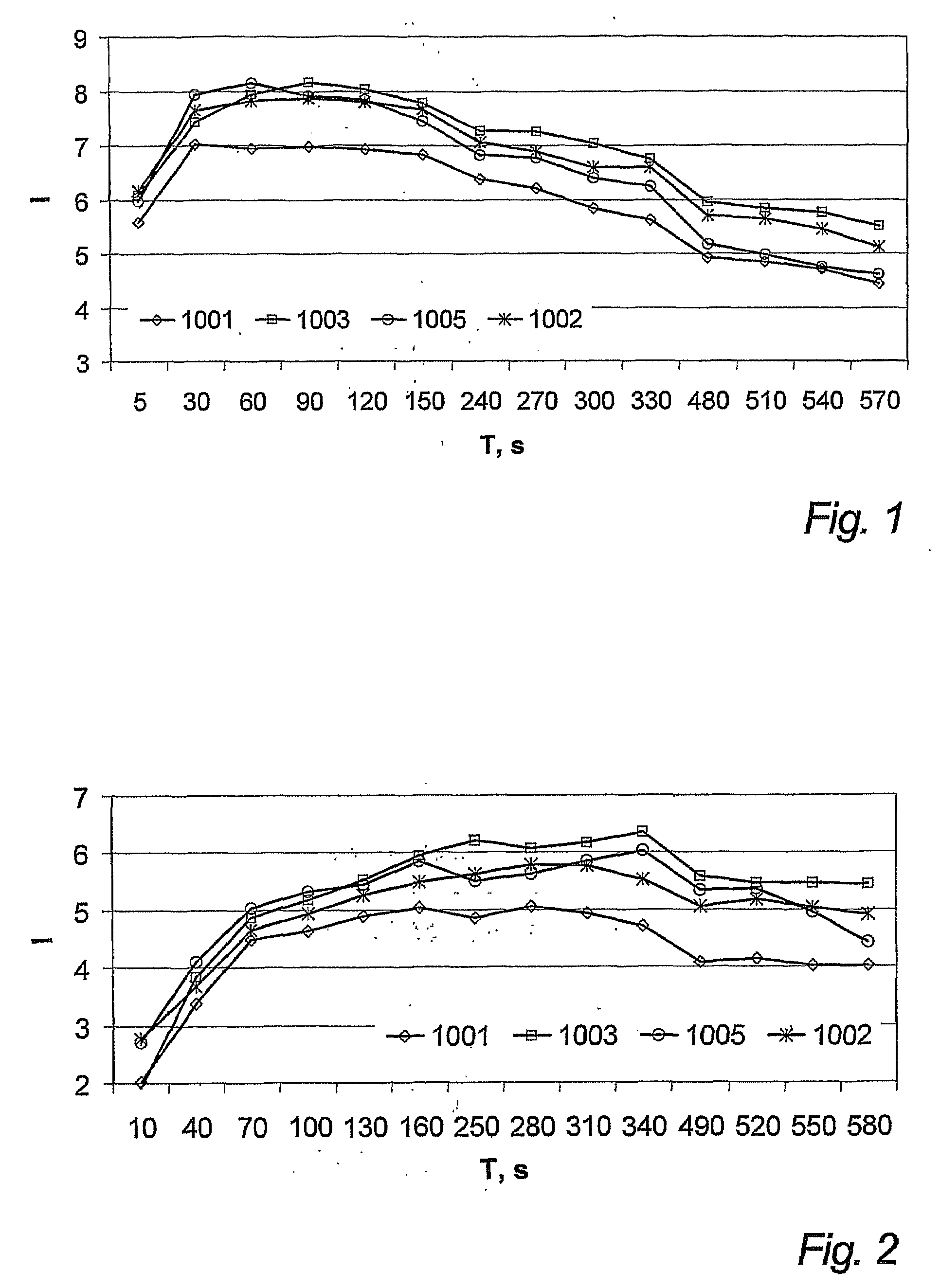
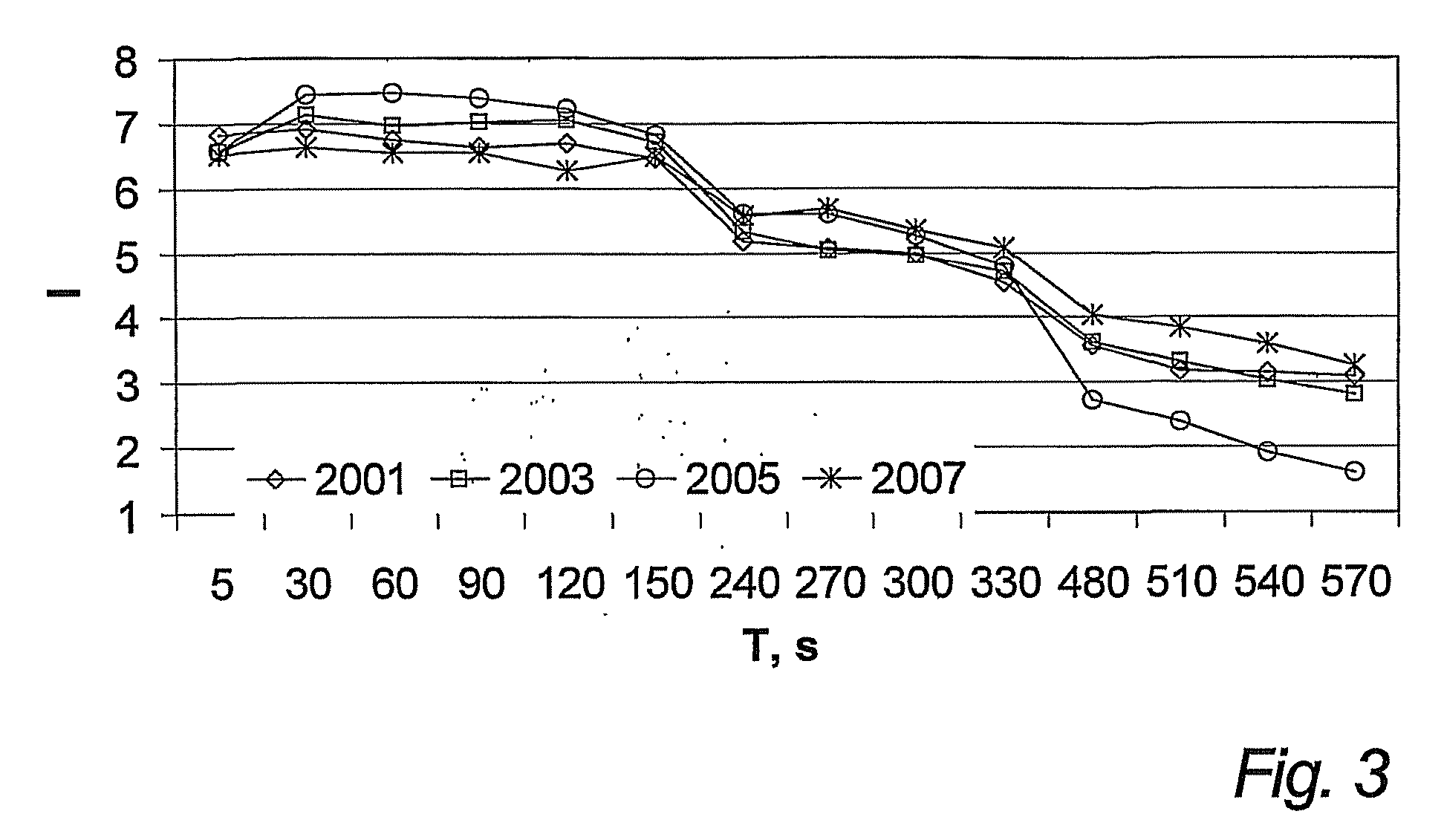
Examples
example 1
Preparation of Polyester Resin
[0207]A resin sample is produced using a cylindrical glass, jacketed 10 L pilot reactor equipped with glass stir shaft and Teflon stir blades and bottom outlet. Heating of the reactor contents is accomplished by circulation of silicone oil, thermo stated to 130° C., through the outer jacket. ε-caprolactone (358.87 g, 3.145 mol) and 1,2-propylene glycol (79.87 g, 1.050 mol) are charged to the reactor together with stannous octoate (1.79 g, 4.42×10⁻³ mol) as the catalyst and reacting in about 30 min. at 130° C. Then molten D,L-lactide (4.877 kg, 33.84 mol) are added and reaction continued for about 2 hours. At the end of this period, the bottom outlet is opened, and molten polymer is allowed to drain into a Teflon-lined paint can. Characterization of the product indicates Mn=6,000 g / mol and Mw=7,000 g / mol (gel permeation chromatography with online MALLS detector) and Tg=25-30° C. (DSC, heating rate 10° C. / min).
example 2
[0208]The resin applied is a polyester resin provided by NatureWork®: PLA 5500 D which is an amorphous poly D,L-lactide. The homopolymer has a Tg of about 50° C. (Mn 50,000).
example 3
Preparation of Polyester Elastomer
[0209]An elastomer sample is produced using a 500 mL resin kettle equipped with an overhead stirrer, nitrogen gas inlet tube, thermometer, and distillation head for removal of methanol. To the kettle are charged 83.50 g (0.43 mole) dimethyl terephthalate, 99.29 g (0.57 mole) dimethyl adipate, 106.60 g (1.005 mole) di(ethylene glycol) and 0.6 g calcium acetate monohydrate. Under nitrogen, the mixture is slowly heated with stirring until all components become molten (120-140° C.). Heating and stirring are continued and methanol is continuously distilled. The temperature slowly rises in the range 150-200° C. until the evolution of methanol ceases. Heating is discontinued and the content is allowed to cool to about 100° C. The reactor lid is removed and the molten polymer is carefully poured into a receiving vessel.
[0210]Characterization of the product indicates Mn=40,000 g / mol and Mw 190,000 g / mol (gel permeation chromatography with online MALLS detect...
PUM
 Login to View More
 Abstract
Description
Claims
Application Information
 Login to View More