Cleanliness of certain preparation areas or rooms is becoming a bigger issue for a diverse group of organizations such as pharmaceutical and
medical device manufacturers, industrial research facilities,
patient care facilities, animal research facilities, and
electronics laboratories.
Cleanliness is an issue particularly in the wet environments of
microelectronics laboratories.
Bacteria, including
Pseudomonas putida, can grow and flourish in such environments, leaving tools and work surfaces contaminated and unclean.
While a solution of six percent (6%)
hydrogen peroxide is found to be acceptable in killing bacterial growths, the use of free liquid hydrogen peroxide poses both health and safety issues.
Hydrogen peroxide, as well as other liquid cleaning solutions can be difficult to work with.
Most liquid cleaning solutions, especially hydrogen peroxide, lose their cleaning
potency over time because the cleaning agents are constantly decomposing.
For example, hydrogen peroxide decomposes to water and
oxygen over time, such that once prepared, the
shelf life is extremely short.
Improper measuring / proportions of the hydrogen peroxide and the solvent, typically water, however, can cause excessive
dilution of the hydrogen peroxide, decreasing the effectiveness of the resulting solution.
Further, when liquid cleaning solutions are used, there is often too little solution used, leaving an unsanitized environment; and, in other cases, there is too much solution used, resulting in solution wastage.
Moreover, the dilutions of some cleaning solutions may be too weak to be effective, liquid cleaning solution may be spilled, and juggling two or more containers for measuring and diluting the cleaning solution can all be time-consuming, inconvenient, unsafe, and inefficient.
A problem with these wipes, however, is that, in addition to the cleaning solution losing its strength or
potency over time if not used soon after packaging, the solution reacts with most common fabrics used for the wipes.
The reaction causes degradation of the wiping material and of the cleaning agents within a short period of time.
When the wipes are needed for cleaning purposes, the smaller container is broken, releasing the liquid onto the wipes.
But the problem still remains where the liquid cleaning solution loses its
potency over time.
In addition, particularly with hydrogen peroxide, hydrogen peroxide continually deteriorates and produces
oxygen gas such that if one attempted to
package wipes pre-wetted with hydrogen peroxide solution, the gas would build up within the packaging and rupture the packaging over time.
The shelf-life of such a product would be extremely short.
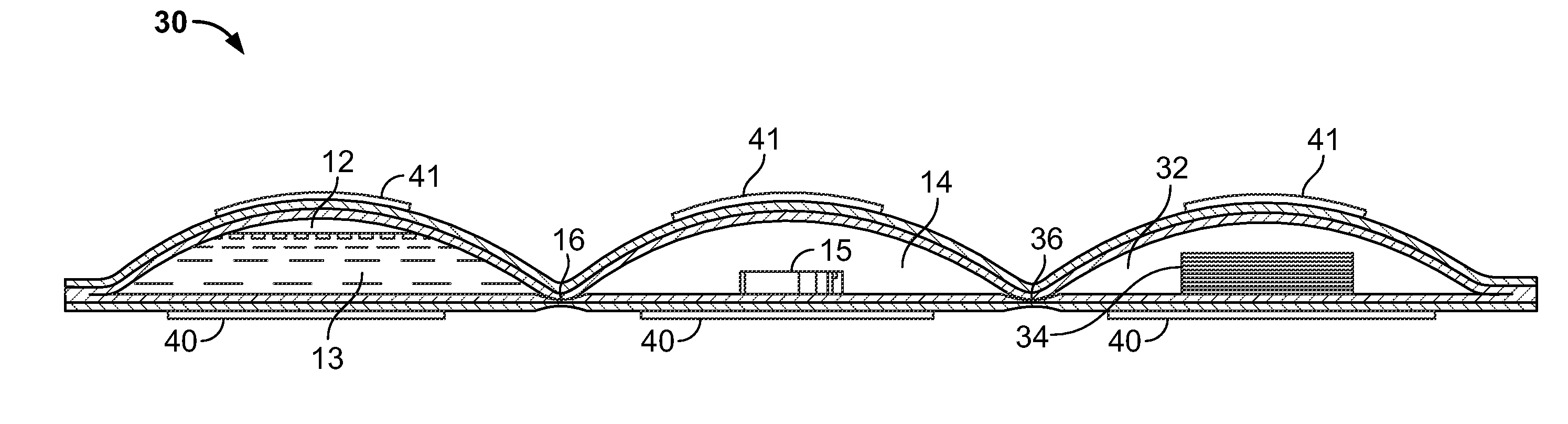
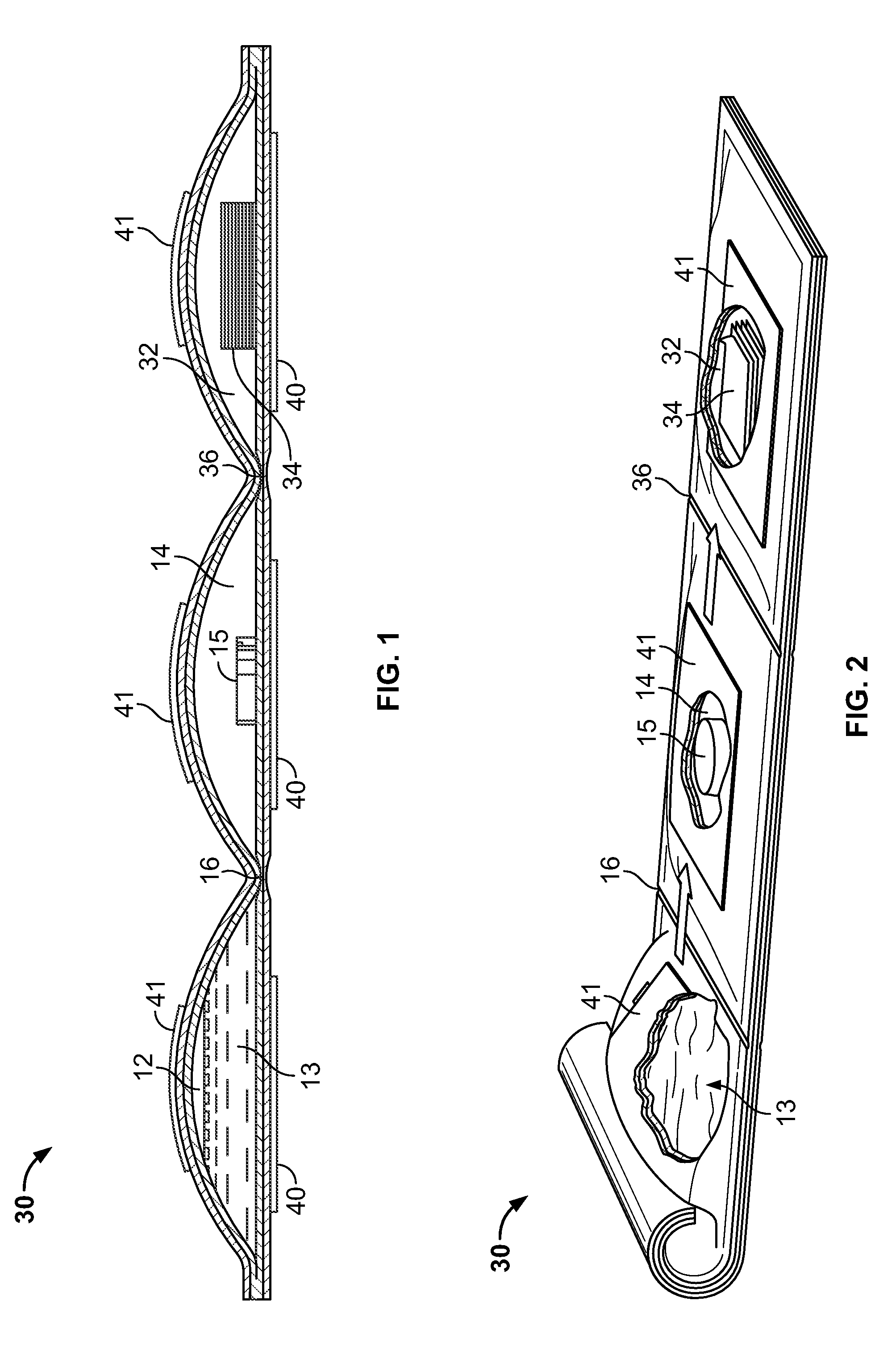
As a result, there still exists a need for a hydrogen peroxide point of use wetted wiper
system with a long
shelf life and little wiper
decomposition.


 Login to View More