Method for optimizing an unrouted design to reduce the probability of timing problems due to coupling and long wire routes

US20090132982A1Inactive Publication Date: 2009-05-21GLOBALFOUNDRIES INC
3 Cites 7 Cited by

Patent Information

Authority / Receiving Office
US · United States
Current Assignee / Owner
Publication Date
2009-05-21
Estimated Expiration
Not applicable · inactive patent

Smart Images

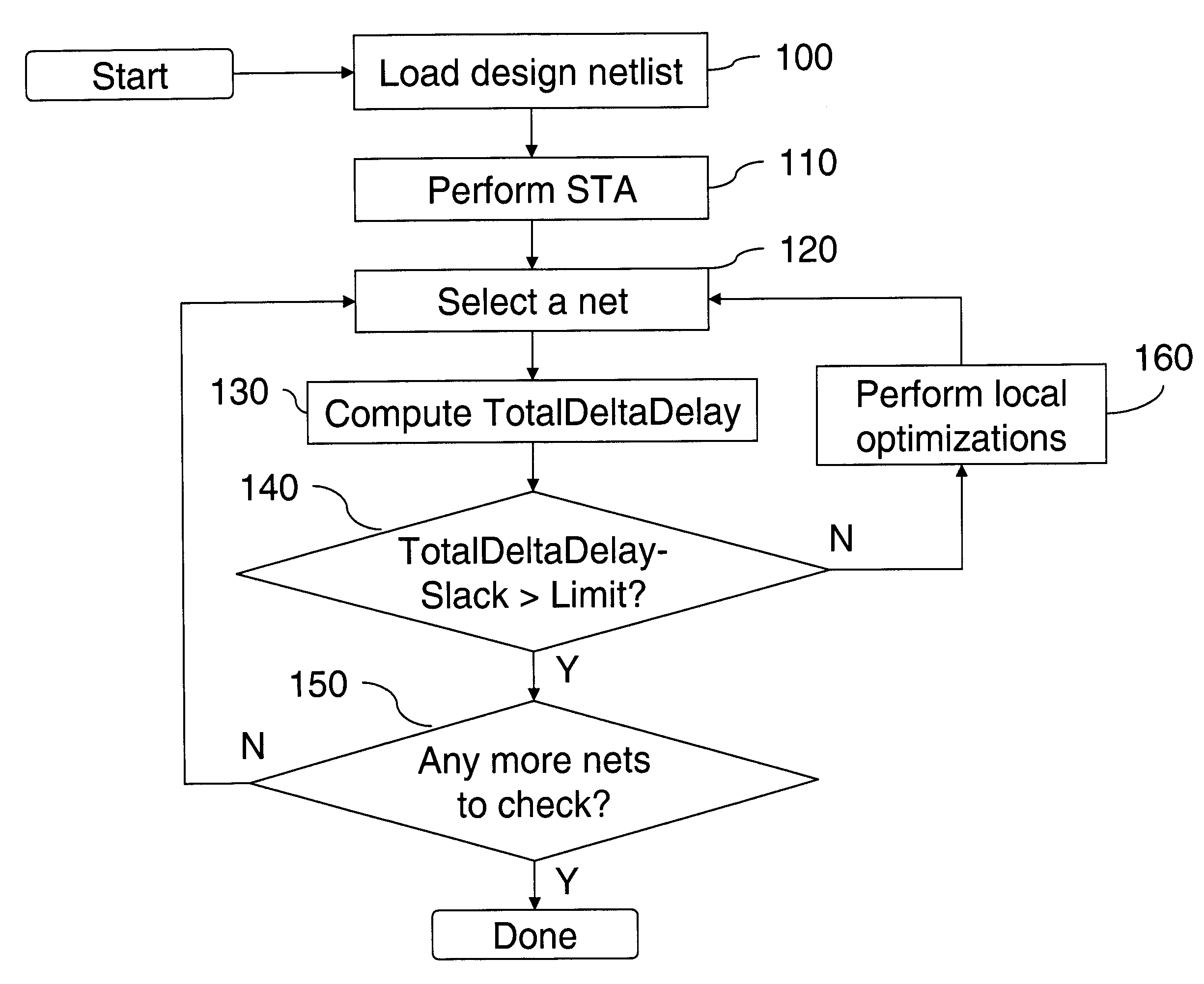
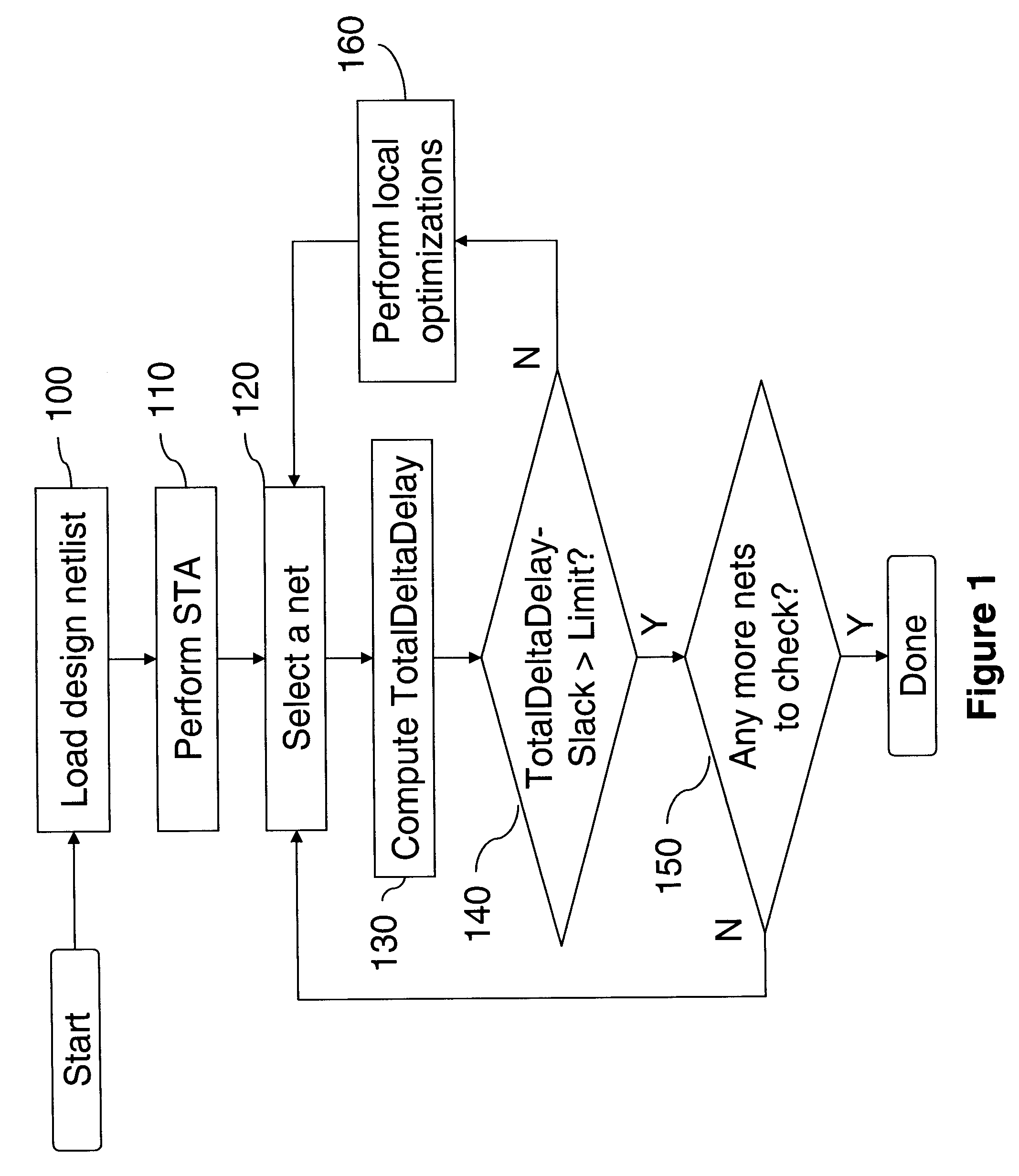
  • Figure 1
    Figure 1
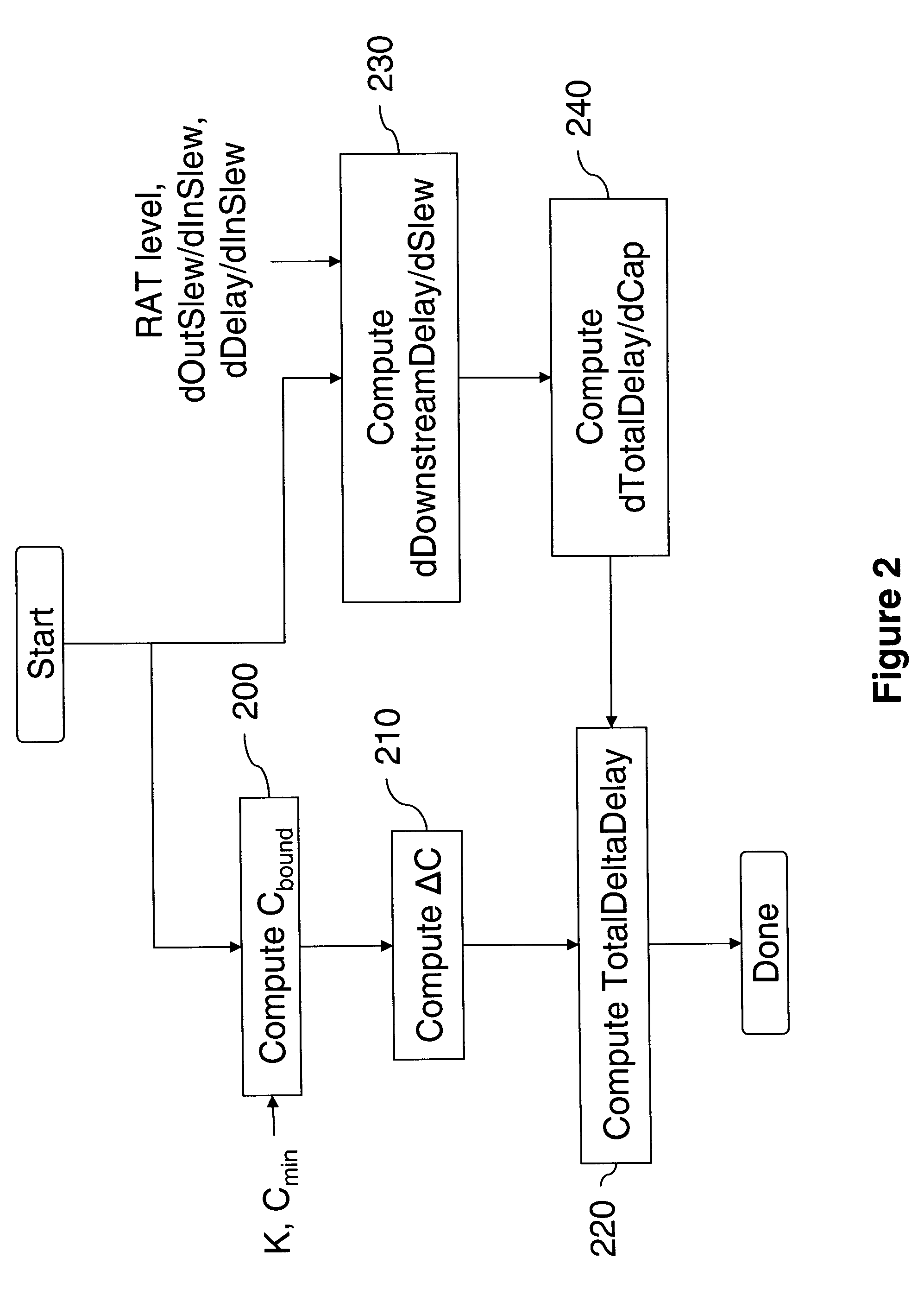
  • Figure 2
    Figure 2
  • Figure 3
    Figure 3
Patent Text Reader

Abstract

A method and a system is described to predict effects of coupling on timing by estimating the delta delay and delta slack that can occur due to coupling on any net, for optimization to minimize the sensitivity of slack to potential coupling violations. The invention protects against other unexpected increases in effective load capacitance, such as those due to unexpectedly long wire routes. It also estimates the delay impact of a single ‘fault’ or ‘event’, such as a coupling event or unexpectedly long wires routes, including the impact of slew propagation.
Need to check novelty before this filing date? Find Prior Art

Description

FIELD OF THE INVENTION

[0001] The present invention generally relates to very large scale integrated (VLSI) circuit designs, and more particularly, to a system and method for setting up a timing environment for use during early optimization stages to capture timing effects caused by long wires routes and coupling.BACKGROUND OF THE INVENTION

[0002] Timing optimization of a logic network is typically performed using an integrated incremental timing analyzer, and is invoked at different stages of the design process, e.g., before placement, and after placement and routing. A benefit of this approach is that the design changes that are required to correct large problems can be made before subsequent expensive design stages such as placement and routing, reducing the computational expense that would otherwise be required to incrementally update the design decisions made during these subsequent processes.

[0003] Coupling between nets can affect the timing of a logic network, and its impact on th...

Examples

Embodiment Construction

[0026]The present invention and the various features and advantageous details thereof are explained more fully with reference to the non-limiting embodiments that are illustrated in the accompanying drawings and detailed in the following description.

[0027]The present inventive method computes before routing a change in delay, hereinafter referred to as TotalDeltaDelay that could reasonably be expected to occur due to coupling, long wire routes, or other characteristics of a net that might be discovered after routing has been performed. Further, TotalDeltaDelay also includes the anticipated downstream delay that increases due to the slew degradation propagation. Coupling problems occur often enough that in order to prevent “surprise” problems after routing, it becomes necessary to ensure that any single “typical” coupling problem will not cause timing or electrical problem. Yet, coupling problems occur infrequently enough that it is sufficient to assume during pre-routing optimizatio...