
Vibrating micromechanical sensor of angular velocity
a micromechanical sensor and vibration technology, applied in the direction of acceleration measurement using interia force, turn-sensitive devices, instruments, etc., can solve the problems of limiting the dynamic of the signal, and reducing the accuracy of the signal
- Summary
- Abstract
- Description
- Claims
- Application Information
AI Technical Summary
Benefits of technology
Problems solved by technology
Method used
Image

Examples
Embodiment Construction
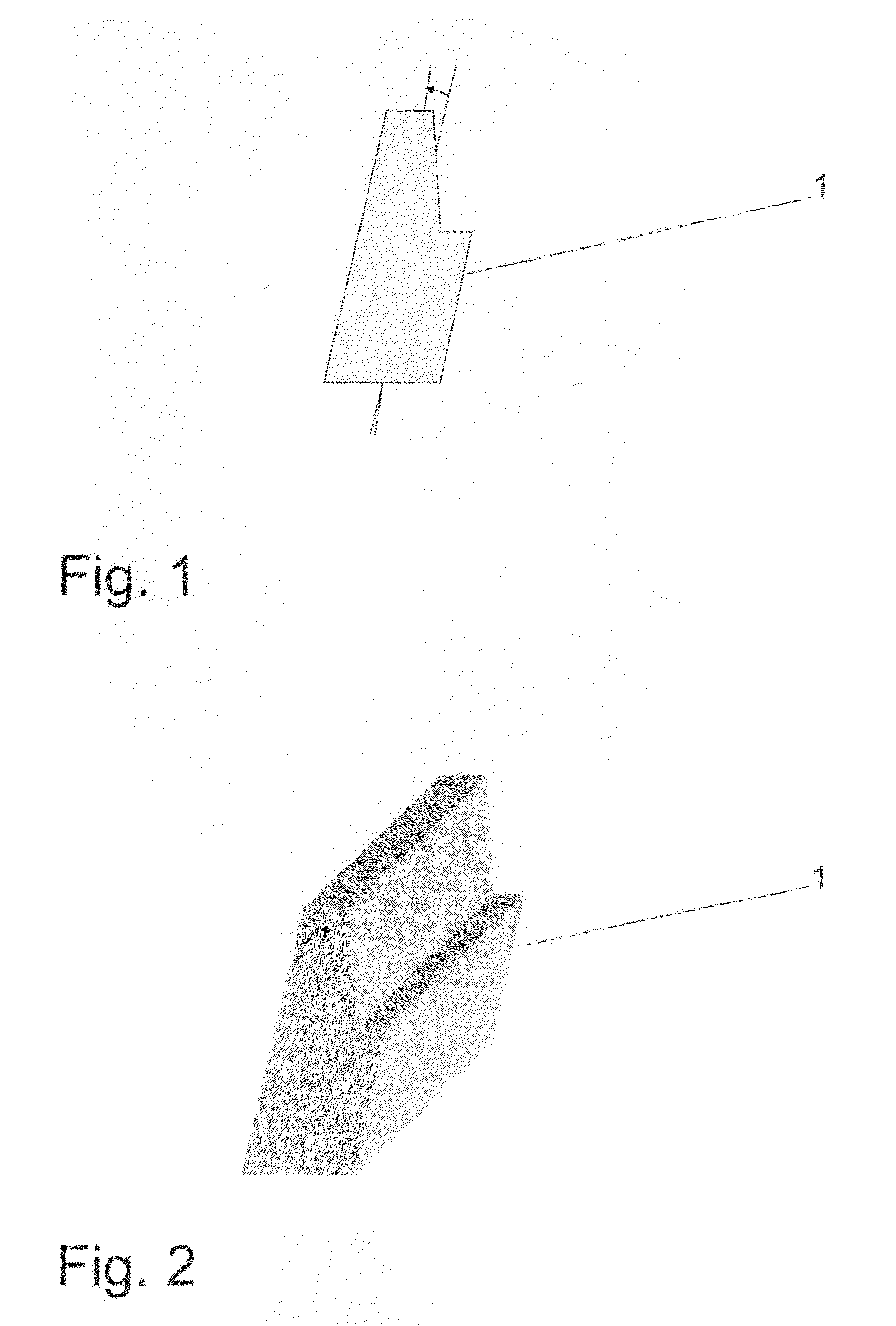
[0030]In a vibrating sensor of angular velocity according to the invention, the primary motion to be activated is the vibration of at least one seismic mass and an associated moving electrode. In addition to the primary motion, the seismic mass possesses another degree of freedom in relation to a detection axis essentially perpendicular to the primary motion.
[0031]Further, the sensor of angular velocity according to the invention comprises a seismic mass and an associated moving electrode, which mass is supported to the frame of the sensor component by means of a spring structure.
[0032]The moving electrode in the primary motion mode of the vibrating sensor of angular velocity according to the invention is activated into vibration. Thus, the coupling caused by the Coriolis force activates the detection motion mode. The motion axes of the primary motion mode and the detection motion mode, or the detection motion modes, are essentially perpendicular to each other. Due to the known non-...
PUM
| Property | Measurement | Unit |
|---|---|---|
| Angle | aaaaa | aaaaa |
| Depth | aaaaa | aaaaa |
| Angular velocity | aaaaa | aaaaa |
Abstract
Description
Claims
Application Information
 Login to View More