

Medical Device for the Transport of Subcooled Cryogenic Fluid through a Linear Heat Exchanger
a technology of cryogenic fluid and heat exchanger, which is applied in the field of medical devices for use in cryogenic systems, can solve the problems of tissue freezing, heat exchanger use, etc., and achieve the effects of safe operation of the cryogenic system, improved surface area, and reduced cryogenic liquid temperatur
- Summary
- Abstract
- Description
- Claims
- Application Information
AI Technical Summary
Benefits of technology
Problems solved by technology
Method used
Image

Examples
Embodiment Construction
[0020]In the following detailed description, for purposes of explanation and not limitation, exemplary embodiments disclosing specific details are set forth in order to provide a thorough understanding of the present invention. However, it will be apparent to one having ordinary skill in the art that the present invention may be practiced in other embodiments that depart from the specific details disclosed herein. In other instances, detailed descriptions of well-known devices and methods may be omitted so as not to obscure the description of the present invention.
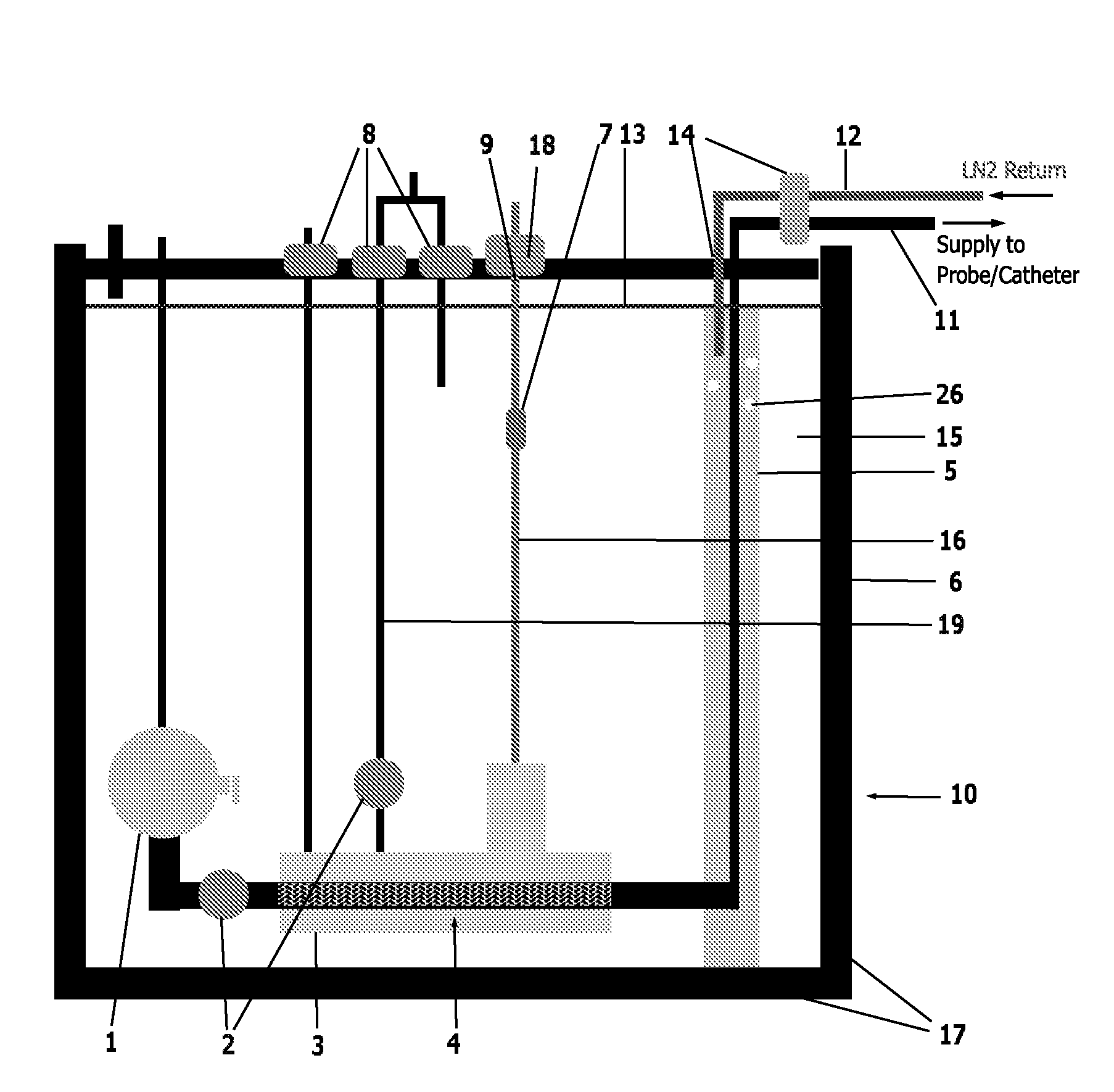
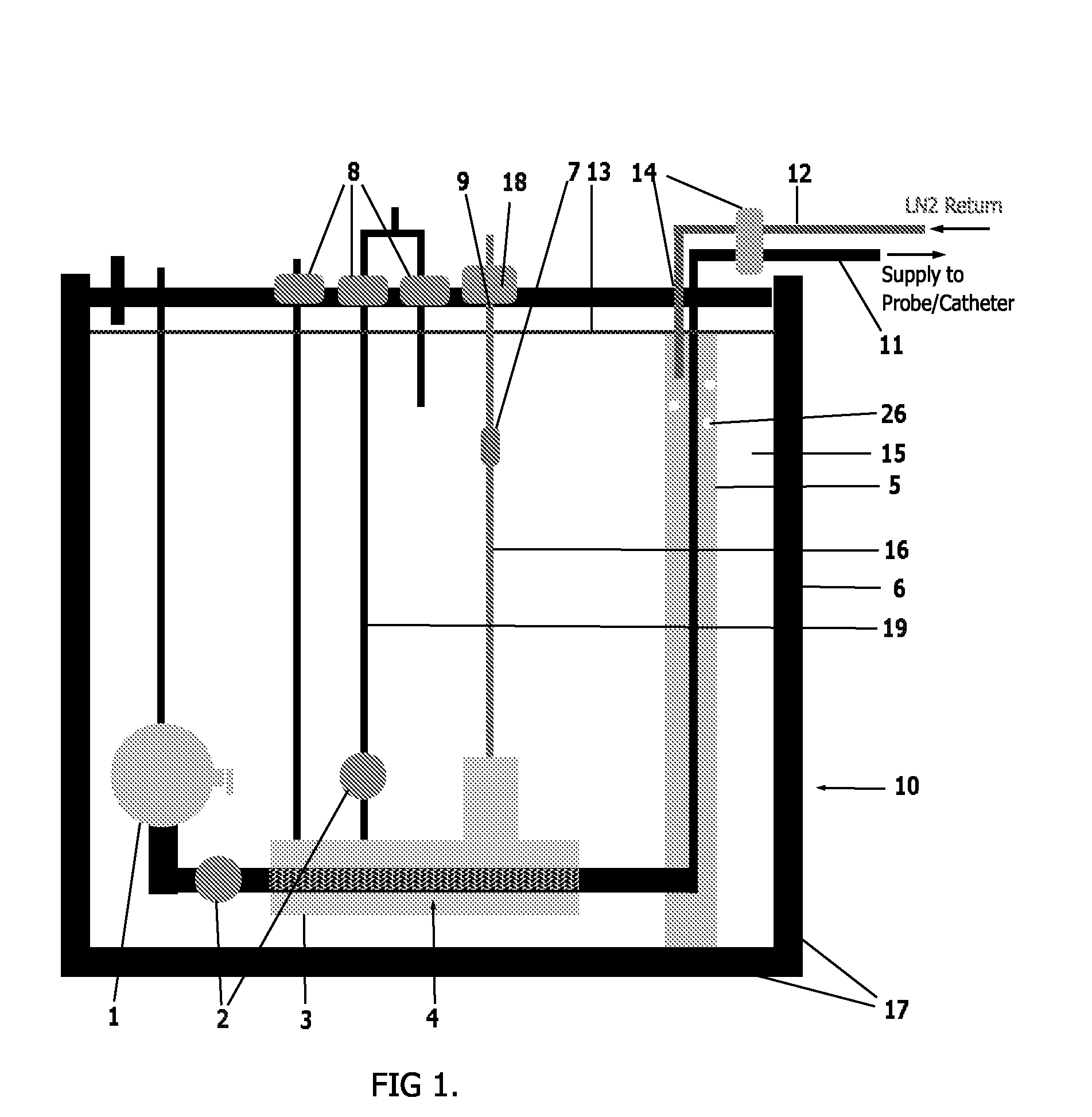
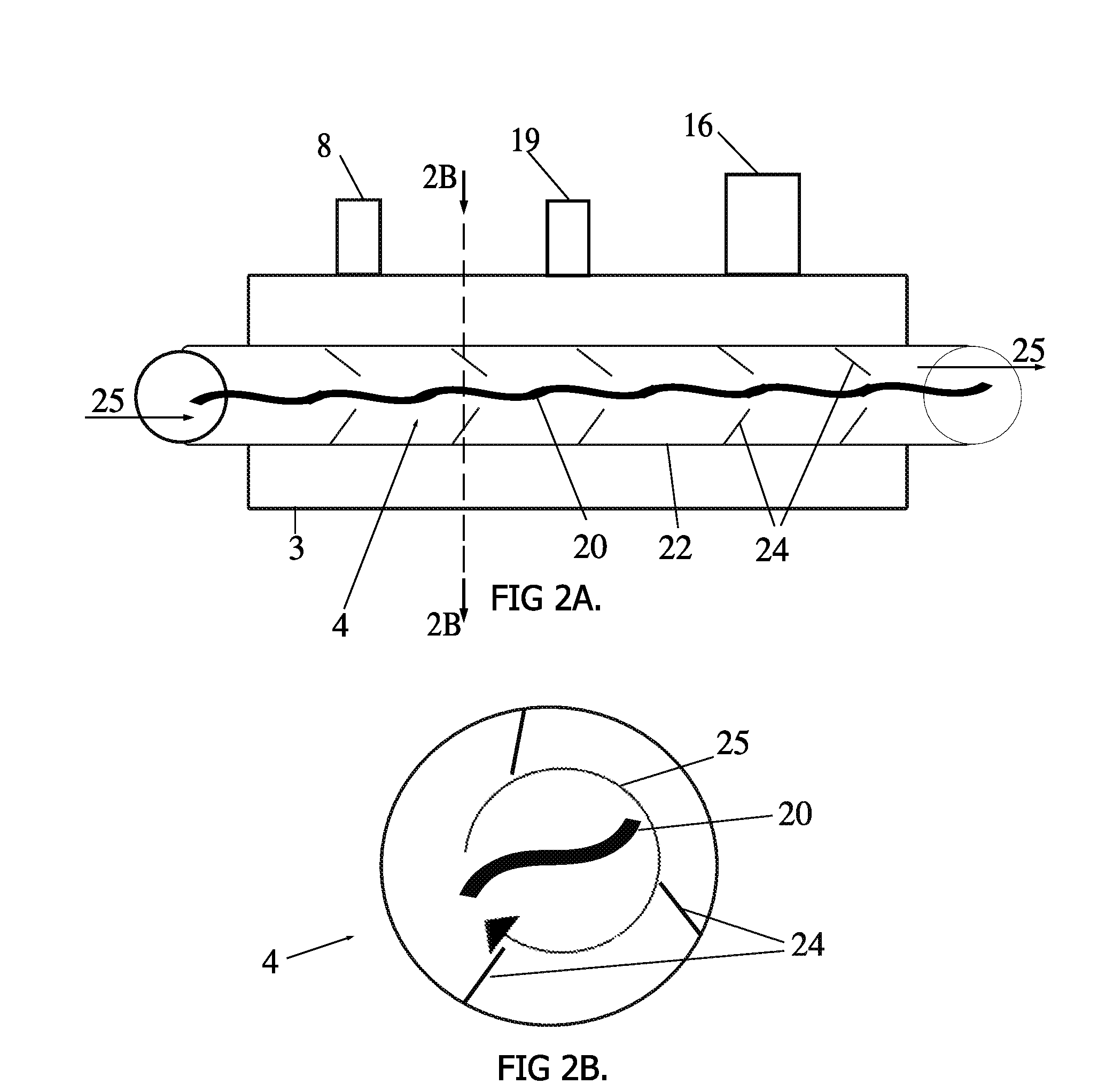
[0021]An external view of a device and system 10 in accordance with one embodiment of the present invention is shown in FIG. 1. The cryogenic system or device 10 has side walls 17 enclosing an internal area, or lumen 15. The device 10 in this embodiment takes the form of a vacuum insulated dewar 6 which stores liquid cryogen in connection with a supply line 11 and return line 12 to a probe or catheter (not shown) to form a...
PUM
 Login to View More
 Abstract
Description
Claims
Application Information
 Login to View More