
Micro-electro-mechanical-system sensor and method for making same
a micro-electromechanical system and sensor technology, applied in the field of micro-electromechanical system (mems) sensors, can solve the problems of cmos process, equipment or materials which are not required, and process too complicated in the prior ar
- Summary
- Abstract
- Description
- Claims
- Application Information
AI Technical Summary
Benefits of technology
Problems solved by technology
Method used
Image

Examples
Embodiment Construction
[0014]The drawings as referred to throughout the description of the present invention are for illustration only, but not drawn according to actual scale.
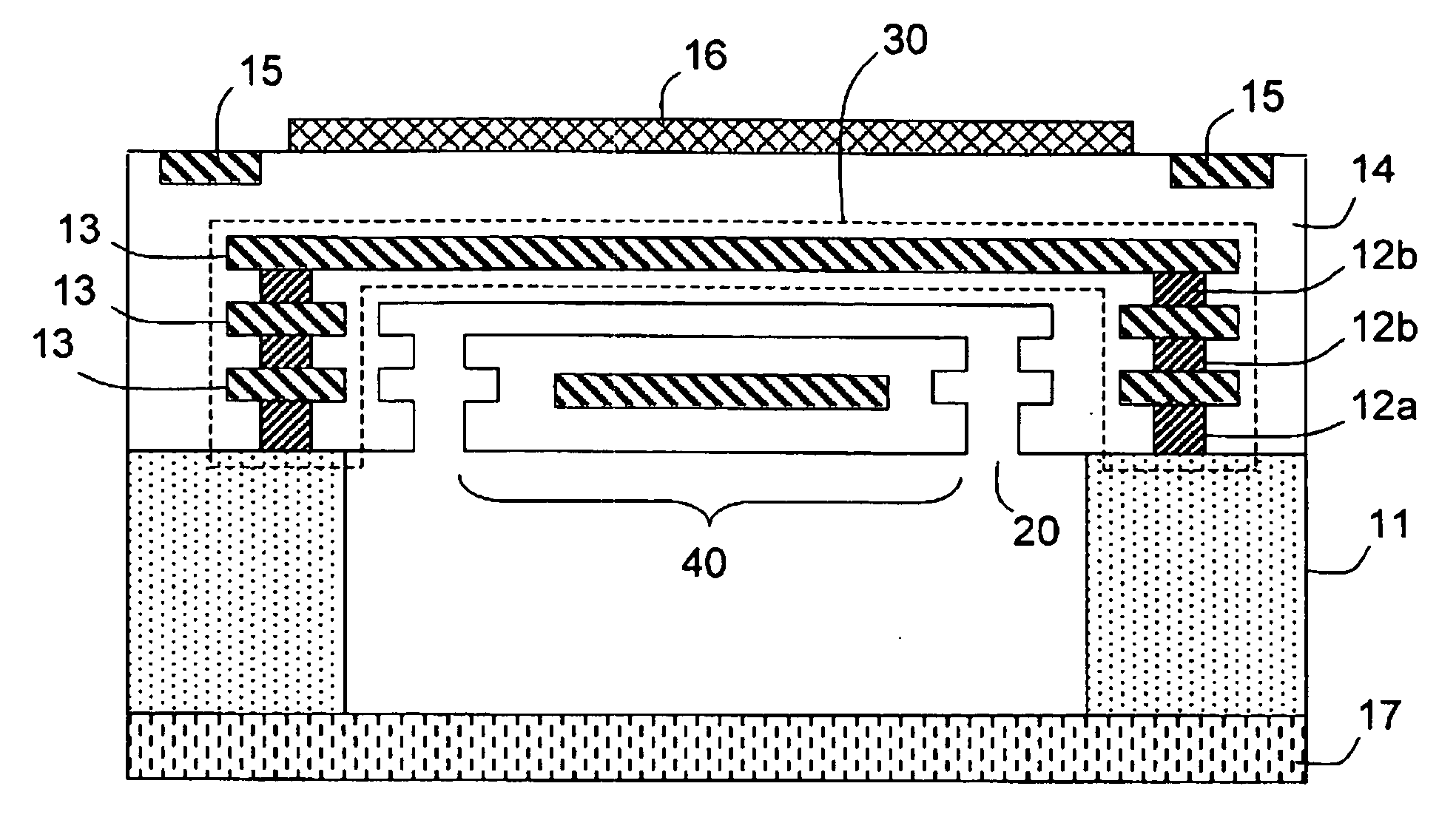
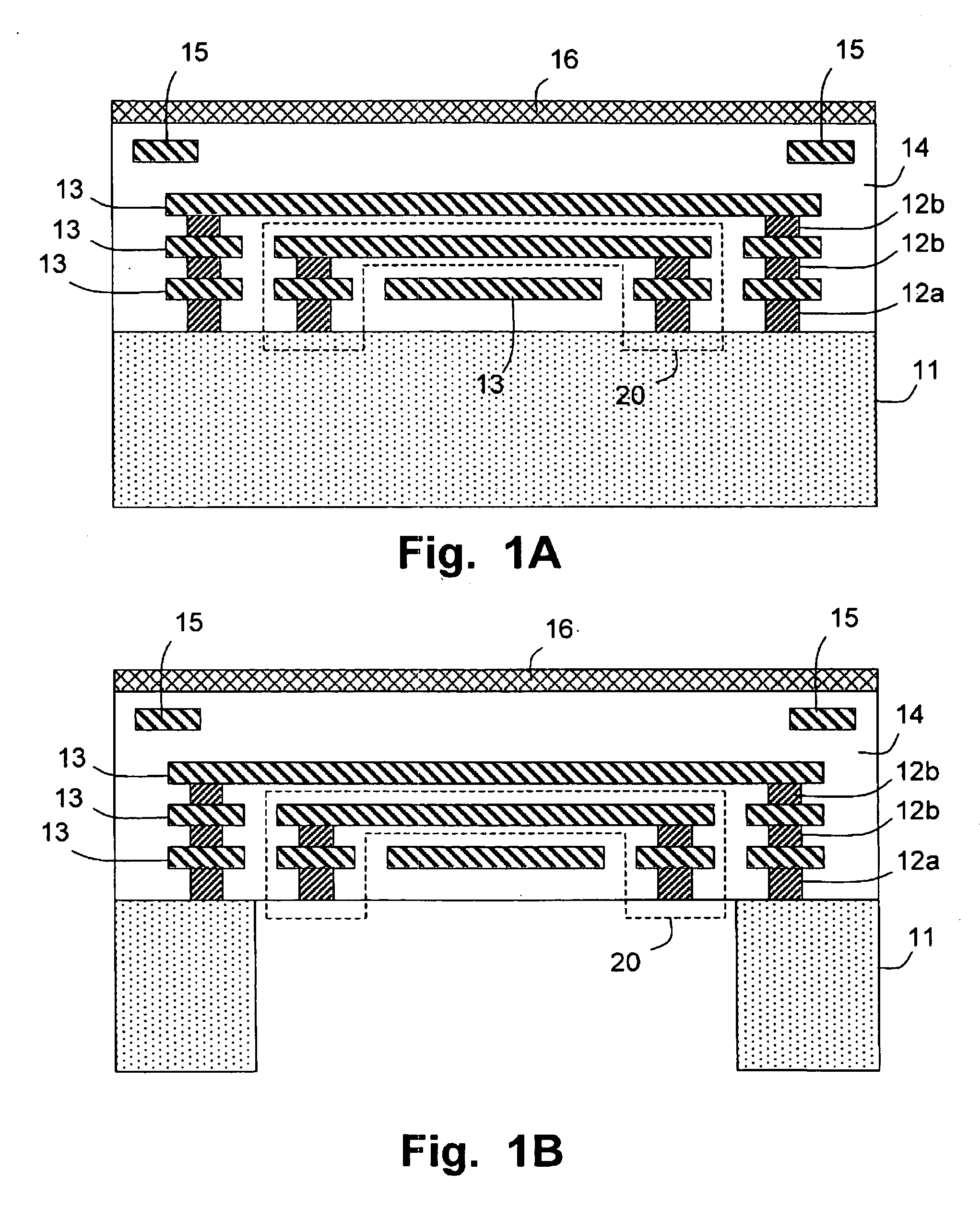
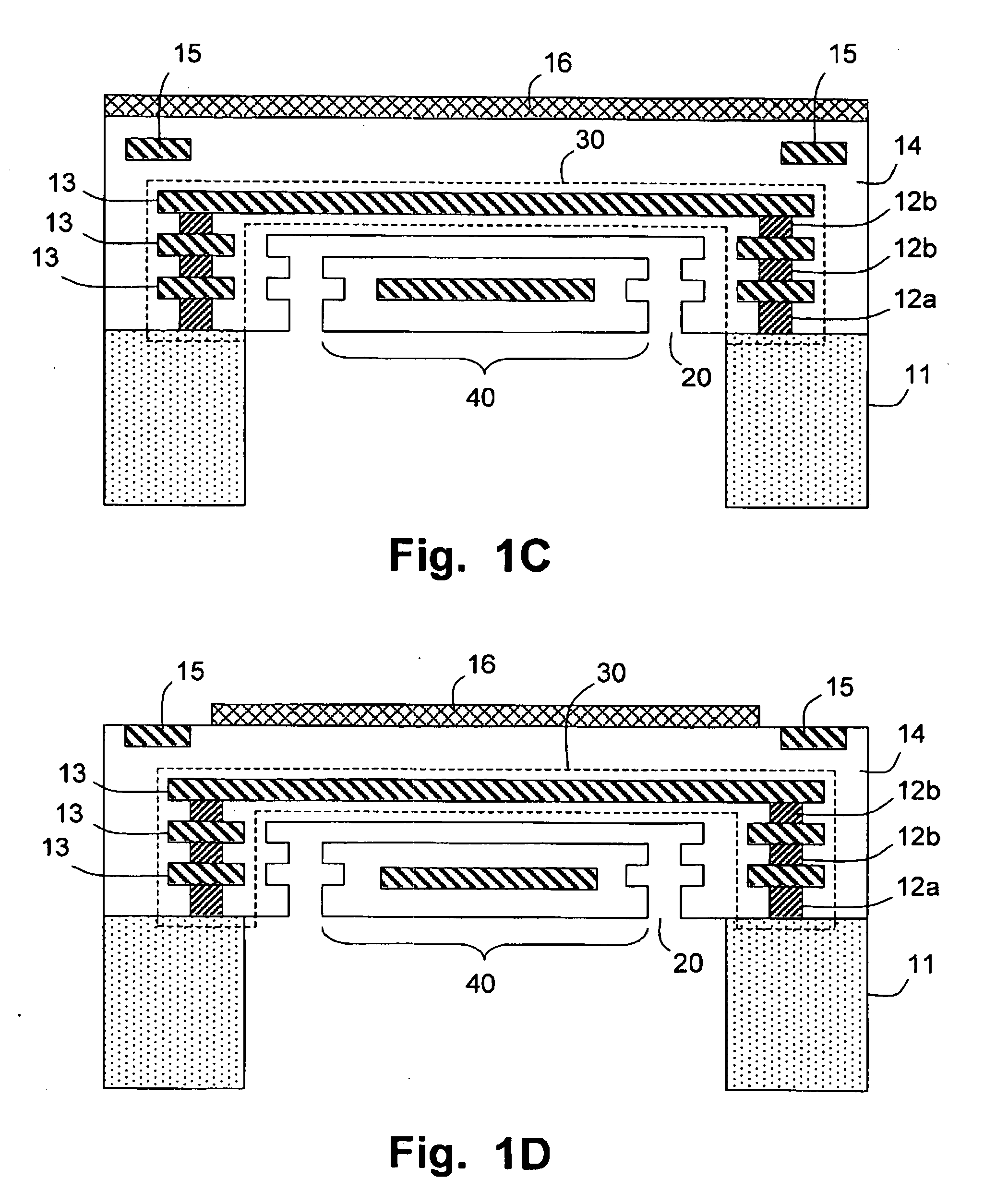
[0015]Referring to FIG. 1A for the first embodiment of the present invention, a zero-layer wafer substrate 11 is provided, which for example can be a silicon wafer so that the process is compatible with a standard CMOS process. Next, transistor devices can be formed by standard CMOS process steps as required (not shown), followed by deposition, lithography and etch steps to form interconnection including a contact layer 12a, metal layers 13, and via layers 12b. A dielectric layer 14 is provided to isolate the metal patterns of the layers where there should not be connection. Furthermore, a bond pad pattern 15 is formed on the topmost metal layer, and a passivation layer 16 is formed on top of the overall structure. In one embodiment, the contact layer 12a and the via layers 12b can be made of tungsten; the metal layers 13 can be mad...
PUM
 Login to View More
 Abstract
Description
Claims
Application Information
 Login to View More