
Apparatus for delivering precursor gases to an epitaxial growth substrate
a technology of precursor gas and epitaxial growth chamber, which is applied in the direction of crystal growth process, machine/engine, transportation and packaging, etc., can solve the problems of inefficient conversion of precursor gas to gan at the substrate, temperature of precursor gas, and product quality decline, so as to achieve more accurate delivery of thermalized precursor gas, high volume growth, and high volume
- Summary
- Abstract
- Description
- Claims
- Application Information
AI Technical Summary
Benefits of technology
Problems solved by technology
Method used
Image

Examples
example
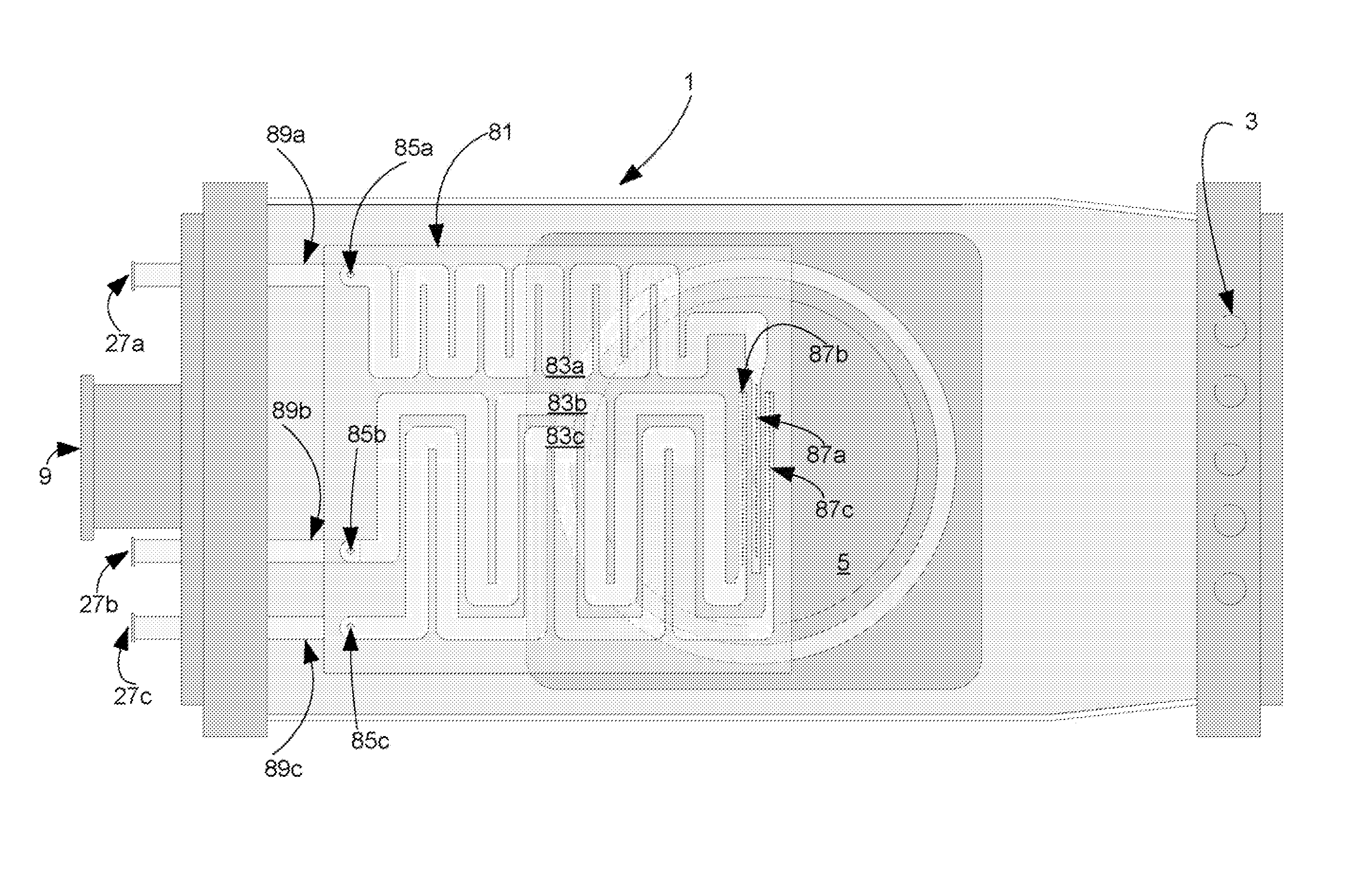
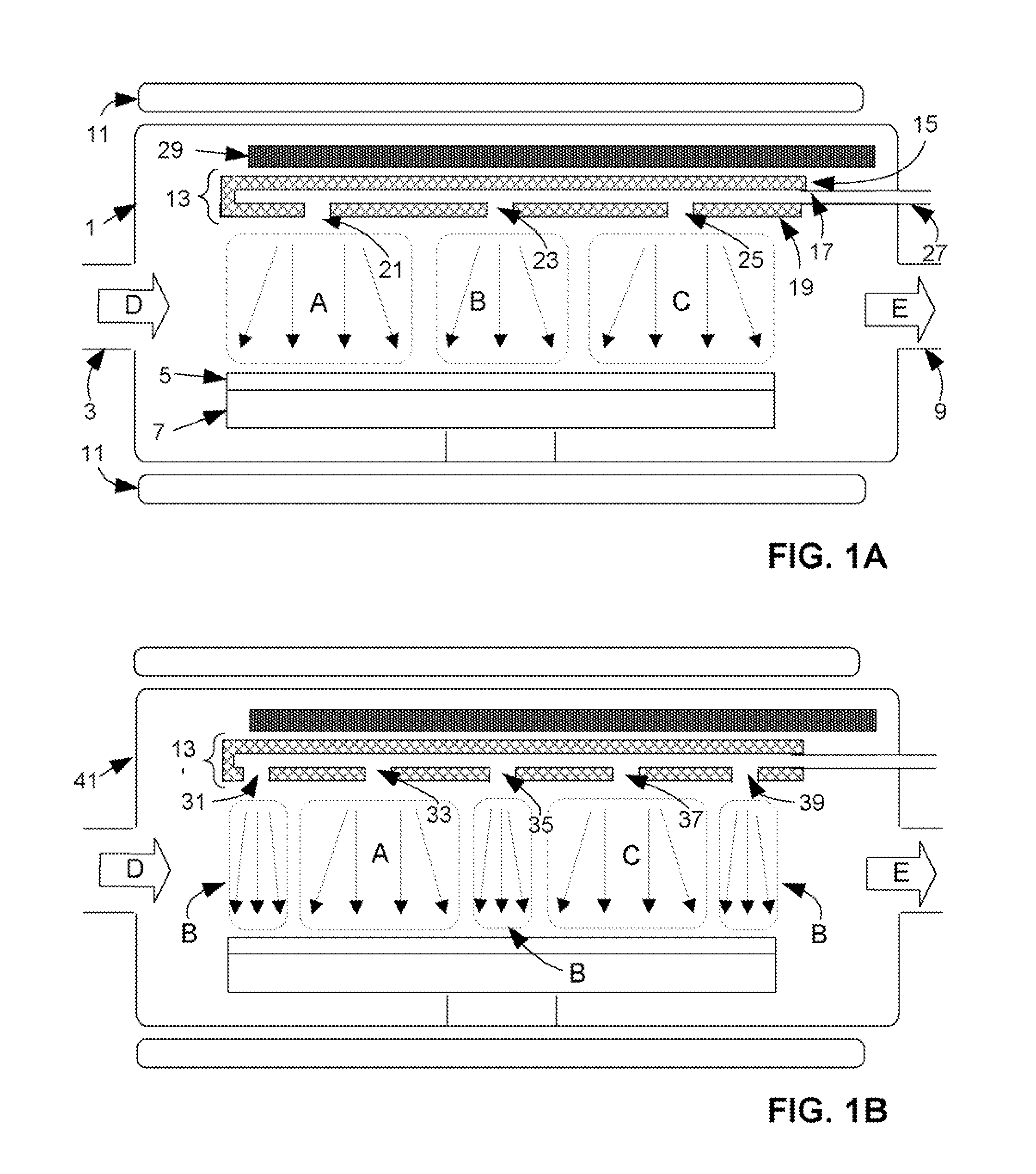
[0053]For GaN grown by HVPE processes, an internal injector of this invention can be constructed from quartz with a SiC plate positioned above the injector to promote the heating of the injector and of the gases flowing therein. The SiC plate results in more efficient transfer of heat from the radiant heating source to the injection scheme. Precursors are NH3 and GaCl3: the NH3 being flowed through the interior injector at a rate of about 1-5 SLM (standard litres per minute); and an N2 carrier gas having entrained GaCl3 also being flowed through the interior injector at a rate of about 1-5 SLM. In addition, further gases can be introduced through additional cross flow input ports at flow rates between about 0 and about 50 SLM in order to better optimize of the gas flow over the growth substrate. Interior injectors similar to the embodiments illustrated in FIGS. 3A-C, 4, and 5 in the illustrated growth chambers are suitable for this application.
PUM
| Property | Measurement | Unit |
|---|---|---|
| thickness | aaaaa | aaaaa |
| thickness | aaaaa | aaaaa |
| temperature | aaaaa | aaaaa |
Abstract
Description
Claims
Application Information
 Login to View More