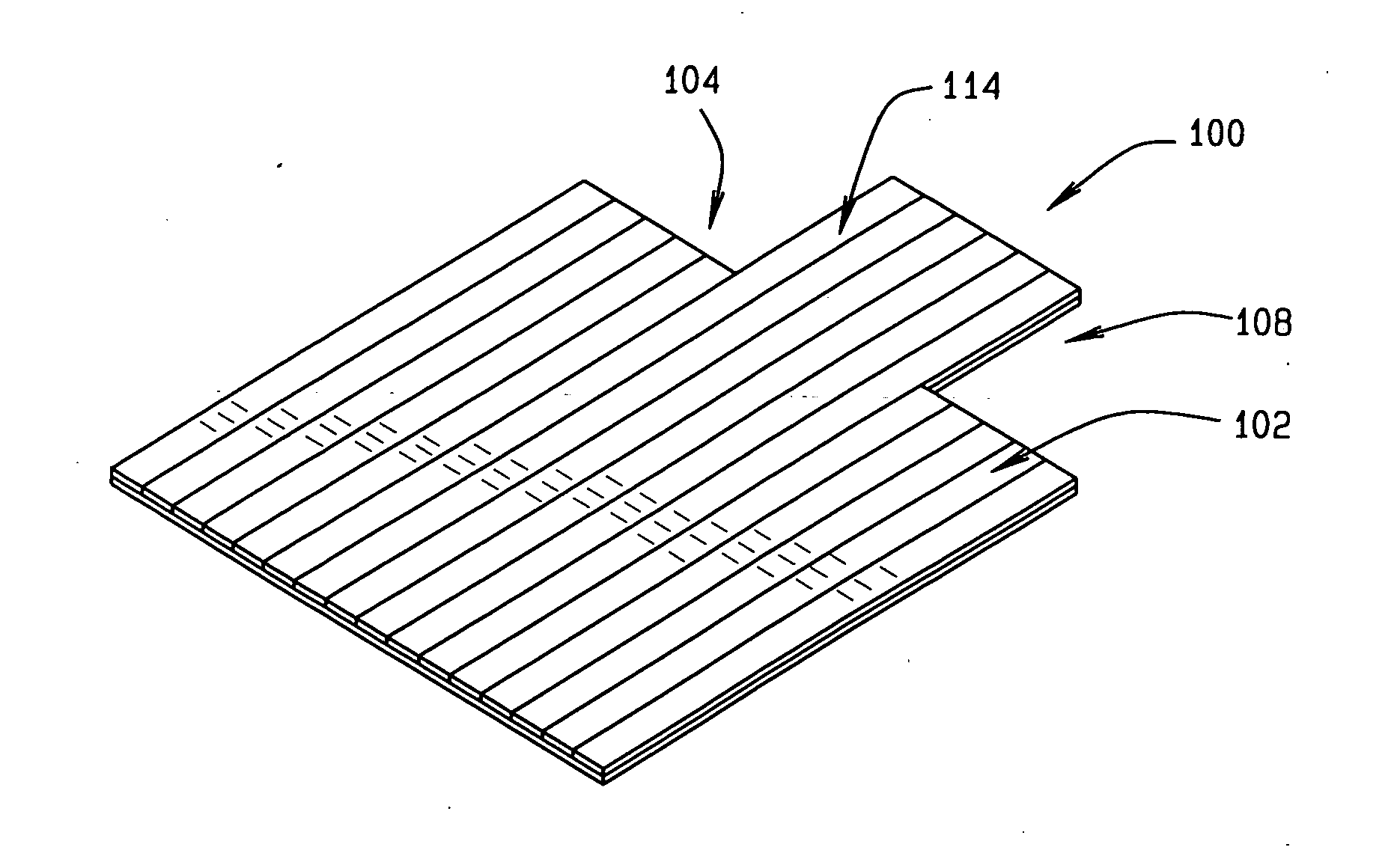
[0012]The invention is a hard wood chair pad formed from multiple elongated bamboo planks that have been processed like
hardwood flooring. The chair pad provides a substantially
hardwood rigid surface but the pad can be rolled up like a chair pad for ease of transport and shipping. The
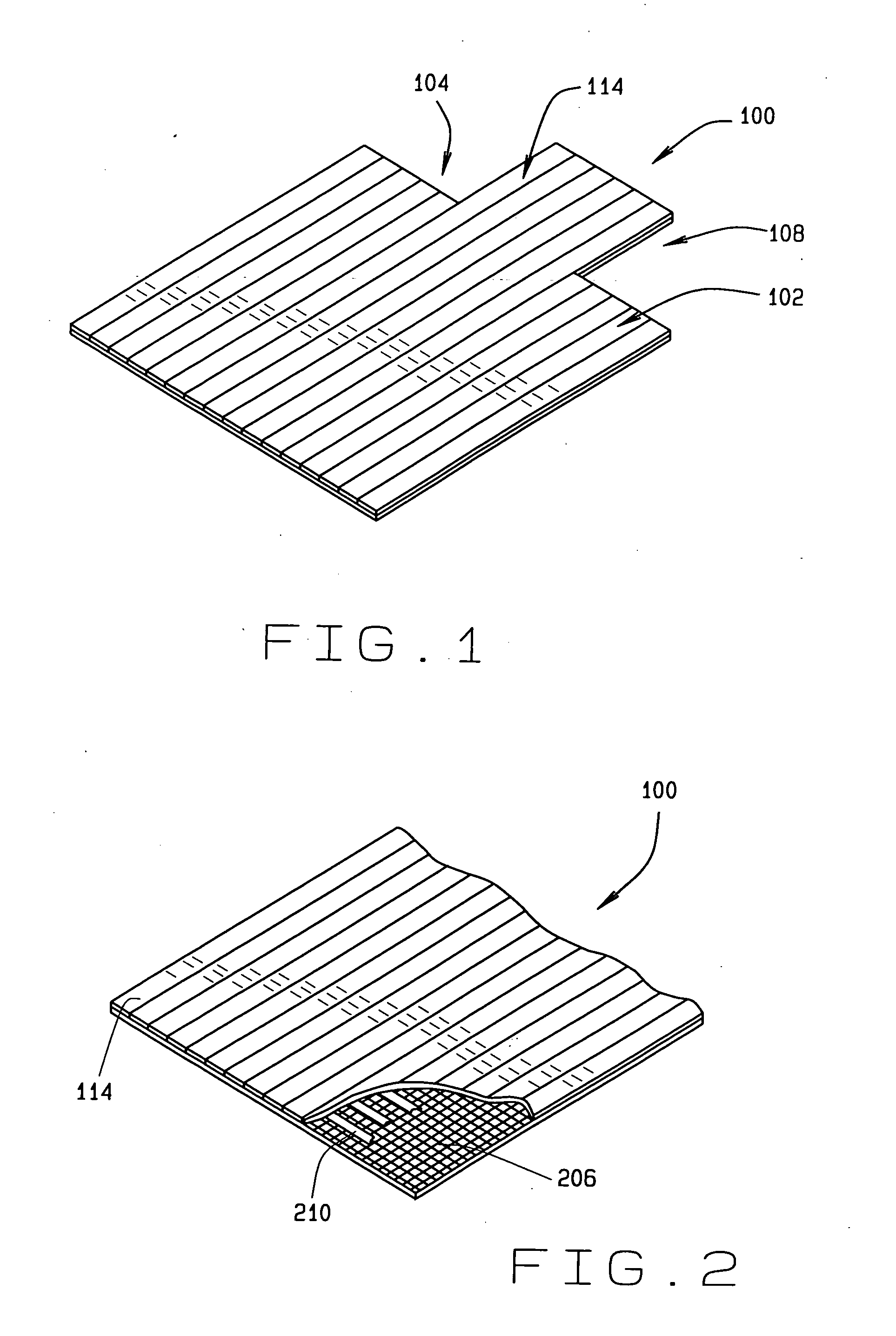
hardwood planks have sufficient thickness such that when they are bonded to a backing in an adjacent side by side manner a substantially rigid surface is provided. The planks are not adjacent connected along their side edges, therefore the pad can be rolled for ease of transport.
[0013]The bamboo chair pad can be manufactured from 100% Anji Mountain bamboo from China. The bamboo is all treated with various protective coatings to add resistance to natural factors including water, sun and
dirt. All bamboo chair pads are made from the harder portions of the bamboo trunk. (Some bamboo used for indoor purposes are manufactured from the softer fibers of the inside of the bamboo trunk). This portion of the bamboo trunk is not utilized for this invention. The bamboo utilized in the present invention is taken from the harder part of the bamboo trunk to assure maximum endurance and
longevity. The
lower trunk portion of the bamboo
plant is harder and less porous.
[0014]The bamboo for the present invention is
kiln dried to prevent warping and remove
moisture that can cause future warping. Certain styles of bamboo are oxidized in a boiling vat of liquid to bring out different variations of color versus the
common method of spray
staining the bamboo planks to a particular color. The
oxidation process also makes the bamboo less porous to
moisture. In addition, the planks will be carbonized, in addition to being oxidized, in that boiling vat of liquid, which not only brings out coloration, but also removes any insects from the bamboo slats. A
UV coating can also be applied to the bamboo planks. One embodiment of the inventions can have 7 coats of
UV protection. The
UV protection can be obtained by applying several
layers of
polyurethane coatings, and said coatings are applied a number of successive times and have
exposure to UV heat bulbs, to add to their curing. The bamboo can be arranged with a series of planks
lying next to one another and then assembled into a chair pad utilizing the same manufacturing processes and machinery utilized for bamboo rugs. The chair pad can then be rolled or pressed thereby compressing the entire layer of the chair pad.
[0016]After the bamboo planks are
kiln dried, so as to prevent warping, and after their oxidizing and being carbonized in a boiling vat of liquid, the bamboo planks may be placed in
humidity measured
drying room for
multiple days to assure even
drying and to maintain a consistent
moisture level in the bamboo planks, as used. In other words, the
drying room lowers the moisture content, and consistently keeps the moisture content of the planks uniformly at that lower level.
[0017]Certain bamboo that can be used in the manufacture of the present bamboo chairpad is oxidized and gives it an extra step in making the bamboo more impermeable to water,
sunlight and
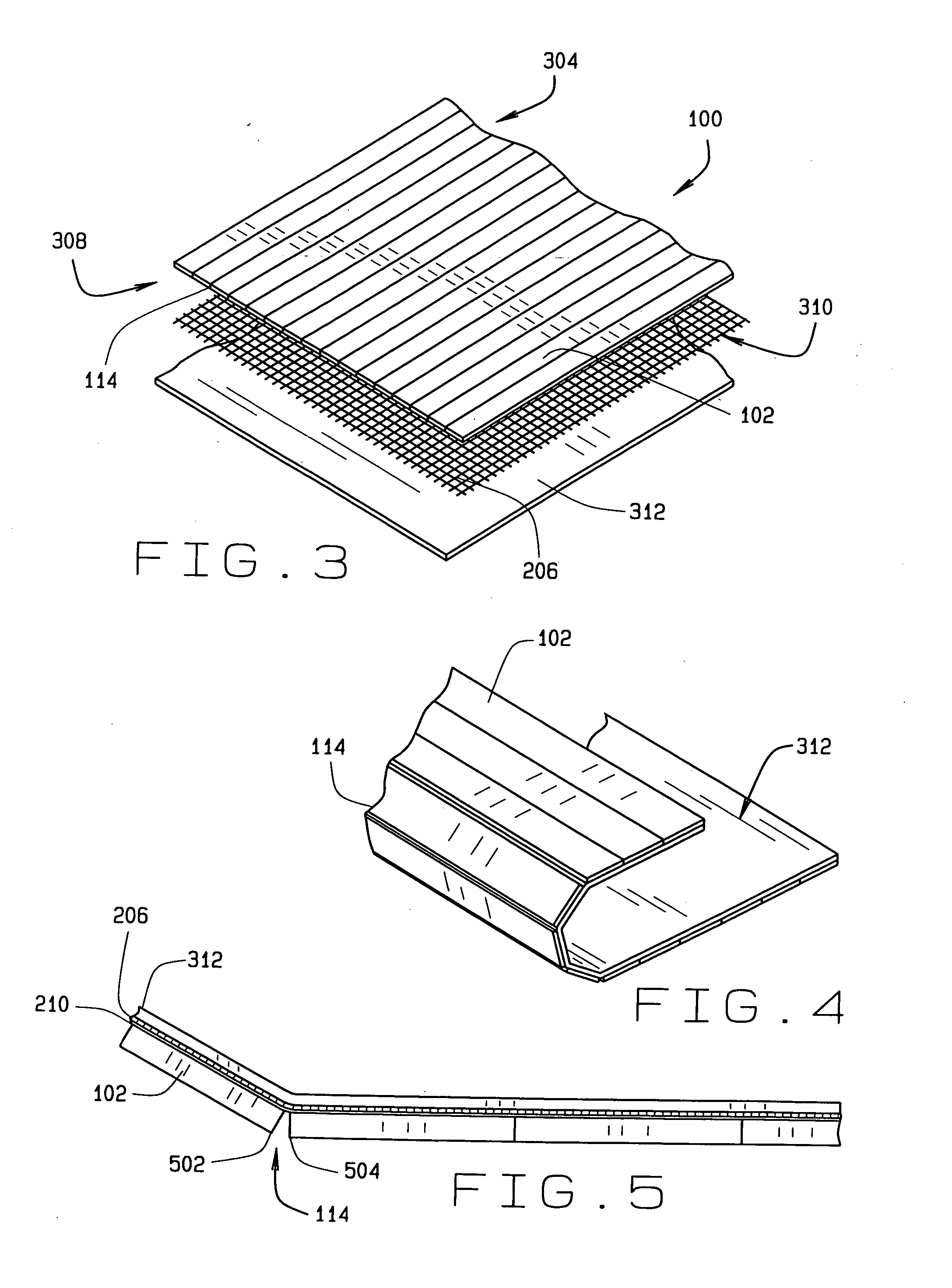
dirt. Once the elongated bamboo planks have been processed, they are adjacently aligned lengthwise, and side by side. A fibrous strip, or multiple threads and / or a fibrous tape material can be applied to the underside to connect the bamboo planks. A
fiber mesh sheet can then be applied and bonded to the underside to hold the strips together. Then the porous
mating is bonded to the underside. The present inventions construction provides a product that is easily packaged, transported, shipped and moved about to the flexibility of the chair pad and ability to roll up.


 Login to View More