Semi-rigid compression splint for application of three-dimensional force

a compression splint and three-dimensional force technology, applied in the field of compression splints for trauma, can solve the problems of insufficient pre-hospital time and talent for this procedure, the inability to apply force to the soft anterior abdominal/pelvic wall, and the inability to reduce the number of patients, reduce the number of long bone fractures or pelvis, and achieve no deleterious effects on cardio-pulmonary mechanics

a compression splint and three-dimensional force technology, applied in the field of compression splints for trauma, can solve the problems of insufficient pre-hospital time and talent for this procedure, the inability to apply force to the soft anterior abdominal/pelvic wall, and the inability to reduce the number of patients, reduce the number of long bone fractures or pelvis, and achieve no deleterious effects on cardio-pulmonary mechanics

US20120101418A1Inactive Publication Date: 2012-04-26THE RES FOUND OF STATE UNIV OF NEW YORK

Image

Smart Image Click on the blue labels to locate them in the text.
Viewing Examples
Smart Image
  • Semi-rigid compression splint for application of three-dimensional force
  • Semi-rigid compression splint for application of three-dimensional force
  • Semi-rigid compression splint for application of three-dimensional force

Examples

Experimental program
Comparison scheme
Effect test

Embodiment Construction

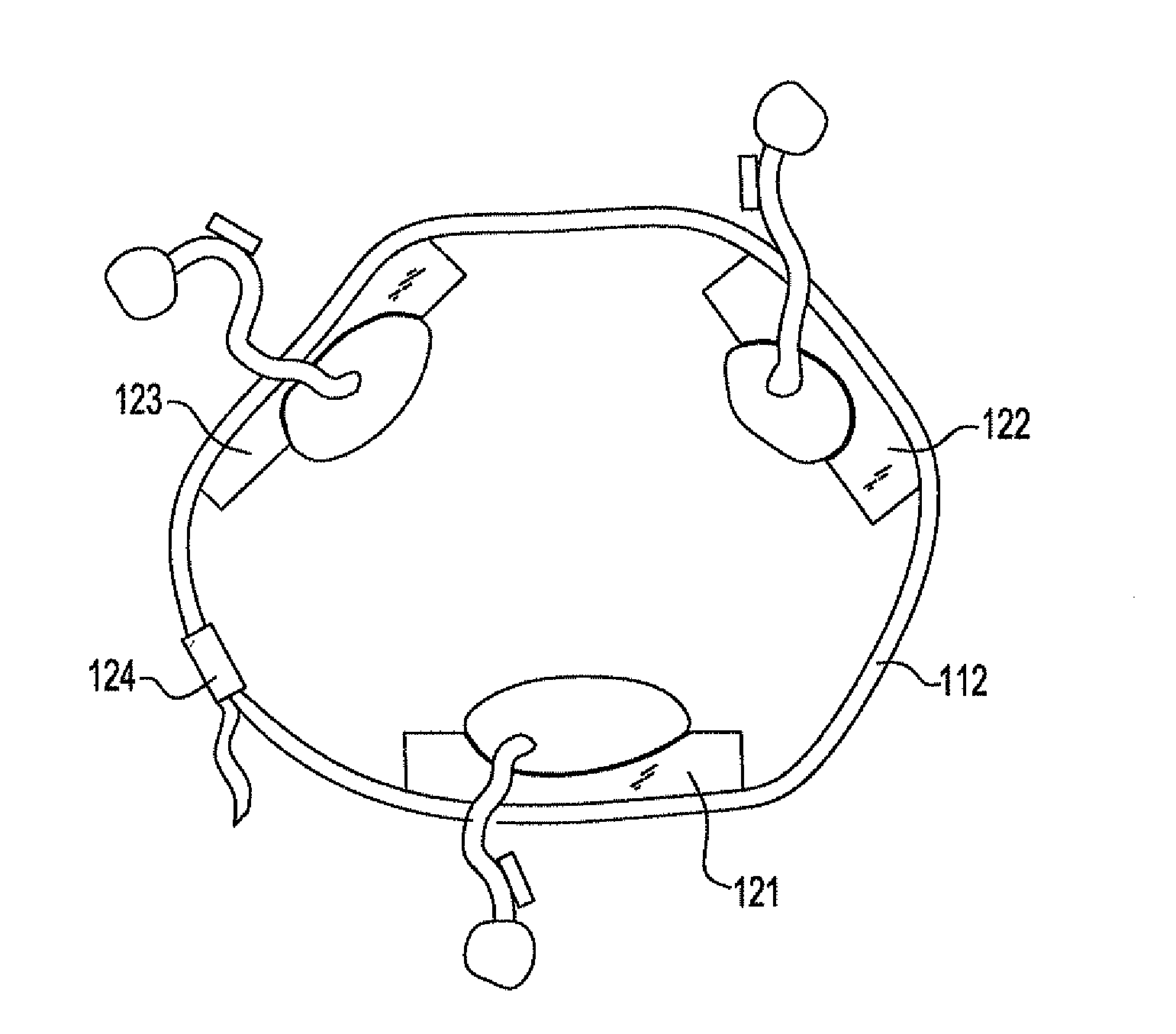
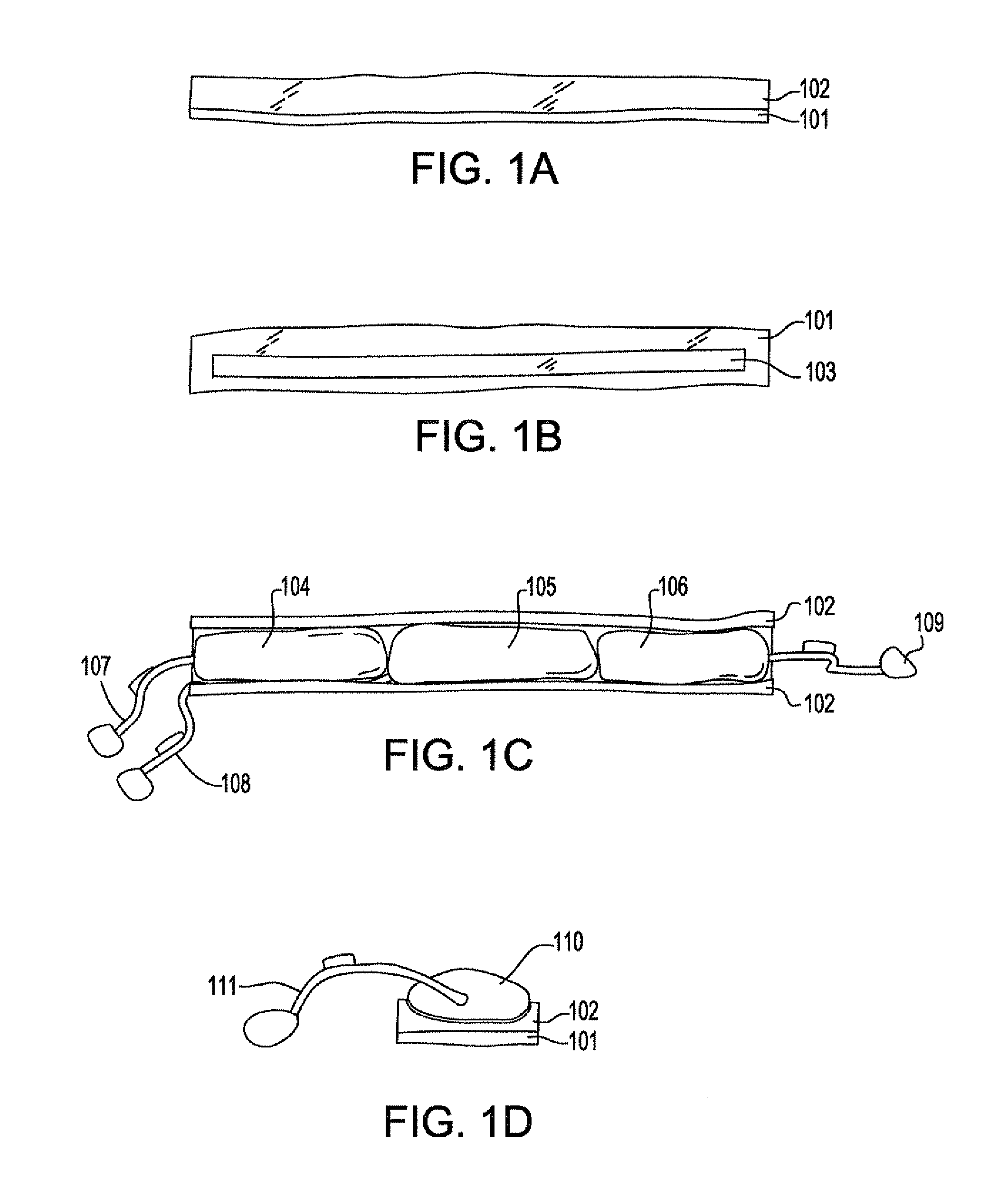
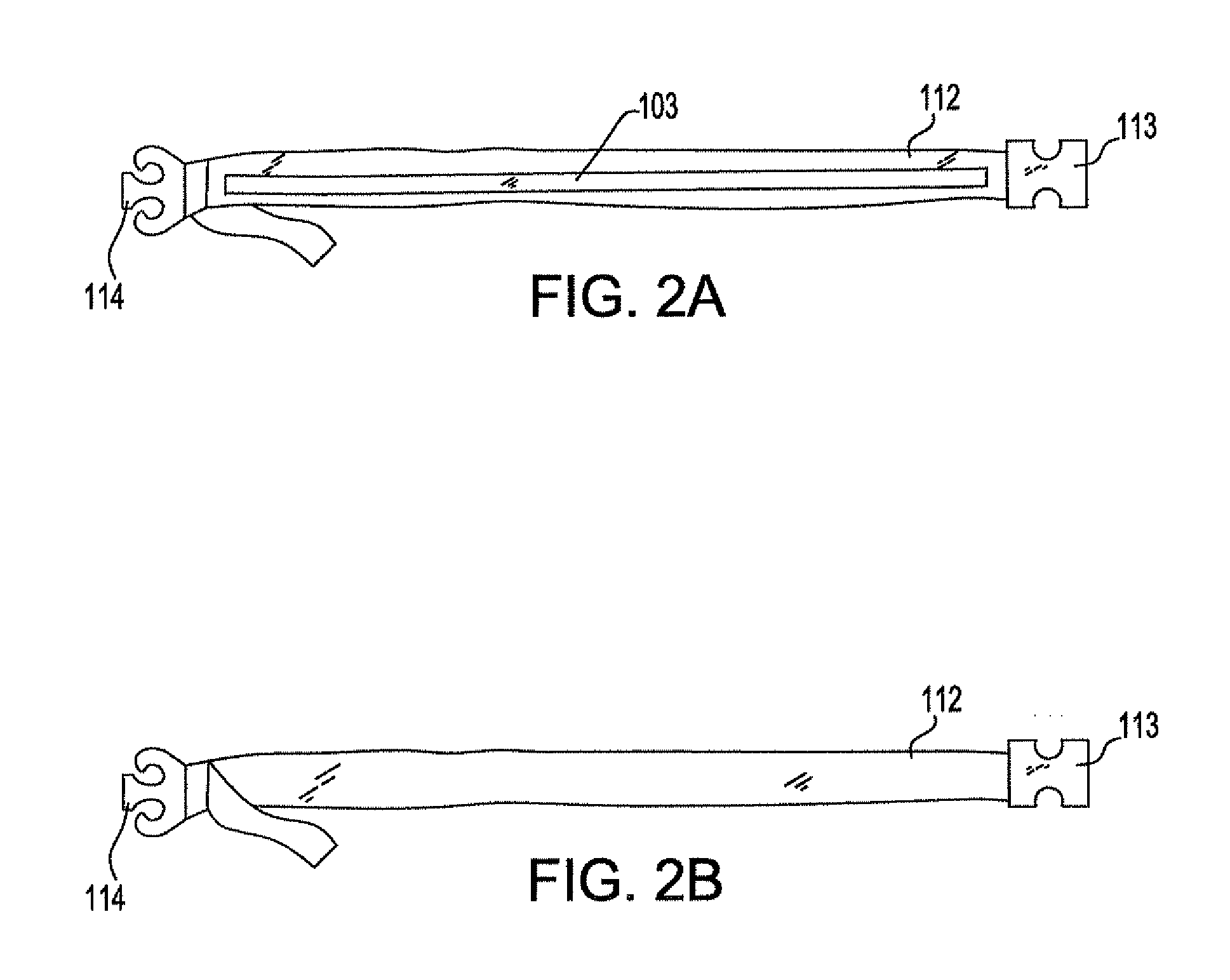
[0022]A semi-rigid compression splint of the present invention will be discussed first in general as applied to a fracture and below with more specificity. The splint, when in an open position is slid posterior to (under) the supine patient's buttocks, when applied to a pelvic fracture, or placed under the patient's head, neck, upper or lower limbs using standard trauma techniques. A plurality of straps and right and left plates form the posterior and lateral aspects of the splint.

[0023]In one embodiment, one end of each of the straps are passed superior to (over) the patient's fracture site and attached to the opposing end of each respective strap. A system of cushions and air bladders are mounted on the internal side of each plate. After the splint is in place on a patient, the air bladders are inflated to compress / stabilize the patient's pelvis. The straps and air bladders may then be further manipulated to optimize the fit and function of the splint.

[0024]The plates are designed...

the structure of the environmentally friendly knitted fabric provided by the present invention; figure 2 Flow chart of the yarn wrapping machine for environmentally friendly knitted fabrics and storage devices; image 3 Is the parameter map of the yarn covering machine
Login to View More

PUM

No PUM Login to View More

Abstract

A compression splint is provided for reduction, compression and stabilization of spinal, pelvic, and long bone fractures. The compression splint includes a plurality of plates selectively disposed at a plurality of positions of a fracture site; a plurality of inflatable cushions, each cushion positioned between respective plates of the plurality of plates and the fracture site; and a support means for supporting the plurality of plates and plurality of cushions compressively against the fracture site in three dimensions, Additionally, the plates of the compression splint can be adjusted, removed or additional plates added to further customize the compressive force applied to the fracture site.

Description

FIELD OF THE INVENTION[0001]The present invention relates generally to compression splints for trauma and, more particularly, to an axial, rotation, semi-rigid compression splint.BACKGROUND OF THE DISCLOSURE[0002]Bone fractures are stabilized with splints until proper diagnosis and treatment are available. Medical personnel align a fractured bone, which is referred to as reduction, and maintain the alignment through various treatments for healing. The following presents approaches to noninvasive reduction of fractures of the pelvis and long bones.[0003]Compression splints of the prior art are typically fabricated from a solid piece of fabric or other material. While these splints have their advantages, in order to ensure that the providers can see and access the area being treated by the splint, such as the spine, limbs, anterior abdomen, pelvis, and ano-genital regions, the splint must be disengaged. Furthermore, pelvic compression splints of the prior art cause compressive forces ...

Claims

the structure of the environmentally friendly knitted fabric provided by the present invention; figure 2 Flow chart of the yarn wrapping machine for environmentally friendly knitted fabrics and storage devices; image 3 Is the parameter map of the yarn covering machine
Login to View More

Application Information

Patent Timeline
26 Apr 2012
Publication
US20120101418A1
IPC
A61F5/00
CPC
A61F5/0193; A61F5/05816; A61F5/34; A61F5/05841; A61F5/05825
Inventors
MANOACH, SETH M.; STRAUSS, ELTON